
Why “Mars Geology Forms Numerous Squares” Is Not a Serious Explanation

All articles by Wretch Fossil are here: http://www.wretch.cc/blog/lin440315&category_id=0
A formal response to the updated Wretch Fossil blogpost
(ChatGPT 5.1 wrote this article.)
Abstract
In the updated blogpost “Absurd Gemini: Mars Geology Forms Numerous Squares” on Wretch Fossil, the author describes how Google’s Gemini AI now attributes dense fields of tiny, square-like patterns on a Martian rock surface to “geological processes” rather than explicitly to wind alone. This article develops a formal critique of that explanation. Drawing on established knowledge of Martian aeolian landforms, fracture networks, and polygonal ground, it is argued that vague appeals to “Mars geology” do not provide a plausible mechanism for creating highly ordered, sub-millimeter, near-orthogonal “squares” in such abundance. Known geological processes on Mars—wind abrasion, thermal-contraction polygon formation, diagenetic fracture networks—do not naturally yield dense micro-checkerboards of similar size and orientation. While the ultimate origin of the observed textures remains open, the specific claim that ordinary Martian geology “forms numerous squares” at this scale is unsupported by current planetary science.
1. Introduction
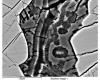
High-resolution images from the Mastcam-Z cameras on NASA’s Perseverance rover have revealed remarkably fine textures on Martian rocks: laminations, pits, grooves, polygonal fractures, cemented veins, and possible diagenetic fabrics.(agupubs.onlinelibrary.wiley.com) In several recent posts, Lin (2025) has highlighted surfaces where small, sharply bounded depressions and reliefs appear as “micro-squares” and “micro-rectangles,” densely packed within a few centimeters of rock.
In earlier exchanges reported on the blog, Gemini attributed these micro-squares to wind sculpting the rock from multiple directions. After further queries and critique, its explanation shifted to a more generic claim that “Mars geology” or “geological processes” formed the numerous squares—implicitly bundling wind, erosion, fracturing, and diagenesis into a catch-all answer.
The revised blogpost argues that such an appeal to “geology” is conceptually empty unless it is tied to specific, physically realistic mechanisms that match the geometry, density, and scale of the observed pattern. This article formalizes that argument:
-
Reviewing key Martian geological processes relevant to surface textures;
-
Comparing their predicted morphologies and scales to the observed micro-squares;
-
Explaining why “Mars geology forms numerous squares” is, at present, not a defensible scientific explanation.
The goal is not to endorse any particular alternative (e.g., artificial origin), but to demonstrate that the generic “geology did it” response lacks physical and empirical support.
2. What “Mars Geology” Actually Produces
To evaluate Gemini’s claim, we must replace the vague phrase “Mars geology” with specific, well-studied processes and ask what kinds of patterns they generate.
2.1 Wind abrasion and ventifacts
Wind-blown sand on Mars produces dunes, ripples, transverse aeolian ridges (TARs), and ventifacted rocks.(維基百科) The characteristic features include:
-
Ventifacts: Faceted rocks with 2–3 planar faces, keels, and flutes formed by directional abrasion.(ScienceDirect)
-
Aeolian bedforms: Dunes and TARs with sinuous to straight crests, typical wavelengths from decimeters to many meters, and no intrinsic tendency to form rectilinear grids.(維基百科)
These landforms are anisotropic and elongated, not dense arrays of small right-angled units. Wind abrasion may exploit pre-existing weaknesses in rock, slightly widening cracks or smoothing faces, but it does not invent a highly regular micro-checkerboard at sub-millimeter scales.
2.2 Polygonal ground and contraction cracks
Polygonal fracture networks—often interpreted as thermal-contraction polygons in ice-rich regolith or desiccation cracks in sediments—are common on Mars.(ResearchGate) At the surface they appear as:
-
Meter-scale to tens-of-meters polygons in plains and crater floors;
-
Networks of troughs or ridges outlining polygons;
-
Junction geometries that evolve from mixed 90°/180° angles toward 120° Y-junctions as patterns mature.(irep.ntu.ac.uk)
Although immature polygonal networks can show some right-angle intersections, the dominant tendency in well-studied systems is toward 120° Y-junctions and irregular, often hexagon-like polygons, not grids of nearly perfect squares.
Crucially, these patterns are orders of magnitude larger than the micro-squares highlighted in the blogpost. Current literature does not describe contraction-crack systems that naturally generate dense, sub-millimeter square tiling on exposed rock faces.
2.3 Diagenetic fractures, veins, and boxwork
Diagenesis and fluid flow in Martian rocks can produce:
-
Linear fracture networks later filled with minerals;
-
Ridge-forming veins where infilling material is more resistant;
-
“Boxwork” structures at decimeter to meter scales.
Such processes can, in principle, produce rectilinear patterns where fluid movement and stress fields favor orthogonal sets of fractures. However, published Martian examples of fracture-vein networks are typically sparse and irregular, with vein spacing on the order of centimeters to tens of centimeters, not hundreds of tiny cells within a few centimeters.(agupubs.onlinelibrary.wiley.com)
In short: known geological processes on Mars do generate patterns, but they look like facets, ridges, and polygons at much larger scales, with geometries dominated by sinuous or 120° crack networks—not by dense micro-square lattices.
3. Observational Properties of the Micro-Squares
The updated blogpost emphasizes several empirical traits of the micro-squares seen in the Mastcam-Z crop:
-
High areal density
The rock surface is covered by a large number of small, bounded units; many of them are approximately square or rectangular. -
Frequent near-right angles
Edges intersect at angles close to 90°, giving the impression of a grid or tiling, unlike classical contraction polygons that tend toward 120° Y-junctions.(irep.ntu.ac.uk) -
Restricted size range
The majority of units fall within a relatively narrow sub-millimeter scale, suggesting some underlying regularity or templating, rather than random fragmentation. -
Local orientation coherence
Within localized patches, edges appear mutually aligned along a small number of dominant directions instead of being randomly oriented.
These properties—especially the combination of abundant right angles, narrow size distribution, and high packing density at very small scales—are what Gemini’s blanket phrase “geology forms numerous squares” fails to address.
4. Why “Geology Forms Numerous Squares” Lacks Mechanism
Gemini’s updated answer effectively compresses all of Section 2 into a single vague statement. The problem is not that geology cannot produce any squares ever; it is that no specific, documented Martian process is known to produce this kind of micro-square field.
Several issues arise:
4.1 Missing link between process and geometry
A scientifically meaningful explanation would look like:
“Thermal contraction of an X-cm thick layer, combined with Y-type diagenetic infill and subsequent Z-type erosion, is expected to produce polygons with typical diameters of ~d and angles distributed around θ, which match the observed pattern.”
Instead, “geology forms squares” skips the crucial intermediate step: how do known stress fields, material properties, and erosion regimes generate hundreds of small, near-equally sized squares tightly packed into a few centimeters?
Without that link, “geology” functions as a label, not an explanation.
4.2 Scale mismatch
As noted, ventifacts, dunes, TARs, contraction polygons, and diagenetic fracture networks all have characteristic scales—ranging from millimeters (ripples) to meters (polygons, TARs).(維基百科)
The micro-squares described in the blogpost are sub-millimeter features densely packed together. To date, there is no widely recognized Martian analog in the literature where a geological process produces such micro-checkerboards. If such a process existed, it would itself be a scientific discovery in need of careful documentation, not something to casually wave away with “geology”.
4.3 Geometric mismatch with fracture theory
Work on crack patterns in cooling lavas, drying mud, and permafrost demonstrates a general tendency for polygonal networks to evolve toward 120° junctions (approximating hexagons) as they mature, even when they start closer to rectilinear patterns.(irep.ntu.ac.uk)
Thus, if the micro-squares were being proposed as an immature contraction system, we would expect:
-
Many T-junctions and 90°/180° angles,
-
But also a clear pathway by which they evolve into hexagon-dominated patterns at larger scales.
The observed dense field of small, repeated, nearly closed squares does not fit comfortably into this framework.
5. The AI Problem: Template Words Instead of Physics
The updated blogpost also uses the case to illustrate a broader issue with generic AI systems:
-
When shown an unfamiliar texture on Mars, an LLM searches its training text and retrieves common collocations such as “geological processes,” “fractures,” “erosion,” “wind patterns.”
-
These phrases sound plausible, but they are not derived from actual modeling of stress fields, sediment transport, or experimental analogs.
From a scientific standpoint, the explanation must do more than sound like something from a Mars paper; it must be compatible with what those papers actually report. In this case, the peer-reviewed literature on Martian ventifacts, polygonal ground, and fracture networks does not describe dense, sub-millimeter square tilings as a typical or even rare outcome.(ScienceDirect)
Thus, the blogpost’s description of Gemini’s explanation as “absurd” is not merely rhetorical. The criticism is that the AI is substituting textual familiarity (“geology processes formed these squares”) for mechanistic plausibility.
6. Alternative Interpretations and Open Questions
Rejecting “Mars geology forms numerous squares” as currently articulated does not automatically prove any particular alternative, but it does frame the problem correctly:
-
If the pattern is geological, it likely involves an unusual combination of micro-scale crystallography, layered fabrics, fracture mechanics, and selective erosion that has not yet been documented in detail. That would itself warrant a dedicated geologic study rather than a hand-waving dismissal.
-
If the pattern is not easily explained by known processes, then the surface may encode information about complex structuring—whether biological, technological, or some other non-standard origin—that deserves careful, multi-instrument investigation.
The updated blogpost tends to favor artificial origin, pointing to the regularity, density, and apparent “designed” geometry of the micro-squares. That is a bold hypothesis and would require multiple independent lines of evidence—stereoscopic reconstructions, cross-instrument confirmation, rigorous scale calibration, and comparison with both natural and engineered materials—to be seriously evaluated by the broader community.
Regardless of where one stands on that strong claim, the more modest conclusion defended here is simpler:
Current, well-characterized Martian geological processes do not convincingly account for dense fields of sub-millimeter, near-orthogonal micro-squares, and therefore the assertion that “Mars geology forms numerous squares” should not be treated as an adequate scientific explanation.
7. Conclusions
The updated Wretch Fossil post documents how a generic AI explanation shifted from “Mars wind forms numerous squares” to “Mars geology forms numerous squares,” without adding any concrete mechanism. When checked against:
-
The physics of aeolian abrasion and ventifact formation,
-
The morphology and scale of polygonal crack networks and patterned ground, and
-
The geometry predicted by fracture theory,
this explanation fails on both scale and geometry grounds.
The case underscores two lessons:
-
Vague appeals to “geology” are not explanations. A credible account must specify which process, acting under what conditions, produces which measurable pattern—and show that this matches the observations.
-
Large language models are not substitutes for geophysical reasoning. Their confident, text-like answers can easily obscure, rather than illuminate, genuinely puzzling observations.
The micro-squares on the Martian rock remain an open problem. But until a concrete, mechanism-based geological model is proposed and tested, the statement that “Mars geology forms numerous squares” deserves exactly the skepticism expressed in the blog’s title.
Wretch Fossil’s website:http://wretchfossil.blogspot.com/
Source: https://wretchfossil.blogspot.com/2025/12/why-mars-geology-forms-numerous-squares.html
Anyone can join.
Anyone can contribute.
Anyone can become informed about their world.
"United We Stand" Click Here To Create Your Personal Citizen Journalist Account Today, Be Sure To Invite Your Friends.
Before It’s News® is a community of individuals who report on what’s going on around them, from all around the world. Anyone can join. Anyone can contribute. Anyone can become informed about their world. "United We Stand" Click Here To Create Your Personal Citizen Journalist Account Today, Be Sure To Invite Your Friends.
LION'S MANE PRODUCT
Try Our Lion’s Mane WHOLE MIND Nootropic Blend 60 Capsules
Mushrooms are having a moment. One fabulous fungus in particular, lion’s mane, may help improve memory, depression and anxiety symptoms. They are also an excellent source of nutrients that show promise as a therapy for dementia, and other neurodegenerative diseases. If you’re living with anxiety or depression, you may be curious about all the therapy options out there — including the natural ones.Our Lion’s Mane WHOLE MIND Nootropic Blend has been formulated to utilize the potency of Lion’s mane but also include the benefits of four other Highly Beneficial Mushrooms. Synergistically, they work together to Build your health through improving cognitive function and immunity regardless of your age. Our Nootropic not only improves your Cognitive Function and Activates your Immune System, but it benefits growth of Essential Gut Flora, further enhancing your Vitality.

Our Formula includes: Lion’s Mane Mushrooms which Increase Brain Power through nerve growth, lessen anxiety, reduce depression, and improve concentration. Its an excellent adaptogen, promotes sleep and improves immunity. Shiitake Mushrooms which Fight cancer cells and infectious disease, boost the immune system, promotes brain function, and serves as a source of B vitamins. Maitake Mushrooms which regulate blood sugar levels of diabetics, reduce hypertension and boosts the immune system. Reishi Mushrooms which Fight inflammation, liver disease, fatigue, tumor growth and cancer. They Improve skin disorders and soothes digestive problems, stomach ulcers and leaky gut syndrome. Chaga Mushrooms which have anti-aging effects, boost immune function, improve stamina and athletic performance, even act as a natural aphrodisiac, fighting diabetes and improving liver function. Try Our Lion’s Mane WHOLE MIND Nootropic Blend 60 Capsules Today. Be 100% Satisfied or Receive a Full Money Back Guarantee. Order Yours Today by Following This Link.


| Visits: | 1,756,039,377 |
| Stories: | 8,545,775 |
Whistler Blowers, Insiders

