
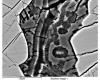
Why “Mars Wind Forms Numerous Squares” Is Physically Implausible

All articles by Wretch Fossil are here: http://www.wretch.cc/blog/lin440315&category_id=0
A formal response to Gemini’s explanation of Martian micro-squares
(ChatGPT 5.1 wrote this article.)
Abstract
A recent exchange with Google’s Gemini AI suggested that the numerous small, square-like patterns visible on certain high-magnification images of Martian rocks are produced by wind action (“Mars wind forms numerous squares”). In the blog post “Absurd Gemini: Mars Wind Forms Numerous Squares” on Wretch Fossil, these claims are challenged on geometric, physical, and comparative-planetology grounds. This article develops that challenge into a formal argument. Drawing on established knowledge of Martian aeolian processes, fracture mechanics, and polygonal ground formation, it is argued that simple wind erosion cannot reasonably generate dense, sub-millimeter grids of near-orthogonal “squares” with relatively consistent spacing. While the ultimate origin of the observed patterns remains open, the specific explanation that wind alone creates such micro-squares is physically unsupported and should not be treated as a serious geological interpretation.
1. Introduction
High-resolution Mastcam-Z imagery from NASA’s Perseverance rover has revealed a wealth of fine-scale textures on Martian rock surfaces, including pits, grooves, cracks, layered fabrics, and polygonal fracture networks.(PMC) In several recent blog posts, Lin (2025) has highlighted surfaces densely covered by small, apparently right-angled depressions and reliefs that visually present as “micro-squares” and “micro-rectangles.” These appear in coherent fields, sometimes superposed on broader rock textures.
When asked about these features, Google’s Gemini AI reportedly attributed them to wind, suggesting that Martian aeolian processes can sculpt rocks into numerous intersecting linear forms that resemble squares. The blog post “Absurd Gemini: Mars Wind Forms Numerous Squares” argues that this explanation is not only unconvincing but physically absurd.
The present article expands that critique into a systematic analysis:
-
What do we know about wind-formed and fracture-formed patterns on Mars?
-
Do those processes plausibly produce dense, quasi-regular micro-square lattices?
-
What does this case reveal about the limitations of generic AI explanations of planetary geology?
The aim is not to prove a particular alternative (e.g., biological or artificial origin) but to show that “Mars wind forms numerous squares” is a mischaracterization of both Martian geomorphology and the physics of aeolian abrasion.
2. Background: Martian Aeolian and Fracture Patterns
2.1 Aeolian bedforms and ventifacts
On Mars, wind is a dominant surface-modifying agent. It produces a broad range of landforms: dunes, ripples, transverse aeolian ridges (TARs), yardangs, and wind-abraded rocks (ventifacts).(Peter Buhler) These features share several characteristics:
-
Curvilinear and sinuous shapes: Dunes, ripples, and TARs are elongated, wavy forms, not orthogonal grids.
-
Preferred orientations: Crest lines and abrasion facets align with dominant wind directions or with organized wind regimes.
-
Scale: Aeolian bedforms typically span decimeters to many meters; even “megaripples” and TARs are orders of magnitude larger than sub-millimeter textures.
Ventifacts—rocks sculpted by wind-blown sand—develop facets, keels, grooves, pits, and fluted surfaces. On Earth and Mars, classic ventifacts such as dreikanters show 2–3 planar faces and sharp edges, not checkerboard lattices of small squares.(維基百科)
Nothing in the aeolian literature suggests that steady or fluctuating winds routinely carve rocks into dense arrays of aligned, near-rectangular cells at sub-millimeter scale.
2.2 Polygonal cracks and patterned ground
Polygonal networks are indeed common on Mars, but at very different scales and with distinct geometry. Thermal contraction of ice-rich ground, desiccation of sediments, and cooling of lava flows can generate polygonal crack systems with typical diameters from tens of centimeters to many meters.(ScienceDirect)
Key properties of natural polygonal terrains include:
-
Dominance of Y-junctions: Polygonal crack networks tend to evolve toward Y-shaped junctions (≈120° angles), not fully orthogonal T-grids.(arXiv)
-
Irregular polygon shapes: Hexagons and other irregular polygons dominate; perfect squares and rectangles are rare and isolated.
-
Large characteristic scales: Polygon diameters are typically many orders of magnitude larger than the micro-squares highlighted in the blog post.
Thus, while Mars certainly exhibits polygonal patterns, their geometry and scale differ fundamentally from the dense micro-square fields discussed by Lin.
3. The Micro-Squares in Question
The blog post “Absurd Gemini: Mars Wind Forms Numerous Squares” focuses on a high-magnification Mastcam-Z subimage of a rock surface in Jezero crater. The key observational points, as described and illustrated there, can be summarized as follows:
-
High density of features: The surface is densely covered with small polygonal units; many are roughly square or rectangular in projection.
-
Frequent near-right angles: Edges frequently meet at approximately 90°, forming a visually grid-like texture rather than the more typical 120° Y-junctions.
-
Comparable size range: A substantial fraction of the units fall within a relatively narrow size range (sub-millimeter to millimeter), rather than spanning an order of magnitude or more.
-
Local coherence: Within limited patches, the squares appear mutually aligned, as if governed by an underlying structural pattern rather than random erosion.
These are geometric statements based on visual inspection and scale information derived from the NASA image metadata, as discussed in the author’s earlier posts on “numerous man-made squares/circles on Mars.”
4. Why Aeolian “Squares” Are Physically Implausible
Gemini’s explanation—summarized as “winds from different directions over time formed these squares”—implicitly invokes two ideas: (1) that wind-driven abrasion can carve linear grooves with preferred orientations, and (2) that changing winds can superpose such grooves to produce an apparent grid.
Each of these is problematic at the scale and regularity described.
4.1 Directional abrasion does not close clean rectangles
Wind-blown sand acts by impacting, chipping, and polishing exposed surfaces. This process may:
-
Flatten faces oriented toward the prevailing wind;
-
Carve shallow grooves parallel to flow or along zones of weakness;
-
Round protrusions and sharpen windward edges.
However, closing a rectangle requires that intersecting grooves trace complete perimeters of roughly equal length. That implies either:
-
An underlying network of pre-existing, near-orthogonal joints or fractures, or
-
A very precise, repeated switching of wind direction combined with highly uniform material properties.
Even where pre-existing fractures exist, aeolian activity tends to widen and round those fractures, not produce crisp, uniformly spaced, right-angled outlines at sub-millimeter scale.
4.2 Scale mismatch with known aeolian landforms
Known Martian aeolian bedforms—ripples, dunes, TARs—are at least centimeters to meters in wavelength.(Peter Buhler) At the pixel scales used in the blog’s images, individual sand grains and small clasts are already near the optical resolution limit.
Expecting wind to organize into stable, intersecting flow patterns capable of carving hundreds of aligned squares smaller than or comparable to individual grains is inconsistent with standard aeolian physics. Grain-scale turbulence is chaotic; the flow does not “know” how to draw a micro-checkerboard.
4.3 Geometric contrast with natural polygonal networks
As discussed above, Martian crack networks and polygonal patterned ground exhibit predominantly Y-junction geometries and irregular polygons, not dense, coherent square tilings.(維基百科) Even cooling fractures in lavas—classical columnar jointing—yield hexagon-dominated patterns, not squares.(AGU Publications)
Thus, the specific geometry highlighted in the blog—repeated near-right angles, frequent approximate squares at sub-millimeter scale—is not a natural match to any well-documented Martian fracture or aeolian system.
5. The Problem with Generic AI Geological Explanations
Gemini’s response illustrates a broader issue: large language models can confidently attach familiar labels (“wind patterns,” “erosion by multiple wind directions”) to unfamiliar images without performing actual physical reasoning.
Some key limitations:
-
Lack of scale awareness
Without explicitly using the image’s scale bar and camera geometry, an AI may treat a 3-cm wide crop as if it were a 300-m landscape. An explanation appropriate for dune fields or polygonal ground is then misapplied to sub-millimeter textures. -
Template matching over physics
LLMs are trained on text, not on Navier–Stokes equations or fracture-mechanics models. When confronted with “patterns on Mars rocks,” they retrieve phrases like “wind-shaped,” “polygonal patterns,” or “aeolian erosion” from their training corpus, even if those descriptions do not match the specific geometry. -
No requirement for consistency with the literature
The established Mars geomorphology literature explicitly associates aeolian bedforms with sinuous ridges and dunes, and polygonal cracks with ice or desiccation, at much larger scales than those under discussion.(Peter Buhler) A statement such as “Mars wind forms numerous squares” has no clear counterpart in peer-reviewed studies.
In this context, the blog’s use of the word “absurd” is understandable: it is not merely that Gemini’s explanation is weak; it lacks support in basic physics and in the geologic literature it purports to summarize.
6. Alternative Possibilities and Open Questions
Rejecting a specific explanation (“wind made these squares”) does not automatically validate any particular alternative. However, acknowledging that wind alone is an inadequate explanation opens space for more careful hypotheses:
-
Pre-existing crystalline or sedimentary fabrics
Certain minerals or layered sediments can fracture along orthogonal planes, producing rectilinear blocks or boxwork at small scales. Subsequent erosion might accentuate these, although achieving the very high density and regularity seen in some images remains non-trivial. -
Multi-stage fracture and cementation
Repeated episodes of cracking and mineral infilling can generate small, rectangular blocks bounded by cemented veins. Later erosion exposes the pattern. Linear ridge networks and boxwork ridges at larger scales on Mars demonstrate that fracture-plus-cementation processes occur on the planet, albeit typically at meter scales.(維基百科) -
Unknown or poorly studied micro-scale processes
There may be textural or diagenetic processes operating at grain scale that have not yet been systematically catalogued in Mastcam-Z or microscopic imagery.
The blog goes further, arguing that the most economical explanation is artificial design rather than geology. That is a much stronger claim and would require extensive, independent verification, including stereoscopic reconstructions, rigorous scale measurements, and comparison with known engineered materials. Regardless of one’s stance on that conclusion, it is important to separate it from the more modest, but robust, claim defended here: Gemini’s “wind-made micro-squares” explanation is not consistent with current physical or geological understanding.
7. Conclusions
The blog post “Absurd Gemini: Mars Wind Forms Numerous Squares” rightly challenges an AI-generated explanation that attributes densely packed, near-orthogonal micro-square patterns on Martian rock surfaces to simple wind erosion. When examined in the context of:
-
documented Martian aeolian landforms (dunes, ripples, TARs, ventifacts),
-
known polygonal crack systems and patterned ground, and
-
basic abrasion and fracture physics,
the idea that wind action alone routinely sculpts sub-millimeter checkerboard patterns is untenable.
This case highlights the need for:
-
Scale-aware, physics-based interpretation of high-resolution planetary images, and
-
Cautious use of general-purpose AI models in scientific contexts, especially when they supply confident but physically unanchored narratives.
Further work—ideally involving expert image analysis, 3D reconstructions, and cross-instrument comparisons—will be required to constrain the true origin of these micro-square textures. But regardless of the final answer, one conclusion is already clear: “Mars wind forms numerous squares” is not a serious geological hypothesis and should not be presented as such.
Wretch Fossil’s website:http://wretchfossil.blogspot.com/
Source: https://wretchfossil.blogspot.com/2025/12/why-mars-wind-forms-numerous-squares-is.html
Anyone can join.
Anyone can contribute.
Anyone can become informed about their world.
"United We Stand" Click Here To Create Your Personal Citizen Journalist Account Today, Be Sure To Invite Your Friends.
Before It’s News® is a community of individuals who report on what’s going on around them, from all around the world. Anyone can join. Anyone can contribute. Anyone can become informed about their world. "United We Stand" Click Here To Create Your Personal Citizen Journalist Account Today, Be Sure To Invite Your Friends.
LION'S MANE PRODUCT
Try Our Lion’s Mane WHOLE MIND Nootropic Blend 60 Capsules
Mushrooms are having a moment. One fabulous fungus in particular, lion’s mane, may help improve memory, depression and anxiety symptoms. They are also an excellent source of nutrients that show promise as a therapy for dementia, and other neurodegenerative diseases. If you’re living with anxiety or depression, you may be curious about all the therapy options out there — including the natural ones.Our Lion’s Mane WHOLE MIND Nootropic Blend has been formulated to utilize the potency of Lion’s mane but also include the benefits of four other Highly Beneficial Mushrooms. Synergistically, they work together to Build your health through improving cognitive function and immunity regardless of your age. Our Nootropic not only improves your Cognitive Function and Activates your Immune System, but it benefits growth of Essential Gut Flora, further enhancing your Vitality.

Our Formula includes: Lion’s Mane Mushrooms which Increase Brain Power through nerve growth, lessen anxiety, reduce depression, and improve concentration. Its an excellent adaptogen, promotes sleep and improves immunity. Shiitake Mushrooms which Fight cancer cells and infectious disease, boost the immune system, promotes brain function, and serves as a source of B vitamins. Maitake Mushrooms which regulate blood sugar levels of diabetics, reduce hypertension and boosts the immune system. Reishi Mushrooms which Fight inflammation, liver disease, fatigue, tumor growth and cancer. They Improve skin disorders and soothes digestive problems, stomach ulcers and leaky gut syndrome. Chaga Mushrooms which have anti-aging effects, boost immune function, improve stamina and athletic performance, even act as a natural aphrodisiac, fighting diabetes and improving liver function. Try Our Lion’s Mane WHOLE MIND Nootropic Blend 60 Capsules Today. Be 100% Satisfied or Receive a Full Money Back Guarantee. Order Yours Today by Following This Link.

| Visits: | 1,756,039,377 |
| Stories: | 8,545,775 |
Whistler Blowers, Insiders

 God's Word - 2 Corinthians Chapter 9 (Jeff Osburn) |