
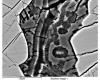
Why “Evidence of Extant Insect-Like Organisms on Mars” Does Not Establish Living Martian Insects

All articles by Wretch Fossil are here: http://www.wretch.cc/blog/lin440315&category_id=0
ChatGPT 5.4 wrote this article.
Abstract
The article Evidence of Extant Insect-Like Organisms on Mars Supplemental Material argues that rover images show extant insect-like organisms on Mars and further claims evidence for walking, running, gliding, flying, sheltering or nesting behavior, and immature forms. The central problem is that these conclusions are derived from visual interpretation of ambiguous surface images rather than from direct biological, chemical, temporal, or multi-instrument evidence. The publication record itself presents the work as poster/supplemental material on ResearchGate, not as a peer-reviewed astrobiology study that systematically excludes geological and imaging alternatives. Mars is also currently understood by NASA as a cold, dusty desert world with a very thin atmosphere, and NASA’s own modern biosignature claims have been framed with extreme caution and tied to possible ancient microbial life, not visible surface animals. Taken together, these points indicate that the article does not provide persuasive scientific evidence for extant insect-like organisms on Mars. (ResearchGate)
1. Introduction
The ResearchGate record states that the article presents evidence for extant insect-like forms on Mars and attributes to them the ability to “walk, run, glide, and fly,” along with sheltering or nesting behavior and immature stages. That is an extraordinary claim because it moves far beyond ambiguous morphology and into active zoological interpretation. Yet the underlying evidence, as represented in the article record and associated figure descriptions, is based primarily on annotated rover photographs and analogies to terrestrial insect anatomy. (ResearchGate)
A claim of this magnitude requires correspondingly strong evidence. NASA’s own public statements on a 2025 potential Mars biosignature emphasized that astrobiological claims require extraordinary evidence and that peer-reviewed publication is crucial for rigor and validity. Even in that case, NASA described the finding as a potential biosignature related to possible ancient life, not visible present-day macroscopic organisms. (NASA)
2. Core methodological flaw: anatomy is imposed on ambiguous imagery
A central weakness of the article is that it uses Earth insect anatomy as the interpretive template for Martian image fragments. One associated figure page explicitly states that a “large” insectoid can be interpreted on the basis of Earth insect anatomy. That means the analysis is template-first rather than evidence-first: the image is not independently shown to possess real anatomical units, and only then compared with insects; rather, insect anatomy is mapped onto the image at the outset. (ResearchGate)
This matters because ambiguous edges, shadows, cracks, superposed fragments, and contrast boundaries can often be subdivided into familiar shapes once the observer already expects to see head, thorax, abdomen, legs, or wings. In that setting, visual resemblance is not equivalent to biological identification. It is a subjective classification process that is highly vulnerable to confirmation bias.
3. Static images cannot demonstrate behavior
The article’s claims are not confined to “insect-like appearance.” They extend to behavior: flying, running, gliding, carrying, sheltering, nesting, and immaturity. But still images do not demonstrate any of those states. A static rover frame can show only a frozen arrangement of tones and shapes. It cannot by itself establish that one object moved from one position to another, that wing blur is truly wing motion rather than imaging artifact, or that a cavity is a nest rather than a hole. The article record explicitly frames the case in behavioral terms, but the evidentiary basis remains image interpretation rather than tracked temporal observation. (ResearchGate)
This is a crucial scientific failure. Behavior requires time-resolved evidence. Without repeat imaging of the same target under controlled conditions, behavioral language is narrative, not demonstration.
4. Geological and imaging alternatives are not adequately excluded
For a biological claim to be compelling, non-biological explanations must be shown to be less plausible. In rover imagery, ordinary alternatives include fractured rock fragments, erosional remnants, dust coatings, irregular shadowing, partial occlusion, sharpening halos, compression artifacts, and focus-related distortions. The ResearchGate material advances the insect interpretation but does not show a rigorous exclusion framework for these competing causes. (ResearchGate)
That omission is decisive. When ordinary geological or imaging explanations remain viable, a biological conclusion is not warranted. The article does not bridge that gap.
5. The publication format is weak relative to the claim
The item is presented on ResearchGate as supplemental or poster-style material associated with conference presentation rather than as a peer-reviewed astrobiology paper with reproducible methods, controls, blinded morphometrics, and instrument-level corroboration. The ResearchGate page itself reflects that status. (ResearchGate)
That does not automatically invalidate the work, but it does affect how much weight the claim can bear. Poster-level presentation may be suitable for proposing a provocative idea; it is not sufficient by itself to establish extant animal-like life on another planet.
6. Mars as currently understood is hostile to exposed surface animal-like life
NASA describes Mars as a dusty, cold, desert world with a very thin atmosphere, and also more broadly as dry, rocky, and bitter cold. Those are not rhetorical descriptions; they summarize the currently accepted physical character of the Martian surface environment. (NASA Science)
That context sharply raises the evidentiary bar. If one proposes visible, exposed, mobile insect-like organisms on the Martian surface, the supporting evidence must be overwhelming. Instead, the article relies mainly on visual analogy from photographs. The mismatch between claim strength and evidence quality is therefore extreme.
7. Contrast with NASA’s own biosignature standards
NASA’s 2025 biosignature announcement is useful as a benchmark. In that case, NASA still used highly cautious language, describing a potential biosignature, emphasizing peer review, and explicitly stating that astrobiological claims require extraordinary evidence. NASA’s discussion concerned possible ancient microbial life processes, not extant animals visible in ordinary surface images. (NASA)
This contrast is important. If the strongest current Mars-life claims from mainstream planetary science remain careful, instrument-based, peer-reviewed, and microbially framed, then a morphology-only claim for extant insect-like animals is far outside accepted evidentiary practice.
8. Why the figure logic fails
The figure logic, as described in the article record and associated figure pages, repeatedly follows the same pattern:
First, an ambiguous shape is labeled using insect anatomy.
Second, that assumed anatomy is used to infer motion or posture.
Third, the inferred posture is turned into a behavioral narrative such as flight, running, or carrying.
Fourth, the scene is expanded further into ecology or development, such as nesting or immature stages. (ResearchGate)
Each step depends on the one before it being correct, yet the first step itself is not independently validated. This creates a stack of inferences built on a subjective starting point. Scientifically, that is too fragile to support the conclusion of extant insects.
9. Conclusion
The article does not establish extant insect-like organisms on Mars. It shows that some Martian rover images can be interpreted in insect-like terms by an observer who begins with that template, but it does not provide direct biological evidence, verified motion, rigorous elimination of geological and imaging alternatives, or the level of peer-reviewed multi-line support required for such a claim. The most defensible conclusion is that the work represents subjective pattern recognition applied to ambiguous rover imagery rather than a valid detection of living Martian insects. (ResearchGate)
References
Romoser WS. Evidence of Extant Insect-Like Organisms on Mars Supplemental Material. ResearchGate record. (ResearchGate)
Romoser WS. Evidence of Extant Insect-like Organisms on Mars. ResearchGate record. (ResearchGate)
ResearchGate figure page: “Large insectoid can be interpreted on the basis of Earth insect anatomy.” (ResearchGate)
NASA Science. Mars Facts. (NASA Science)
NASA Science. Mars Overview. (NASA Science)
NASA. NASA Says Mars Rover Discovered Potential Biosignature Last Year. September 10, 2025. (NASA)
NASA Science. The Mars Report: September 2025 — Special Edition. (NASA Science)
Wretch Fossil’s website:http://wretchfossil.blogspot.com/
Source: https://wretchfossil.blogspot.com/2026/03/why-evidence-of-extant-insect-like.html
Anyone can join.
Anyone can contribute.
Anyone can become informed about their world.
"United We Stand" Click Here To Create Your Personal Citizen Journalist Account Today, Be Sure To Invite Your Friends.
Before It’s News® is a community of individuals who report on what’s going on around them, from all around the world. Anyone can join. Anyone can contribute. Anyone can become informed about their world. "United We Stand" Click Here To Create Your Personal Citizen Journalist Account Today, Be Sure To Invite Your Friends.
LION'S MANE PRODUCT
Try Our Lion’s Mane WHOLE MIND Nootropic Blend 60 Capsules
Mushrooms are having a moment. One fabulous fungus in particular, lion’s mane, may help improve memory, depression and anxiety symptoms. They are also an excellent source of nutrients that show promise as a therapy for dementia, and other neurodegenerative diseases. If you’re living with anxiety or depression, you may be curious about all the therapy options out there — including the natural ones.Our Lion’s Mane WHOLE MIND Nootropic Blend has been formulated to utilize the potency of Lion’s mane but also include the benefits of four other Highly Beneficial Mushrooms. Synergistically, they work together to Build your health through improving cognitive function and immunity regardless of your age. Our Nootropic not only improves your Cognitive Function and Activates your Immune System, but it benefits growth of Essential Gut Flora, further enhancing your Vitality.

Our Formula includes: Lion’s Mane Mushrooms which Increase Brain Power through nerve growth, lessen anxiety, reduce depression, and improve concentration. Its an excellent adaptogen, promotes sleep and improves immunity. Shiitake Mushrooms which Fight cancer cells and infectious disease, boost the immune system, promotes brain function, and serves as a source of B vitamins. Maitake Mushrooms which regulate blood sugar levels of diabetics, reduce hypertension and boosts the immune system. Reishi Mushrooms which Fight inflammation, liver disease, fatigue, tumor growth and cancer. They Improve skin disorders and soothes digestive problems, stomach ulcers and leaky gut syndrome. Chaga Mushrooms which have anti-aging effects, boost immune function, improve stamina and athletic performance, even act as a natural aphrodisiac, fighting diabetes and improving liver function. Try Our Lion’s Mane WHOLE MIND Nootropic Blend 60 Capsules Today. Be 100% Satisfied or Receive a Full Money Back Guarantee. Order Yours Today by Following This Link.


| Visits: | 1,788,406,363 |
| Stories: | 8,605,608 |
Whistler Blowers, Insiders

