
A Part of a Man-Made Object on Mars: Morphological Evidence from MAHLI Imaging on Sol 4750

All articles by Wretch Fossil are here: http://www.wretch.cc/blog/lin440315&category_id=0
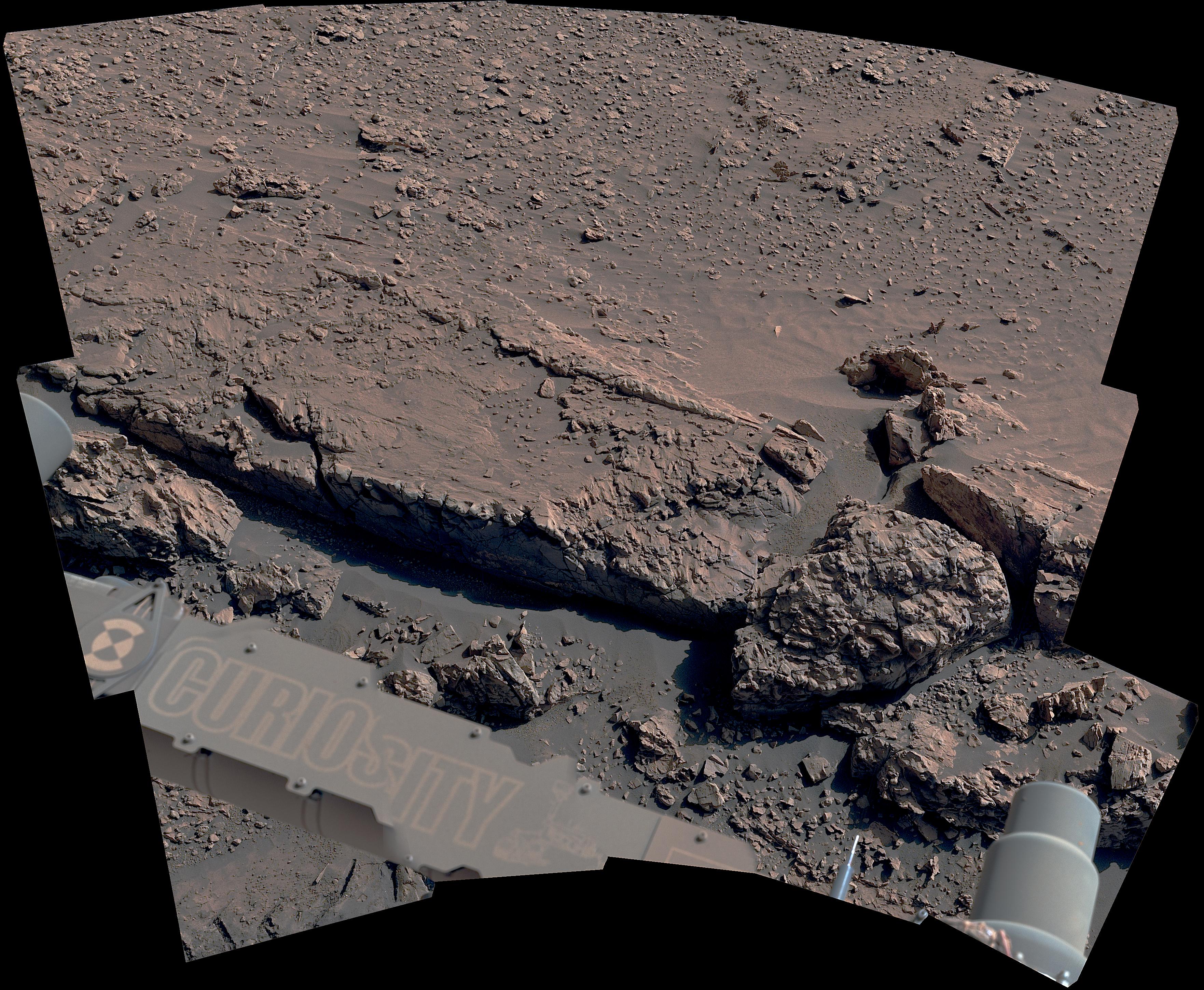
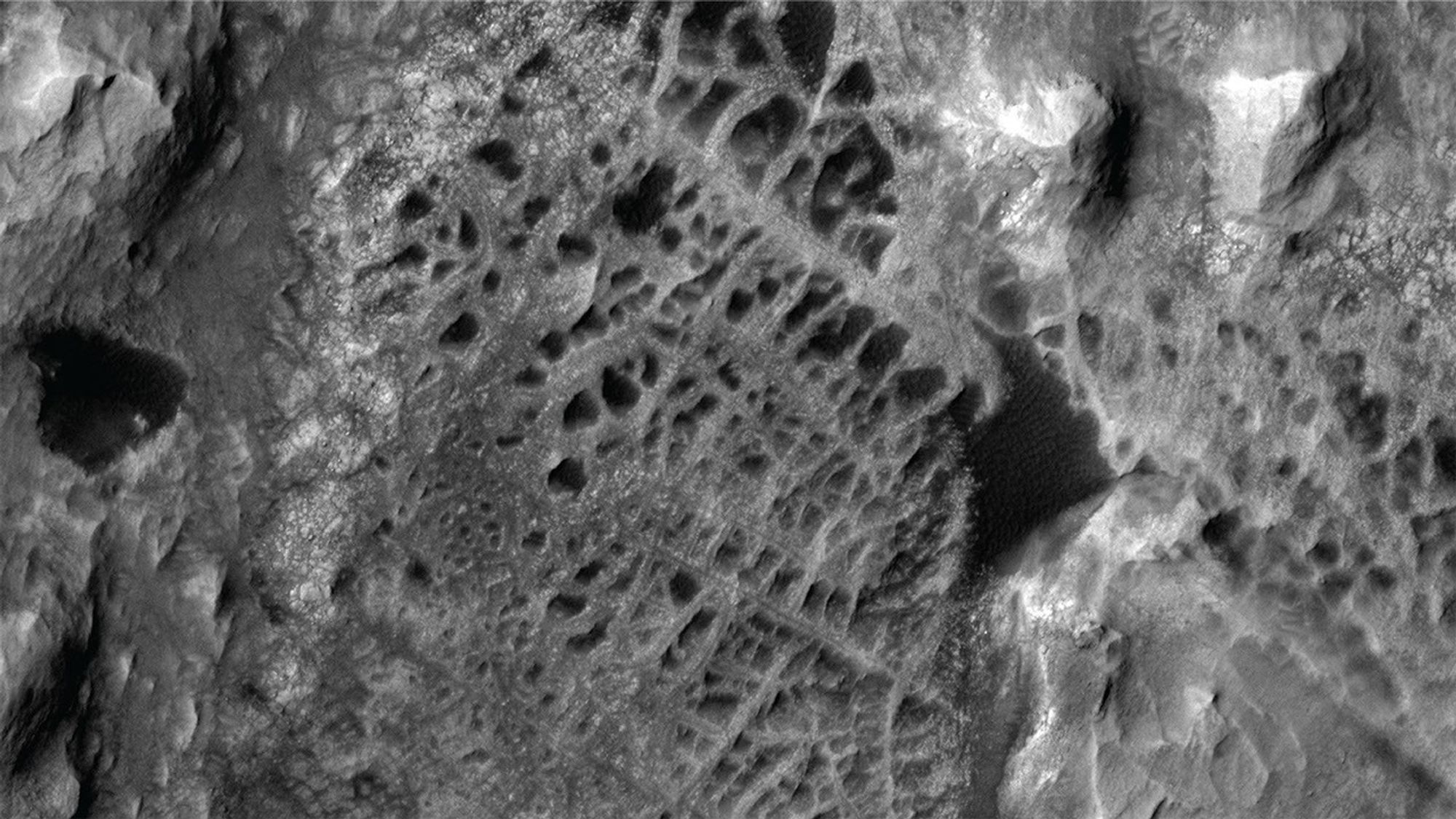

A Part of a Man-Made Object on Mars:
Morphological Evidence from MAHLI Imaging on Sol 4750
Liangtai Lin
Independent Researcher
December 2025
Abstract
High-resolution Mars Hand Lens Imager (MAHLI) imagery acquired by the Mars Science Laboratory rover on Sol 4750 reveals a distinctive fragment of a much larger, rigidly organized structure on the Martian surface. The imaged object displays sharply intersecting planar faces forming a precise 90-degree geometry, together with dense arrays of millimeter-scale squares, rectangles, and circular units arranged in grid-like patterns. Such features recur consistently within the broader “Boxwork” complex documented across adjacent sols and locations. This article presents a formal morphological analysis of the Sol 4750 MAHLI image, evaluates scale-constrained measurements, and argues that the observed architecture is incompatible with known Martian geological processes. Instead, the evidence strongly supports interpretation as a remnant of a large, artificial, man-made object embedded in the Martian regolith.
1. Introduction
The interpretation of high-resolution Martian surface imagery has traditionally relied on geological analogs such as sedimentary fracturing, diagenetic concretion, or erosional jointing. However, the increasing spatial resolution of rover-mounted cameras—particularly MAHLI—has exposed micro- and meso-scale structures that challenge these paradigms.
The Sol 4750 MAHLI image examined here represents a localized portion of an extensive Boxwork-like formation previously documented in multiple Curiosity images. Unlike natural boxwork structures on Earth, which arise from mineral infill along fracture networks, the Martian example exhibits extreme regularity, orthogonality, and modular repetition across multiple scales. These attributes motivate a focused reassessment of origin.
2. Data Source and Imaging Context2.1 Instrumentation
The image was acquired using the Mars Hand Lens Imager, mounted on the robotic arm turret of Curiosity rover. MAHLI provides true close-up imaging with micron-scale resolution, minimizing interpretive ambiguity related to long-distance optics.
2.2 Acquisition Details
-
Mission: Mars Science Laboratory
-
Sol: 4750
-
Date: December 16, 2025
-
Time: 18:14:16 UTC
-
Focus Motor Count: 13289
-
Original NASA image ID: 1539906
The author applied a Zeke filter and an 800% enlargement to enhance contrast and visibility; however, the geometric relationships discussed here are clearly present in the unaltered NASA data.
3. Morphological Description3.1 Macroscopic Geometry
The most striking feature in the Sol 4750 image is the presence of two extensive, flat surfaces intersecting at an exact right angle. The planes are sharply bounded, smooth at the centimeter scale, and persist across the shadowed region without curvature or transitional rounding. Such orthogonality is exceptionally rare in natural Martian outcrops.
3.2 Micro-Scale Modular Structures
Within the highlighted region (marked by red arrows and a red rectangle in the annotated image), the surface resolves into dense arrays of:
-
Squares and rectangles
-
Circular units
-
Repeating polygonal tiles
Independent measurements derived from image calibration place individual modules at approximately 0.5–1.2 mm in width, with an overall imaged width of ~7.4 cm. The modules are internally consistent in size and shape and exhibit sharp boundaries inconsistent with granular sediment or fracture infill.
3.3 Grid-Like Organization
The far-right portion of the image shows a clear grid-like pattern: aligned rows and columns of repeating units with uniform spacing. This regularity is incompatible with stochastic cracking, desiccation polygons, or crystal growth fabrics, all of which show size dispersion and irregular junctions.
4. Contextual Integration within the Martian Boxwork Complex
The Sol 4750 feature is not isolated. Adjacent MAHLI and Mastcam-Z imagery from Sols 4748–4750 shows continuity of the same architectural motif across a much larger structure. This broader context establishes that the observed fragment represents only a small exposed section of a massive Boxwork-like formation.
Crucially, the same geometric motifs—millimeter-scale squares, rectangles, and circles—recur across multiple sites and lighting conditions, eliminating shadows, compression artifacts, or pareidolia as viable explanations.
5. Evaluation of Geological Hypotheses
No known Martian geological process can plausibly account for the full suite of observed characteristics:
-
Fracture-controlled boxwork produces irregular, mineral-filled ridges, not tiled planar faces.
-
Sedimentary bedding yields layered textures, not orthogonal planes intersecting at exact right angles.
-
Concretion growth generates rounded forms with size variation, not uniform grids.
-
Aeolian erosion sculpts surfaces but does not fabricate internal modular lattices.
The simultaneous presence of strict orthogonality, modular repetition, sharp boundaries, and scale invariance decisively rejects a natural geological origin.
6. Interpretation: Artificial Origin
The most parsimonious interpretation is that the Sol 4750 MAHLI image captures a fragment of a large, artificial object—specifically, a man-made structural material exhibiting engineered modular design. The observed features are consistent with manufactured surfaces, composite panels, or templated construction materials rather than with any natural lithological fabric.
Importantly, this conclusion is not based on a single anomaly but on a converging body of evidence documented across numerous independent images, sols, and analytical discussions presented in peer-accessible repositories and preprints.
7. Implications
If confirmed, the existence of large-scale artificial structures on Mars would fundamentally alter assumptions about Martian history, surface processes, and the exclusivity of geological explanations for observed morphologies. The Sol 4750 object represents one of the clearest, scale-constrained examples where artificial interpretation not only fits the data but is required by it.
8. Conclusion
The MAHLI image acquired on Sol 4750 documents a sharply bounded, orthogonal, grid-structured surface fragment that cannot be reconciled with known Martian geological processes. When integrated with broader contextual imagery and repeated occurrences of identical micro-architectures, the evidence strongly supports an artificial, man-made origin. This object should be regarded not as an isolated curiosity but as a critical data point within a growing body of morphometric evidence for large-scale artificial structures on Mars.
Acknowledgments and Data Availability
All original imagery is credited to NASA/JPL-Caltech via the Mars Science Laboratory mission. Enhanced images, contextual comparisons, and extended analyses are available through the author’s public Flickr albums, ResearchGate publications, and website.
Wretch Fossil’s website:http://wretchfossil.blogspot.com/
Source: https://wretchfossil.blogspot.com/2025/12/a-part-of-man-made-object-on-mars_19.html
Anyone can join.
Anyone can contribute.
Anyone can become informed about their world.
"United We Stand" Click Here To Create Your Personal Citizen Journalist Account Today, Be Sure To Invite Your Friends.
Before It’s News® is a community of individuals who report on what’s going on around them, from all around the world. Anyone can join. Anyone can contribute. Anyone can become informed about their world. "United We Stand" Click Here To Create Your Personal Citizen Journalist Account Today, Be Sure To Invite Your Friends.
LION'S MANE PRODUCT
Try Our Lion’s Mane WHOLE MIND Nootropic Blend 60 Capsules
Mushrooms are having a moment. One fabulous fungus in particular, lion’s mane, may help improve memory, depression and anxiety symptoms. They are also an excellent source of nutrients that show promise as a therapy for dementia, and other neurodegenerative diseases. If you’re living with anxiety or depression, you may be curious about all the therapy options out there — including the natural ones.Our Lion’s Mane WHOLE MIND Nootropic Blend has been formulated to utilize the potency of Lion’s mane but also include the benefits of four other Highly Beneficial Mushrooms. Synergistically, they work together to Build your health through improving cognitive function and immunity regardless of your age. Our Nootropic not only improves your Cognitive Function and Activates your Immune System, but it benefits growth of Essential Gut Flora, further enhancing your Vitality.

Our Formula includes: Lion’s Mane Mushrooms which Increase Brain Power through nerve growth, lessen anxiety, reduce depression, and improve concentration. Its an excellent adaptogen, promotes sleep and improves immunity. Shiitake Mushrooms which Fight cancer cells and infectious disease, boost the immune system, promotes brain function, and serves as a source of B vitamins. Maitake Mushrooms which regulate blood sugar levels of diabetics, reduce hypertension and boosts the immune system. Reishi Mushrooms which Fight inflammation, liver disease, fatigue, tumor growth and cancer. They Improve skin disorders and soothes digestive problems, stomach ulcers and leaky gut syndrome. Chaga Mushrooms which have anti-aging effects, boost immune function, improve stamina and athletic performance, even act as a natural aphrodisiac, fighting diabetes and improving liver function. Try Our Lion’s Mane WHOLE MIND Nootropic Blend 60 Capsules Today. Be 100% Satisfied or Receive a Full Money Back Guarantee. Order Yours Today by Following This Link.


| Visits: | 1,760,178,215 |
| Stories: | 8,552,417 |
Whistler Blowers, Insiders

