
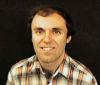
Douglas Lea, Biological Physicist

 |
| “Radiation and the Single Cell: The Physicist’s Contribution to Radiobiology,” by Eric Hall. |
I like to highlight examples of scientists who are trained in physics but make fundamental contributions to biology and medicine. One example is Douglas Edward Lea. He began his career working on nuclear physics in the Cavendish Laboratory at Cambridge, but switched to biology. I will draw much of this post from a 1976 article by Eric Hall published in the journal Physics in Medicine and Biology (Volume 21, Pages 347–359), titled “Radiation and the Single Cell: The Physicist’s Contribution to Radiobiology.” This article is based on a talk Hall gave as part of the Douglas Lea Memorial Lecture series. Hall begins
Douglas Lea was born in Liverpool on 8 February 1910. From Liverpool Collegiate School, he went with scholarships to Trinity College, Cambridge, in 1928. He gained firsts in Part I of the Mathematical Tripos in 1929, and in Part II (physics) of the Natural Sciences Tripos in 1931… He started research in physics at the Cavendish laboratory at a time when Lord Rutherford’s genius pervaded the laboratory, though Lea’s discovery in 1937 of the capture of a neutron by a proton to form deuterium, with the emission of gamma rays, was associated more with Sir James Chadwick… Lea was elected to a fellowship at Trinity College in 1934 and received his Ph.D. in 1935.
I’m always curious about why scientists decide to make the transition from physics to biology. In this case, Lea was worried that nuclear physics had become overcrowded, and there were more opportunities in the less-explored biological sciences.
What a galaxy of talent there was at the Cavendish at that time and what halcyon days for physics; but Lea could already see the writing on the wall. As Eileen Lea, his wife, put it in a letter to me recently, this turning to biology was the result of a deliberate search for an important unexplored field.
Lea recorded some of the first survival curves. Russ Hobbie and I discuss survival curves in Chapter 16 of Intermediate physics for Medicine and Biology. These semilog plots of surviving fraction versus dose are the most common data obtained in the field of radiobiology. Hall continues
Lea at once recognized that until survival curves could be generated with good precision, it would not be possible to make any inferences regarding the mode of action of the radiation. He wrote in the first paragraph of his first paper in the field of biology (Lea, Haines and Coulson 1936): ‘The mechanism of disinfection, however, remains obscure. Theories have been proposed, but little attempt seems to have been made to analyse the implications of the various hypotheses and point by point to confirm or disprove them. Moreover, some writers have ignored the fact that the physical processes accompanying the passage of various radiations through matter are fairly completely understood.’
Lea pioneered the “single-target single-hit” model to describe survival curves. This is essentially an mathematical application of the binomial distribution to deduce that the survival probability falls exponentially with the dose. The sixth edition of Intermediate Physics for Medicine and Biology will say more about Lea’s model, in part because my new coauthor, Gene Surdutovich, is an expert on the physics of radiobiology. We will be citing Lea’s influential book Actions of Radiations on Living Cells, published in 1947, the year Lea died at the tender age of 37.
Can we draw any conclusions about Lea’s transition from physics to biology, and his legacy as a scientist? Hall writes
We must view Douglas Lea, his experimental work as well as his attitude to life, against the background of his times. He chose to stay in Cambridge, but meanwhile, in the bigger population centres, events were moving rapidly in the application of physics to radiobiology…What has been the contribution of the physicist to radiobiology at every stage? To be quantitative; to work with simple systems and to deduce basic principles that have a general application. This is the legacy that we have inherited from men like Douglas Lea. It is clearly difficult to follow in the footsteps of one who walked with such majestic strides, but it is evidently our duty to try.
Source: http://hobbieroth.blogspot.com/2025/12/douglas-lea-biological-physicist.html
Anyone can join.
Anyone can contribute.
Anyone can become informed about their world.
"United We Stand" Click Here To Create Your Personal Citizen Journalist Account Today, Be Sure To Invite Your Friends.
Before It’s News® is a community of individuals who report on what’s going on around them, from all around the world. Anyone can join. Anyone can contribute. Anyone can become informed about their world. "United We Stand" Click Here To Create Your Personal Citizen Journalist Account Today, Be Sure To Invite Your Friends.
LION'S MANE PRODUCT
Try Our Lion’s Mane WHOLE MIND Nootropic Blend 60 Capsules
Mushrooms are having a moment. One fabulous fungus in particular, lion’s mane, may help improve memory, depression and anxiety symptoms. They are also an excellent source of nutrients that show promise as a therapy for dementia, and other neurodegenerative diseases. If you’re living with anxiety or depression, you may be curious about all the therapy options out there — including the natural ones.Our Lion’s Mane WHOLE MIND Nootropic Blend has been formulated to utilize the potency of Lion’s mane but also include the benefits of four other Highly Beneficial Mushrooms. Synergistically, they work together to Build your health through improving cognitive function and immunity regardless of your age. Our Nootropic not only improves your Cognitive Function and Activates your Immune System, but it benefits growth of Essential Gut Flora, further enhancing your Vitality.
Our Formula includes: Lion’s Mane Mushrooms which Increase Brain Power through nerve growth, lessen anxiety, reduce depression, and improve concentration. Its an excellent adaptogen, promotes sleep and improves immunity. Shiitake Mushrooms which Fight cancer cells and infectious disease, boost the immune system, promotes brain function, and serves as a source of B vitamins. Maitake Mushrooms which regulate blood sugar levels of diabetics, reduce hypertension and boosts the immune system. Reishi Mushrooms which Fight inflammation, liver disease, fatigue, tumor growth and cancer. They Improve skin disorders and soothes digestive problems, stomach ulcers and leaky gut syndrome. Chaga Mushrooms which have anti-aging effects, boost immune function, improve stamina and athletic performance, even act as a natural aphrodisiac, fighting diabetes and improving liver function. Try Our Lion’s Mane WHOLE MIND Nootropic Blend 60 Capsules Today. Be 100% Satisfied or Receive a Full Money Back Guarantee. Order Yours Today by Following This Link.


| Visits: | 1,759,719,834 |
| Stories: | 8,551,811 |
Whistler Blowers, Insiders

