

A New Approach to Interacting with Youth: Turning Brain Science Into Real-World Practice

New training model helps professionals better understand youth behavior and respond more effectively across sectors
ARLINGTON, Texas—
For years, police officers, pastors, healthcare workers, and other professionals have responded to young people in crisis, playing a critical role in what happens next.
What’s been missing is a clear, practical understanding of what’s driving the youth’s behavior in those moments, and how to respond in a way that actually helps.

“We were often responding after the fact,” said Cynthia Erich, a former senior policy advisor at the U.S. Department of Justice and now a leader with The Bowman Group, a police consulting firm. “We had strong tools to respond to violence once it happened, but what we weren’t doing enough of was talking about the impact of violence and trauma on our youth, or how to prevent it. The bigger question was: How do we engage with youth differently in the first place?”
That question led to the development of Youth Engagement Strategies (YES), a training model designed to help professionals better understand and respond to youth across a range of environments. The program supports professionals who work directly with youth, whether in law enforcement, schools, faith-based organizations, healthcare, or community settings
At its core, the approach is simple.
“It’s neuroscience for the layman,” Ms. Erich said. “It takes what we know about adolescent brain development and trauma and breaks it down into something people can actually understand and then we turn it into really simple, practical but effective techniques that anyone can use, even parents.”
The model is built on decades of experience from law enforcement, federal policy, research, and community-based work. It starts with youth brain development, how they actually think and respond, and then turns that into practical ways to engage with them.
“This isn’t theoretical,” Erich said. “It’s designed to be used in everyday, real-world situations.”

Dr. Jaya Davis, a criminologist and Director of Research and Thought Leadership for The Bowman Group who originated the program, said adults often expect young people to think and make
decisions like adults. “But they literally can’t,” she said. “Kids’ brains are different, they’re still developing until their mid-20s. Their ability to plan, to process consequences, and to regulate emotion isn’t fully there yet. And when we don’t account for that, we’re often unknowingly responding in ways that don’t match what’s actually happening from the child’s perspective.”
YES doesn’t just explain how youth are not miniature adults, it gives answers about what that actually means in practice.
“It just takes one stupid decision to ruin a life,” Dr. Davis said. “And kids don’t process those decisions like adults. So when we react like they can, that becomes a failure of the adult in the situation, not necessarily a failure of the child. Of course, accountability is important, and that’s part of the learning process, but where there are other factors going on, having the knowledge of a different approach can make a world of difference, and not just for the kid.”
Ms. Erich defines the “other things going on” as the things that define a child, and not to label them, but to more fully understand them.
“Too often, we start talking to a child and then ‘silo’ them into one category—offender, victim, witness. But that’s not how real life works,” she said. “That same child may be a victim, a witness, and acting out—all at the same time. If we only see one piece of that, we’re going to miss what they actually need and what can really help the situation not escalate.”
Youth Engagement Strategies is a comprehensive approach, not just a training. “We start before we ever step into the room, looking at your policies, your strengths, and the reality of your community, the youth issues you’re dealing with and types of challenges you’re facing there. The training is built around that, and it doesn’t stop there,” Ms. Erich said, adding that the program includes follow-up evaluations and continued support to make sure people can and do actually use it.
“It’s a holistic approach,” Erich said. “We’re not just coming in, delivering a training, and leaving. We’re looking at what’s already in place, what’s working, where the gaps are, and how all of that connects to the youth you’re serving.”
YES training is fully customizable to various professions and includes real-world scenarios that they face in their jobs.
The mindset shift for attendees can be immediate.
During a recent training, one rookie police officer described the material as a turning point in how he would approach young people moving forward.
“He had a real ‘Aha’ moment when he understood the why and realized he can approach youth in a little bit calmer way in the future,” Ms. Erich said. “I worked with victims for 20 years, and I’ve seen what happens when we miss those connection moments early on.
What struck me about that officer was this—he’s getting this at the very beginning of his career. That’s years of decisions, years of encounters ahead of him, and the number of youth he will positively impact over time really touches my heart. When you shift that understanding early, it doesn’t just change one interaction—it changes everything that follows.”
Another officer, a veteran investigator with more than three decades of experience, sat quietly through the training, not terribly responsive, said Ms. Erich. But he offered a different kind of reflection.
“At the end of the day, he said, ‘There are a couple of families I need to check on,’ ” Ms. Erich recalled. “It was the simplest of statements, but it changed everything. Knowing what he has witnessed, I envision him going back to them and possibly changing the course, the trajectory of those kids’ lives. That’s what this work does—it gives people a new lens, and sometimes that leads to very real changes in how they show up for the communities they serve.”
The need for that kind of understanding extends beyond law enforcement.
Ken Harrell, a former pastor with more than 20 years of experience working with youth, helped create the faith-based portion of the YES program. He recalls a boy that his Sunday school teachers really struggled with.
“They were sending him from teacher to teacher because he kept having these outbursts and no one really knew why,” Mr. Harrell said. “He was hard to manage, hard to settle down. I ended up taking him on and later realized this kid was dealing with things at home, family issues, being treated differently, carrying stuff no child should be carrying.”
And there was an interesting twist, Mr. Harrell added. “At the same time, this boy was extremely smart, way ahead academically, but none of that was being seen because of how he was acting out.”
Mr. Harrell took the boy under his wing. “I wish I had Youth Engagement Strategies,” he said. “I had my own strategies, but not these. We were responding to what we saw, but we didn’t have the knowledge or tools to understand what was underneath it. And that changes how you respond. It changes everything.”
With the attention and guidance Mr. Harrell and his church team provided, the boy is now a U.S. Marine who flies drones for a living.
“So when I look back on that,” Harrell said. “I think about how many other children are going through these same traumatized moments, and yet no one takes the time out for them. Because Sunday School teachers are focused on teaching Bible lessons, and how many really have the knowledge of how to deal with youth, are prepared to deal with those types of situations like we had with that young man?”
This is nothing against churches, Mr. Harrell said. “These days, many parents are just dropping their kids off at church, and we certainly welcome them, but it puts an even bigger responsibility on church leaders to be aware of and catch this sort of thing if we are truly going to do the work our ministries call us to do.”
“The difference is whether we recognize what we’re seeing and are able to act on it,” he said, “or just dismiss it as misbehavior and miss a huge opportunity to make a difference in the life of a child.”
Police Chief James Hawthorne, former Chief of the Cedar Hill Independent School District Police Department in Texas, pointed out that schools deal with the exact same issue.
“In schools, staff are already managing so much—academics, safety, behavior, and everything’s happening at once,” he said. “In those moments, they’re making decisions about youth without always having the full picture of what’s driving their behavior.”
YES is the bridge that gets them there, Chief Hawthorne said.
“It gives you the ability not only to understand, but to transform lives,” he said. “You transform your own perspective, and it not only helps you in your job, but it opens your eyes to issues and people in your own family. And that’s impactful, it’s huge, because now you’re interacting with people in your own life differently and it just reinforces the training.”
The full YES program is delivered through customized, in-person training and technical assistance. To make the model more accessible, The Bowman Group is now introducing a live, virtual training as an entry point.
“We can do the full one- or two-day, in-person work, and that’s where we go deep, with the pre-work, alignment with policies, real-world scenarios, and identifing your community partners,” Ms. Erich said. “But we also know not everyone can start there. This gives people a way in.”
The first two-hour online session, scheduled for May 9, will focus on youth engagement in faith-based settings.
“No one is doing this work alone,” Ms. Erich said. “And they shouldn’t be. This is about helping people understand who their partners are, what resources are around them, and how to actually work together to support the youth in their communities.”
Mr. Harrell said his experience in working with the now-Marine proves to him that the tactics YES teaches will actually work.
‘I’ve been through a lot of training over the years, but I’ve never seen anything like this,” he said. “I just kept thinking—I wish I had this earlier. Not just in ministry, but in life.”
Ms. Erich agrees. “For over 20 years, I created and managed programs to help law enforcement and their system stakeholders, including victim services and school-based offers, better respond to children exposed to violence. And I can say this sincerely: I have never, and I mean never, seen a training and technical assistance team that brings together what we have here.”
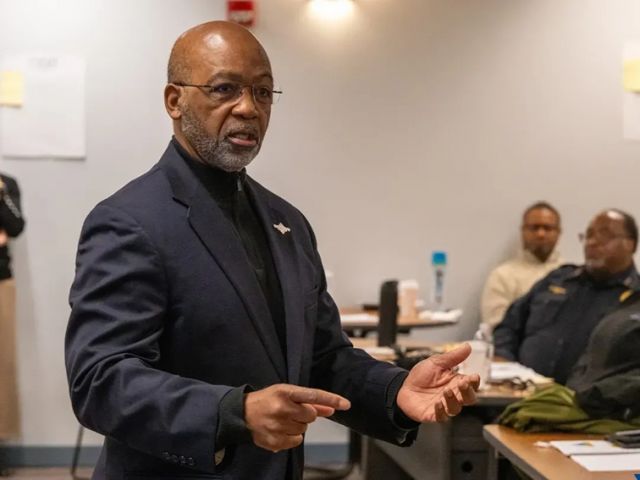
Theron L. Bowman, PhD, founder and CEO of The Bowman Group and former police Chief and deputy city manager in Arlington, Texas, said leaders today are being asked to make decisions in some of the most complex situations our society has ever seen.
“And those decisions have to hold up, not just in the moment, but afterward,” Chief Bowman said. “That requires a level of understanding and consistency that eludes many organizations, and that they are still working toward. We’re excited to help them make that leap to get them there.”
For more information about Youth Engagement Strategies or to register for the May 9 virtual training, visit their website.
About The Bowman Group:
The Bowman Group is a consulting firm that works with public safety leaders and organizations across the country and internationally to strengthen operations, reduce risk, and build trust within the communities they serve.
Led by Chief (Ret.) Theron L. Bowman, Ph.D., the team brings together decades of experience in law enforcement leadership, research, victim services, and community engagement. Their work focuses on helping organizations find solutions and move from policy to practice through training, technical assistance, and real-world strategies that hold up under pressure and scrutiny.
Through programs like Youth Engagement Strategies (YES), The Bowman Group partners with agencies and community-based organizations to improve how professionals engage with youth, respond to complex situations, and support safer, more effective outcomes.
Media Contact
Christy Gilfour, Associate Director, Marketing & Public Information
3901 Arlington Highlands Boulevard, Suite 200
Arlington, Texas 76018
Cell: (817) 996-7477
Business: (817) 502-9197
Email: christy.gilfour@tbowmangroup.com
Anyone can join.
Anyone can contribute.
Anyone can become informed about their world.
"United We Stand" Click Here To Create Your Personal Citizen Journalist Account Today, Be Sure To Invite Your Friends.
Before It’s News® is a community of individuals who report on what’s going on around them, from all around the world. Anyone can join. Anyone can contribute. Anyone can become informed about their world. "United We Stand" Click Here To Create Your Personal Citizen Journalist Account Today, Be Sure To Invite Your Friends.
LION'S MANE PRODUCT
Try Our Lion’s Mane WHOLE MIND Nootropic Blend 60 Capsules
Mushrooms are having a moment. One fabulous fungus in particular, lion’s mane, may help improve memory, depression and anxiety symptoms. They are also an excellent source of nutrients that show promise as a therapy for dementia, and other neurodegenerative diseases. If you’re living with anxiety or depression, you may be curious about all the therapy options out there — including the natural ones.Our Lion’s Mane WHOLE MIND Nootropic Blend has been formulated to utilize the potency of Lion’s mane but also include the benefits of four other Highly Beneficial Mushrooms. Synergistically, they work together to Build your health through improving cognitive function and immunity regardless of your age. Our Nootropic not only improves your Cognitive Function and Activates your Immune System, but it benefits growth of Essential Gut Flora, further enhancing your Vitality.

Our Formula includes: Lion’s Mane Mushrooms which Increase Brain Power through nerve growth, lessen anxiety, reduce depression, and improve concentration. Its an excellent adaptogen, promotes sleep and improves immunity. Shiitake Mushrooms which Fight cancer cells and infectious disease, boost the immune system, promotes brain function, and serves as a source of B vitamins. Maitake Mushrooms which regulate blood sugar levels of diabetics, reduce hypertension and boosts the immune system. Reishi Mushrooms which Fight inflammation, liver disease, fatigue, tumor growth and cancer. They Improve skin disorders and soothes digestive problems, stomach ulcers and leaky gut syndrome. Chaga Mushrooms which have anti-aging effects, boost immune function, improve stamina and athletic performance, even act as a natural aphrodisiac, fighting diabetes and improving liver function. Try Our Lion’s Mane WHOLE MIND Nootropic Blend 60 Capsules Today. Be 100% Satisfied or Receive a Full Money Back Guarantee. Order Yours Today by Following This Link.


| Visits: | 1,834,347,064 |
| Stories: | 8,717,767 |
Whistler Blowers, Insiders

