

Turn Client Relationships Into Revenue Growth

Turn Client Relationships Into Revenue Growth written by John Jantsch read more at Duct Tape Marketing
Catch the full episode:
 Overview
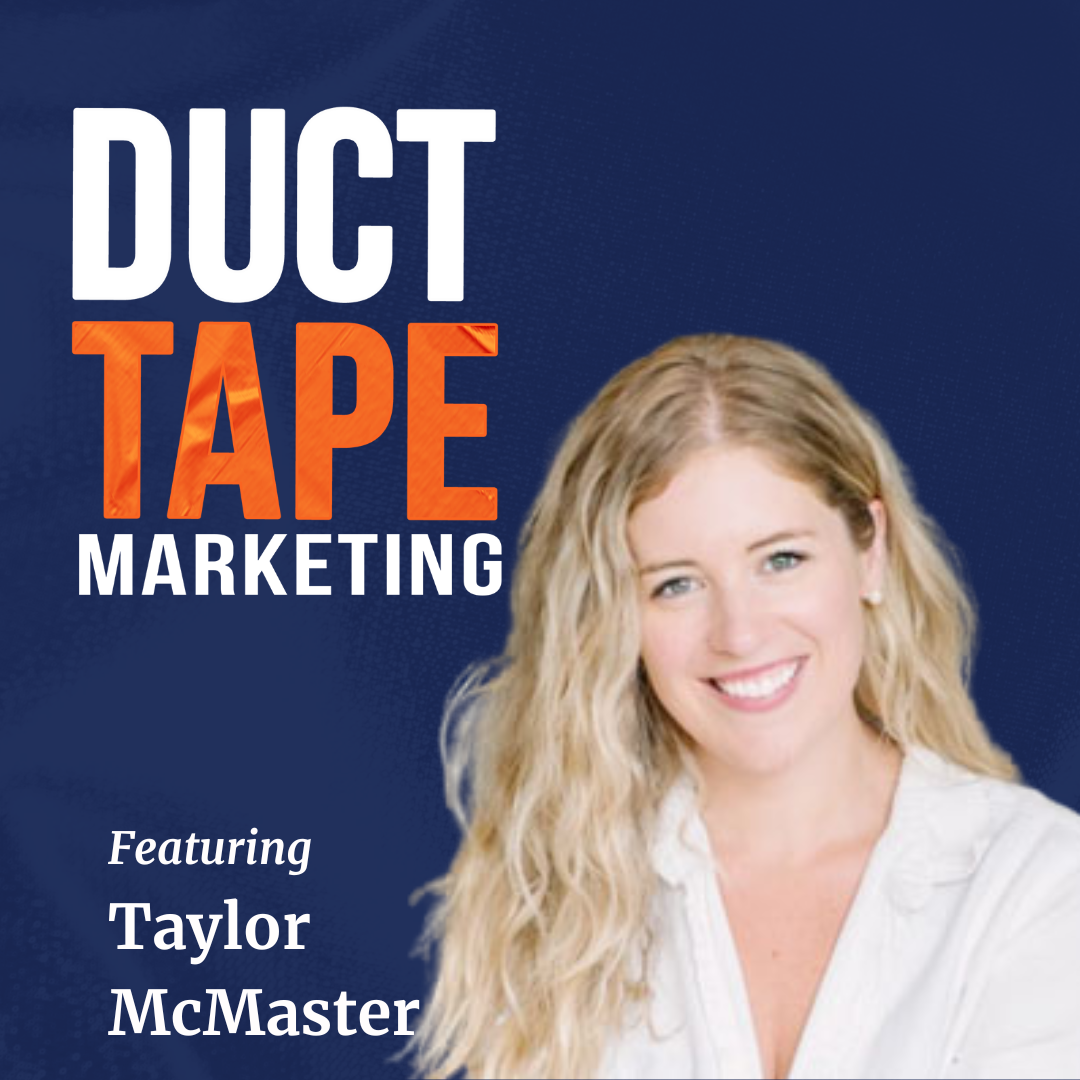
In this episode of the Duct Tape Marketing Podcast, John Jantsch sits down with Taylor McMaster, founder of Dot & Company, to unpack a commonly overlooked growth constraint in agencies: client account management. While most agencies obsess over lead generation and fulfillment, Taylor makes the case that long-term growth is driven by what happens after the sale.
The conversation explores how proactive communication, structured onboarding, and a culture of ownership can dramatically improve retention, increase client lifetime value, and unlock scalable growth. Taylor also shares insights on fractional account management, building acquisition-ready businesses, and how agencies can stay relevant in an AI-driven landscape.
Guest Bio
Taylor McMaster is the founder of Dot & Company, a specialized firm focused on helping digital marketing agencies improve client retention through better account management. Her company provides fractional account managers and builds systems for onboarding, communication, and client experience. Taylor also hosts the Happy Clients Podcast and has built Dot & Company into an acquisition-ready business, offering a unique perspective on specialization and scalable agency models.
Key Takeaways 1. Retention Is the Real Growth Lever
Most agencies focus heavily on acquiring clients but neglect the systems required to keep them. Strong account management directly impacts profitability and long-term growth.
2. Account Managers Are Growth Drivers, Not Just Support
The role goes beyond project coordination. Great account managers identify upsell opportunities, align services with evolving client goals, and actively contribute to revenue growth.
3. Proactive Communication Builds Trust
Silence creates doubt. Consistent, proactive communication ensures clients feel progress is being made and reinforces trust throughout the engagement.
4. Onboarding Sets the Tone for the Entire Relationship
A structured onboarding process is a key differentiator. How a client starts with you often determines retention, satisfaction, and perceived value.
5. Sales and Account Management Must Be Aligned
Misaligned expectations during the sales process create downstream issues. Involving account managers early ensures continuity and better client outcomes.
6. Delegation Requires Systems and Trust
Agency owners struggle to let go because processes live in their heads. Documented systems and gradual trust-building are essential for scaling beyond the founder.
7. Fractional Doesn’t Mean Disconnected
Fractional account managers can feel like full-time team members when integrated properly into culture, communication, and workflows.
8. Specialization Creates Competitive Advantage
Dot & Company’s success stems from focusing narrowly on account management, allowing them to build deep expertise and stand out in a crowded market.
9. Human Experience Is the Differentiator in the AI Era
As AI tools become more prevalent, clients will increasingly value human connection, strategic thinking, and consultative relationships.
10. Build a Business That Can Run Without You
A key factor in Dot & Company’s acquisition was Taylor removing herself from day-to-day operations, reducing risk and increasing business value.
Great Moments
00:01 – The Hidden Growth Constraint
John introduces the idea that account management—not lead generation—may be the real bottleneck in agency growth.
01:14 – The “Butt in the Seat” Mistake
Taylor explains why hiring an account manager without a strategy often fails.
02:44 – Account Managers as Revenue Drivers
Discussion on how account managers should actively identify upsell opportunities.
05:04 – The Power of Overcommunication
Taylor shares her philosophy on proactive communication and its impact on client perception.
07:18 – Why Onboarding Matters More Than You Think
John explains how structured onboarding drives long-term retention.
08:02 – Bringing Account Managers Into Sales
Avoiding the “handoff” problem by integrating delivery teams early.
10:27 – Letting Go as a Founder
How to build trust and transition client relationships away from the owner.
14:42 – AI vs Human Experience
Taylor explains why human connection will matter more—not less—in an AI-driven world.
16:22 – The Power of Specialization
Why Taylor chose a narrow focus and how it fueled growth.
21:06 – Building an Acquisition-Ready Business
Key factors that made Dot & Company attractive to buyers.
Memorable Quotes
“Account management really is part of the whole picture. It’s retaining your clients, keeping them around, and that directly affects your bottom line.”
“Every day that goes by without communication, clients think you’re doing nothing.”
“We don’t want clients to outgrow us—we want to grow with them.”
“People are going to crave the human experience more and more, but expect better results and efficiency.”
John Jantsch (00:01.46)
What if the real growth constraint inside an agency is not lead generation or fulfillment, but the way client relationships are managed after the sale? Hello and welcome to another episode of the Duct Tape Marketing Podcast. My guest is Taylor McMaster, founder of Dot & Company, a business built around helping digital marketing agencies improve client retention through better client account management.
Rather than focusing on campaigns or delivery, Taylor specializes in the client facing side of agency growth, onboarding, communication, meetings, project flow, and account management systems. She also hosts the happy clients podcast and her experience building dot and company is a specialized acquisition ready business gives her a unique perspective on retention, specialization, and creating an agency model that can grow beyond the founder. So welcome Taylor. So, you know, as I read that,
Taylor (00:51.554)
Thanks for having me, John.
John Jantsch (00:54.784)
We are talking about agencies here, but quite frankly, account management, there’s lot of types of businesses that have that function or should have that function. Is there something that you saw really convinced you that that was really a core growth issue and not what most people focus on getting more clients?
Taylor (01:14.616)
Yeah, I would say in the beginning of starting Dot and Company, it was mainly a pain point for the agency owners that I knew. They were all working so hard on building their marketing funnels and getting leads on their calendar and closing those leads, but they didn’t have the time or energy to think about keeping those clients around. And they knew in their heart that they needed somebody to do this job.
but they almost approached it as more of a butt in the seat. They were like, I just need to hire an account manager and then my days will be free and I won’t have to talk to clients ever again. But they didn’t realize that account management really is part of the whole picture. It’s retaining your clients, keeping them around and in turn, that really affects your bottom line. yeah.
John Jantsch (02:02.612)
Yeah. And you know, there’s another element to that too. I think it’s easy to focus on retention, but like we retain our clients forever. mean, my longest running client is 22 years. And so we’ve been through a lot together. But we keep our clients for years. But where we sometimes struggle is our model is pretty much retainer based. So it’s like, what can you afford to pay me for the rest of your life?
Taylor (02:13.229)
Wow.
Taylor (02:16.526)
Mmm.
Taylor (02:29.87)
Yeah
John Jantsch (02:30.048)
But then we find out like three or four years later, we’re like, well, we need to actually charge more. And so how can client management, account managers, you know, actually be put in sort of the role of selling?
Taylor (02:44.642)
Yeah, yeah. Upselling is a huge part of our role. And the way I always look at it is as an account manager, I am responsible for the whole client experience. And so that is not just onboarding a client and managing their project. It’s making sure I’m doing the best that I can for that client, because at the end of the day, I’m responsible for that relationship and keeping them around. And keeping them around means giving them the best outcome.
and making sure that we’re helping them hit their business goals. And oftentimes when we as agency owners are working with a client, those business needs evolve and there’s always something that is changing or we need to layer on top of something. And my job as the account manager is to be looking for those things or finding these opportunities that I can continue to help my client evolve. And we want to be a part of that. We don’t want this client to outgrow us. We want to grow with that client. So that’s a huge part of our role and responsibility.
John Jantsch (03:41.44)
That’s almost a culture point, isn’t it? I mean, because I think a lot of people are like, well, that’s not my job. My job is to make sure that this stuff goes out the door. so it really has to be that, that almost need, I mean, that not almost, that needs to be part of the job description, doesn’t it?
Taylor (03:46.56)
Absolutely.
Taylor (03:56.717)
Yes, it does. And I think you see this all the time, John, I’m sure, is in our industry, I find people are so siloed in their roles and they put a box around themselves. like, well, that’s not my job. I’m not doing that. But what I have always, how I’ve always worked is I’m just a person who wants to get my fingers into everything. And I want to help with sales and I want to help with operations and all this stuff. the way we’ve kind of packaged up our account manager,
expectations within the role is that you need to want to help the other teams and help the business grow or else that’s why are you here, right?
John Jantsch (04:36.596)
You mentioned the word expectations and I was going to bring that up. feel like anytime we’ve lost a client over the years, it’s really been a mismatch in expectations. Our clients, we’ve basically said, look, the next 90 days, we’re going to be doing strategy or whatever it is. And the client’s like two weeks in, they’re like, how come the phone’s not ringing? How do you actually work on managing communication, expectations, trust throughout the process?
Taylor (04:55.395)
Mm-hmm.
Taylor (05:04.502)
Yeah. You know, it’s, I wish I had a SOP for this, but really it’s, my methodology is over communication, proactive communication. And to me, proactive communication is not just, hey, we’re doing strategy for the next 90 days and then hoping that the client understands that. It is every day over communicating and making sure that we are on the same page over and over and over and over again.
John Jantsch (05:14.058)
Right. Right.
Taylor (05:31.565)
because that client doesn’t know anything generally about what in the world you’re doing. And even though you have sold them on this story of the outcomes that you’re going to get them, they don’t understand how we go from here to actually hitting those goals for my business. So we need to consistently reset expectations every day, whether we feel like we need to or not. So my methodology has always been,
we need to be proactively communicating with our clients. the biggest thing I see, and I see this even when I’m working with other businesses, is every day that goes by that I’m not communicated with, I think they’re doing absolutely nothing, right? Like we’re human beings, that’s just how we work. And so if you’re not constantly proactively updating them, reiterating the next steps, reiterating the expectations, that client thinks,
John Jantsch (06:16.702)
Right. Yeah.
Taylor (06:29.08)
Well, I just wasted another 10 grand.
John Jantsch (06:31.328)
Yeah, absolutely. So I will tell you, we have a very formalized onboarding process. We have a very different process in that one of the first things, most of the people we work with are our owners, founders, and we dig into their business objectives before we ever start talking about marketing. And one of things we’ve discovered early on, I mean, to me, it just made sense. It was logical. But one of the things we discovered very early on is most people don’t do that. And having a formalized, structured
onboarding process is even a unique experience for a lot of folks. And what I’ve discovered is that’s one of the secrets to our long-term retention is how a client starts with you is certainly going to determine a ton about how long they stay with you, what the relationship looks like, whether you become an advisor or a vendor.
Taylor (07:18.99)
Yeah, and I think that starts in the sales process too. know, we sometimes, you know, we’ll struggle when working with agencies when their sales team is not setting the right expectations and we’re not getting the information that we need to kind of pull that over the line. So what I love to do as an account manager is working directly with the sales team so that I understand what this client needs and wants right from the beginning so that
John Jantsch (07:21.596)
It does, 100%.
Taylor (07:47.157)
When I then take them on under my wing and I’m managing this relationship, I know the backstory and I’m not trying to catch up or just take their word on it. I want to know everything. So getting an account manager involved in that sales process is super helpful.
John Jantsch (07:53.119)
Yes.
John Jantsch (08:02.57)
Well, I tell you one of the things we learned a lot of time too, because when I started my agency and I’ve written a couple of books that were very popular, some people would be attracted to us, but they were really attracted to me. And so naturally I would close them and go, by the way, have you met Taylor? And one of the things that we discovered early on is bringing those folks that are going to work with them in, like you said, in that sales process, they don’t feel like they’re handed off anymore. They were like,
Taylor (08:13.23)
Mm-hmm.
Taylor (08:30.324)
Mm-hmm. Yes.
John Jantsch (08:31.11)
mean I get the team, you know, as opposed to, now I get the B team. And boy, it made such a huge difference.
Taylor (08:35.65)
Yes.
So John, I’m curious, when your account managers came into the sales process, were they on every sales call or how did you structure that?
John Jantsch (08:46.976)
Fortunately, most of our leads are inbound just because we’ve been around so long and a lot of stuff’s out there. So we close, especially for strategy, most of the time in one call. so consequently, try to get those folks involved. I mean, it may be a second call, like now we’re going to have a call for discovery as when we’ll bring that and we’ll definitely make sure that everybody’s going to be involved.
is there so that they see what they’re getting. And then we will also, you know, our first step always starts with something we call strategy first. So it’s a very scripted, structured process and deliverable. And we actually have everybody on the team deliver a part of that to the client. And so they get a kind of a full blown experience, you know, within the first 30 days of everybody they’re going to work with.
Taylor (09:37.75)
Awesome. That’s really cool.
John Jantsch (09:40.221)
So
On that same topic, we actually have a network of over a hundred agencies that we work with and train and have licensed our methodology. And one of the struggles they quite often have is as they start to grow, it’s like, I want to add account manager. But then they really have trouble letting go. It’s like, okay, I hired an account manager or maybe even a lead consultant.
let’s call them that. And yet that they still micromanage every element. And it’s really, really tough. I hate to answer for you, but I have a feeling I know what your answer is going to be. How do people get to the point where they can feel like, okay, the client’s getting the experience I would give them?
Taylor (10:27.916)
Yeah, I mean, I think it’s totally valid to feel that way as an entrepreneur, a business owner. get it. You know, we’ve all gone through that where we have to pass over relationships because it’s the only way that we can grow and scale a business, right? It’s to not be on every Slack message and every Zoom call. But I think the biggest thing is obviously hiring the right people. That’s just a no brainer. You know, you have to have the right people, but trust comes over time.
John Jantsch (10:34.868)
Right.
Taylor (10:56.596)
And it’s not something that you have to rush into. And it’s not something that has a 30 day expiry. You have to be at a client calls within 30 days. You can build that trust over time. Maybe it’s a six month runway and the account manager comes in and they shadow and then they take over a little bit and a little bit more until clients go to them first instead of you and clients realize that.
know, Betty’s getting back to them way faster. And even though you’re still there and still in the background or maybe still on the strategy, Betty can still be there and do a great job. And so once you start to build that trust, then you get to a point where you’re like, I shouldn’t be here. I should not be in the account manager seat because Betty’s doing a way better job. And then you can then go focus on more important things. But until you get to that pivot point where you’re…
John Jantsch (11:29.024)
Yeah.
Taylor (11:46.809)
you’re feeling really good about that account manager, for a lot of agency owners, you don’t have to run away yet. You don’t have to close your eyes and hope for the best. It can be a gradual thing. And so I think when you’re thinking about hiring for an account manager, stop thinking about it as just a butt in the seat and stop thinking about somebody just replacing you, because nobody’s going to replace you, but somebody can come in and support you and support your clients to give them a really great experience.
John Jantsch (12:04.777)
Mm-hmm.
John Jantsch (12:09.13)
Yeah.
John Jantsch (12:15.616)
Well, and the other thing I would add to that certainly and why this is such a challenge for most of the agencies we work with is because they’ve actually never created a process. It’s all here and it’s all got and it’s like, how can you get, expect somebody else to replicate that? You can’t. And it’s a ton of work to get from here to wherever you put it. But the payoff is huge. I don’t do any sales calls. I don’t do any client work.
Taylor (12:27.15)
Yeah.
Taylor (12:37.056)
Absolutely. Yep.
John Jantsch (12:44.956)
in our business. And I spend an inordinate amount of time innovating our processes is what I do. Part of these because I like it, but it is the most valuable work I can do. But it’s tough to magically snap your fingers and get there. But that should be the goal, I think, for most of us.
Taylor (12:53.486)
Mmm.
Taylor (12:59.905)
Absolutely.
Taylor (13:08.044)
Yeah, and I think it depends on what your goals are, right? Whenever I’m chatting with agency owners, like, I need an account manager because I want to get out of the day at day to day, but really they don’t. Like they actually don’t want to, right? So, you know, a lot of the time it’s understanding where you want your business to
John Jantsch (13:12.168)
Yeah, yes.
John Jantsch (13:20.126)
Yeah,
John Jantsch (13:27.252)
Yeah, a hundred percent. I mean, I think that’s, that’s probably the challenge too. Cause you know, the founders are really bad at, you know, once they get to a point where like, I really kind of like to get in there and mess with WordPress and, you know, cause I really enjoy doing it, but it, mean, it’s the lowest payoff work you could possibly do. Right. But, but it’s so fun, you know? And so that’s, that’s a real challenge a lot of times.
Taylor (13:47.278)
But it’s so fun.
John Jantsch (13:56.576)
How do you create, especially in today’s world? I was meeting with a group of agencies in our network today and they were complaining a little bit about the fact that their work clients were actually taking their work and running it through chat GPT and saying, you know, is this good? Is this valid? You know, where are the mistakes in this? And I think that we’re increasingly going to face that, right? Because everybody’s advertising, you know, replace your agency for free.
you know, with all these AI tools. So how do we actually rise above that and, and not only create like this high touch experience, but really become this trusted advisor and, really not be seen as that vendor.
Taylor (14:42.156)
Yeah, I mean, it’s we’re we’re in it right now, right? We’re we’re in the blender trying to figure out how things are going to shake out. I think the biggest thing that I see, especially coming from the account management side of things, people are going to crave this human experience more and more and more, but they’re going to expect efficiency. They’re going to expect more for their money. They’re going to expect better results.
John Jantsch (14:45.738)
Yeah.
Taylor (15:10.326)
So I think even though we see all this noise about AI replacing my agency, I think that’s not going to happen. I think it’s just changing our expectations when we work with clients. And so I think the value is still there. I think we just need to shift to more really consultative, making sure that clients feel heard, they feel understood, and that we’re a partner versus just somebody running their ads. And I think the…
the expectations of our clients are going to continue to evolve in the sense where they’re going to demand us to take it all off their plate. Like what business owner wants to stay on ChatGBT all day, trying to figure out marketing, even if it’s through ChatGBT. They don’t have the time or energy or expertise to do that. So it’s just really making sure that they understand the value of what you’re doing.
John Jantsch (15:54.112)
They don’t at all. Yeah.
John Jantsch (16:05.024)
And trust me, we don’t want a client that wants to be on chat GPT all day. So what led you to kind of choose, I mean, you’re in the agency space, but in kind of a narrow lane in the agency space, what made you decide to go there instead of the broader kind of agency?
Taylor (16:08.499)
No, we do not. No, we do not.
Taylor (16:22.924)
Yeah, really kind of boring, but it was just what I loved. I loved account management and I didn’t love what I thought running an agency previously because I started running my own small agency and then pivoted into just doing account management. I think as that started, I started to realize that there was this blue ocean. There was this huge need in our industry for great account managers and done differently because we are fractional account managers.
John Jantsch (16:43.178)
Hmm.
Taylor (16:52.674)
what everyone else is doing in the industry is hiring full-time people. And so we were just doing things differently. And so as the business started to grow, I realized there was this, yeah, this huge opportunity to specialize and to create something really awesome and to be known for that. Being a general agency, just couldn’t, I couldn’t get excited about it. So yeah, it just kind of took off. And once I saw some traction and we started to get the demand,
John Jantsch (16:55.988)
Mm-hmm.
John Jantsch (17:14.992)
A.S.
Taylor (17:22.786)
We just really went all in on the processes. Like you said, John, it was like where I spent all my time was like operationalizing everything from hiring to training to onboarding, offboarding, sales, everything was systematized and it paid off. Yeah.
John Jantsch (17:37.566)
Yeah. So, so talk to me a little bit about the fractional approach. We, we have gone both ways. mean, we, we actually provide fractional CMO services and we teach people how to do that. sometimes the disconnect is, you know, there, there’s a lot of like, yeah, fractional, can save money. It’ll be, you know, I don’t need a full-time person, but you know, a lot of ways they still want a full-time person, right? They still want you in all their silly meetings, that, that, they have. So you do have to, obviously that’s one of the
beauties of having a scope and a methodology. like, here’s what I do. Here’s what you get as opposed to what do need, right? But on the fractional account managers, do you find that there’s a challenge in somebody being there fractionally or maybe doing a couple clients is really not going to be as motivated to be a team player, to want to do all the sort team building that really helps an agency. How do you kind of straddle that?
you know, that divide, especially since we’re all distributed these days.
Taylor (18:37.836)
Yeah. Yeah. I would say the, when I started the business, was an, I was the account manager at DOT. So naturally I got to choose how I wanted it to look and feel. And for me, for me to be motivated working inside of these agencies, I needed to be a part of the team and a part of the culture. So early on I was going to the team events. I was flying in for the weekend. was doing the team calls and the cocktail hour and
John Jantsch (19:07.124)
Yes.
Taylor (19:07.502)
That really made me feel like a part of the team and it made me stick around for a really long time working in these agencies. And so as soon as we started to hire account managers and duplicate this model, we made sure that that was the expectation. We want these account managers to feel like a full-time team member. We want them in your Slack, in everything as if you hired them full-time. We want them to feel like that, not just for you, but for our account managers as well. want them to feel a part of the team.
we approached it very much so like, yes, we’re fractional, but it feels full time because that’s how I think it should be. Sure.
John Jantsch (19:45.504)
Okay, I’m going to throw you a softball. Are you a sports analogy person? Okay, but you get it, right? It’s a bigger ball than a little ball. It’s easier to hit, okay? So I can hire somebody for $20 an hour in the Philippines. Why don’t I just do that?
Taylor (19:51.043)
I’m not, but I’ll take it. Yeah.
Taylor (20:07.628)
Yeah, you definitely can. But the majority of the agencies we work with are looking for specialists. They’re looking for people who they don’t have to manage, they don’t have to train, they don’t have to worry if they know what they’re doing. They want somebody ready to go. So essentially they need somebody to parachute in and save all their problems, fix the processes, keep their clients happy, and continue to grow and scale from there. So
John Jantsch (20:10.528)
You
Taylor (20:36.012)
We really approach ourselves as specialists. This is the last time you’re ever gonna have to go and look for an account management solution because you’re covered when you work with us.
John Jantsch (20:47.69)
So I’m curious, your business was acquired fairly recently. Looking back, is there a part of your company that you think made it more attractive? mean, revenue is always going to be a piece of it, but was there anything that you think made it more attractive to a buyer than the typical business?
Taylor (21:06.286)
A big piece was that I was removed from the day-to-day operations. Yeah, that was definitely attractive from a risk perspective too. You know, they didn’t have to worry. Exactly, there you go. And then the second thing was specialized. So, you know, they were buying something that was very specific and had a very specific scope process, everything like
John Jantsch (21:09.908)
Yeah, sure. Yeah.
John Jantsch (21:17.79)
Like any dummy can run this business now, right?
John Jantsch (21:33.633)
And you’re still involved in the business, though. Yeah, that was just part of the deal.
Taylor (21:37.078)
I am, I’m not involved. Yeah, I didn’t have to stay on to be honest. It wasn’t a requirement. I’m not involved in any of the operations. So you won’t see me on a team call unless it’s like high level. I’m more so a consultant strategist, you know, and I really wanna stay around and see.
John Jantsch (21:43.32)
okay.
John Jantsch (21:49.61)
Awesome. Okay. Yeah.
Yeah.
Taylor (22:02.388)
see the growth in DOT and also E2M, the company who bought us. I absolutely love them, what they’re doing. So yeah, I’m excited to be a part of kind of this bigger picture now. Yeah.
John Jantsch (22:11.186)
Awesome. Well, I appreciate you taking a few moments to drop by the Duct Tape Marketing Podcast. Is there anywhere you’d invite people to connect with you, find out more about your work?
Taylor (22:18.848)
Yeah, I’m on LinkedIn all the time. So feel free to add me on LinkedIn and connect or check out our website dot and company dot co.
John Jantsch (22:27.88)
Awesome. again, I appreciate you taking a few moments and hopefully we’ll run into you soon out there on the road.
Taylor (22:34.093)
We will. Thanks, John.
Sign up to receive email updates
Enter your name and email address below and I’ll send you periodic updates about the podcast.
Bio: John Jantsch is a marketing consultant and author of Duct Tape Marketing[www.ducttapemarketing.com] and The Referral Engine[www.referralenginebook.com] and the founder of the Duct Tape Marketing Consultant Network.[www.ducttapemarketingconsultant.com]
Source: https://ducttapemarketing.com/turn-client-relationships-into-revenue-growth/
Anyone can join.
Anyone can contribute.
Anyone can become informed about their world.
"United We Stand" Click Here To Create Your Personal Citizen Journalist Account Today, Be Sure To Invite Your Friends.
Before It’s News® is a community of individuals who report on what’s going on around them, from all around the world. Anyone can join. Anyone can contribute. Anyone can become informed about their world. "United We Stand" Click Here To Create Your Personal Citizen Journalist Account Today, Be Sure To Invite Your Friends.
LION'S MANE PRODUCT
Try Our Lion’s Mane WHOLE MIND Nootropic Blend 60 Capsules
Mushrooms are having a moment. One fabulous fungus in particular, lion’s mane, may help improve memory, depression and anxiety symptoms. They are also an excellent source of nutrients that show promise as a therapy for dementia, and other neurodegenerative diseases. If you’re living with anxiety or depression, you may be curious about all the therapy options out there — including the natural ones.Our Lion’s Mane WHOLE MIND Nootropic Blend has been formulated to utilize the potency of Lion’s mane but also include the benefits of four other Highly Beneficial Mushrooms. Synergistically, they work together to Build your health through improving cognitive function and immunity regardless of your age. Our Nootropic not only improves your Cognitive Function and Activates your Immune System, but it benefits growth of Essential Gut Flora, further enhancing your Vitality.

Our Formula includes: Lion’s Mane Mushrooms which Increase Brain Power through nerve growth, lessen anxiety, reduce depression, and improve concentration. Its an excellent adaptogen, promotes sleep and improves immunity. Shiitake Mushrooms which Fight cancer cells and infectious disease, boost the immune system, promotes brain function, and serves as a source of B vitamins. Maitake Mushrooms which regulate blood sugar levels of diabetics, reduce hypertension and boosts the immune system. Reishi Mushrooms which Fight inflammation, liver disease, fatigue, tumor growth and cancer. They Improve skin disorders and soothes digestive problems, stomach ulcers and leaky gut syndrome. Chaga Mushrooms which have anti-aging effects, boost immune function, improve stamina and athletic performance, even act as a natural aphrodisiac, fighting diabetes and improving liver function. Try Our Lion’s Mane WHOLE MIND Nootropic Blend 60 Capsules Today. Be 100% Satisfied or Receive a Full Money Back Guarantee. Order Yours Today by Following This Link.


| Visits: | 1,795,234,510 |
| Stories: | 8,619,262 |
Whistler Blowers, Insiders

