

The Invisible Census: How Israel Is Building a Shadow Government in Southern Syria


Freddie Ponton
21st Century Wire
Israel is extending its control beyond the occupied Syrian Golan through household surveys, phone searches, detention and recruitment, alongside permits governing access to farmland and work.
In early June 2026, after Israeli forces had prevented farmers from reaching their land, the Quneitra Farmers Union, which serves the southern Syrian province bordering the occupied Golan, met the United Nations Disengagement Observer Force, or UNDOF, to arrange access during the harvest. The union submitted lists of farmers’ names for UNDOF to share with Israel.
Later that month, farmers around al-Rafid, a town in southern Quneitra near the ceasefire line with the occupied Golan, received identification cards through UNDOF. Syria TV, which examined the cards, reported that they contained personal details, plot information and instructions on movement and safety during farm work.
When farmer Khaled Abdul Rahman al-Hassan presented his card to Israeli soldiers, they demanded proof of land ownership, checked his identity against Israeli “military records” and allowed him through only during designated daytime hours for a limited harvest period. A Syrian liaison said roughly 20 to 25 farmers in the locality held comparable documents.
The land remained theirs, but reaching it depended on Israeli permission, a divide between ownership and access that Palestinian farmers in the occupied Palestinian territories know all too well.
VIDEO: Farmers and herders in Quneitra describe how Israeli restrictions on access to farmland and grazing areas threaten their livelihoods. (Source: TRT World)
.
In September 1967, Israel conducted a census that excluded absent Palestinians from the population register, with consequences for their residency rights, according to a submission published by the United Nations.
In the seam zone, the West Bank land between Israel’s separation barrier and the 1949 armistice line known as the Green Line, OCHA has documented a system requiring Palestinian farmers to obtain Israeli military permits to reach their land, with permits issued by category and for limited periods. Applicants must provide ownership or land-tax documents and satisfy additional security requirements. Evidence of ownership does not itself guarantee permission to enter.
Today, in southern Syria, that control extends far beyond the fields into residents’ homes, phones and family lives.
Since the fall of Bashar al-Assad’s government in December 2024, Israeli forces have expanded beyond the occupied Syrian Golan, establishing a network of positions across Quneitra and the UN-monitored area of separation. A September 2026 Haaretz investigation estimated that Israel was exercising control over approximately 600 square kilometres through nine outposts and reported the demolition of 17 homes.
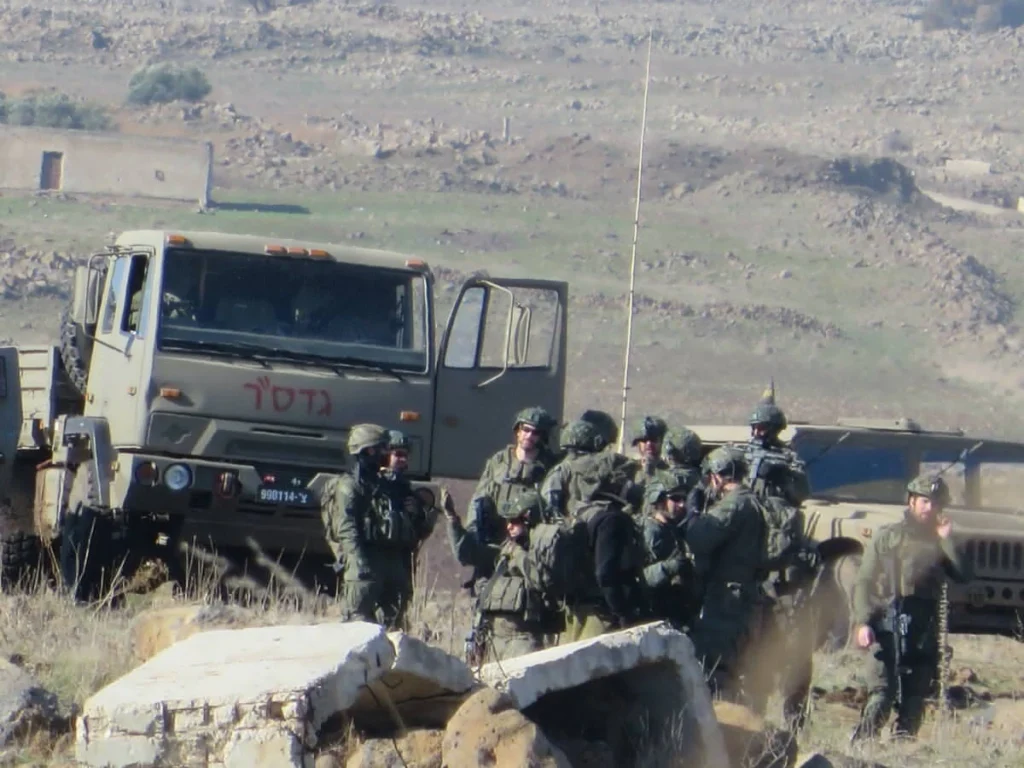
IMAGE: Israeli soldiers beside an armored vehicle in Dawaya al-Saghira, Quneitra, on December 25, 2024. (Source: Emad Albasiri/Syria Direct)
The military infrastructure is visible, but what is far less visible is the information apparatus growing around it.
In Sida Golan, Israeli soldiers reportedly asked Ahmad Abu Zein and other residents about household size, family members’ ages, occupations and weapons before offering flour and food. Residents rejected the offer. It was the second Israeli incursion into the village within days.
Elsewhere, patrols reportedly recorded identity cards and telephone numbers, photographed documents, inspected phones and asked about relatives, employment and opinions of Israel’s presence. In Kudna, soldiers sought the names and contact details of shopkeepers and those responsible for the mosque, clinic and water pump.
These inquiries identify the people through whom a village functions, including those who distribute goods, maintain infrastructure, treat the sick, convene the community and communicate with authorities.
The result is a social map assembled through recurring encounters involving household surveys, checkpoints, night raids and phone searches. Names can be linked to faces, faces to households, and households to relatives. Those connections extend to telephone contacts, occupations, property and local institutions.
Mapping these communities serves several purposes. It identifies residents, reveals their connections and locates the people through whom village life functions. That knowledge gives the Israeli military leverage over not only individuals but also the relationships and institutions that sustain life in southern Syria.
Files arriving at the door
These encounters do not always begin with soldiers collecting information at the scene. In some cases, they appear to arrive with a file already assembled.
A resident of Kudna told researcher Aymenn Jawad al-Tamimi that Israeli forces entered his home at around 3 a.m., seized his pistol and his children’s passports, and said they possessed information linking him to Liwa al-Quds. The allegation preceded the raid, and the household search was its operational consequence.
Former detainees told Haaretz that interrogators displayed photographs of their neighbours, questioned them about their relationships and asked several to become informants. The photographs and prior allegations indicate that interrogation was being used to test and expand information already assembled about the detainee’s community.
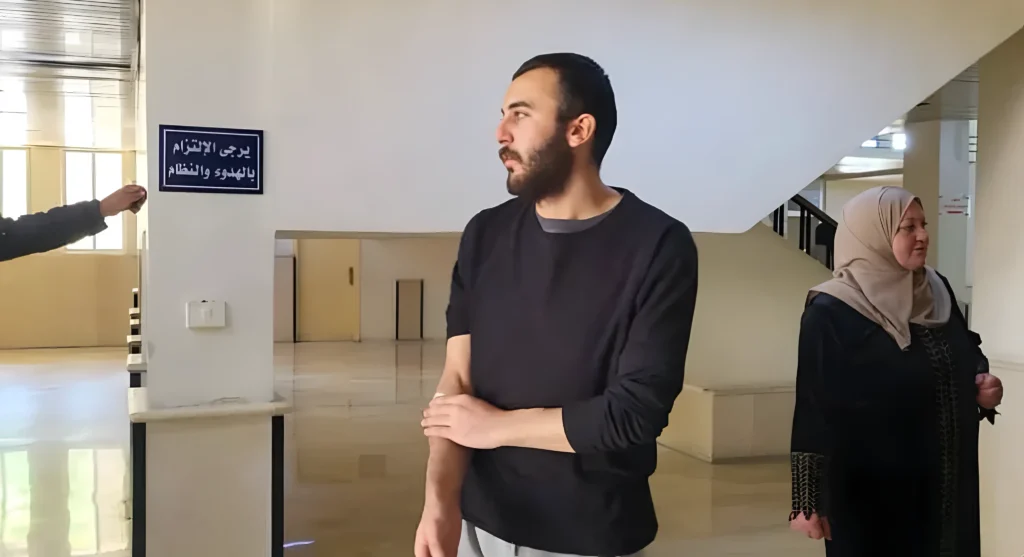
IMAGE: Wadi Bakr, a resident of Tarnaja in northern Quneitra, after his release from approximately 16 months in Israeli detention. (Source: The Syrian Observer / Al-Modon)
An intelligence census goes beyond recording who lives where to establish who knows whom, who moves between communities and who can be recruited, pressured or targeted. Here, detention becomes a means of expanding that knowledge, not simply acting on it.
Detention as intelligence production
The scale of detention makes this more than an occasional practice. According to figures cited by Haaretz, local monitoring organisation Sijil counted 248 detentions between 8 December 2024 and 1 September 2026. Many lasted several hours or a day. More than 60 detainees were reportedly transferred into Israel, including to Sde Teiman, Kishon and Ofer.
Separately, a UN independent commission said that by June 2026 it had identified 49 people, including two children, detained by Israeli forces on Syrian territory and presumed taken across the ceasefire line.
Unit 504, the Israeli military intelligence formation responsible for interrogations and recruiting agents, turns these detentions into operational intelligence. Israeli accounts document a recurring institutional cycle involving Unit 504, Division 210 and the brigades carrying out raids.
On 11 June 2025, intelligence from Unit 504 interrogations reportedly led to arrests in Beit Jinn. On 2 July, Unit 504 personnel accompanied the 474th Golan Brigade during operations in Umm al-Luqs and Ein al-Bassali. The Israeli military said the intelligence came from interrogations conducted during the preceding weeks.
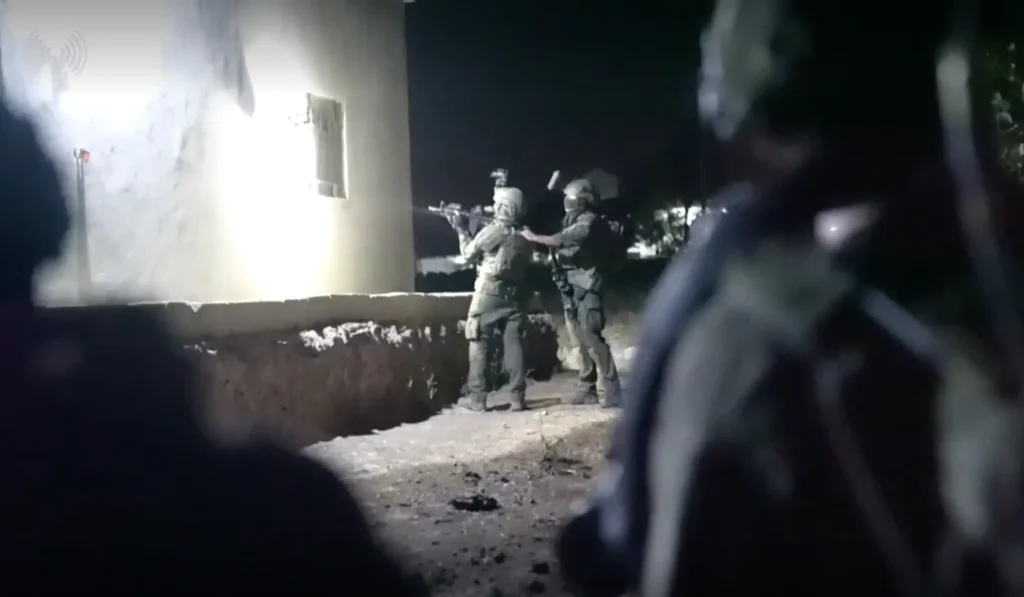
IMAGE: A still from Israeli military footage of a July 2025 arrest operation in southern Syria involving Unit 504 personnel. (Source: IDF Spokesperson’s Unit / Ynetnews)
On 7 July, the Alexandroni Brigade carried out an operation in Tel Kudna based on Unit 504 intelligence, described as the second such arrest operation in one week. Israeli reporting also connected these operations to the broader interrogation-driven campaign in southern Syria.
Across the three operations, information extracted during earlier interrogations fed into later raids carried out by brigades under Division 210.
When interrogators add photographs of neighbours and requests to become informants, the process goes beyond suspect identification. It becomes the continuous mapping and penetration of communities under occupation.
The same occupation that uses interrogation to identify new targets is also developing procedures that determine who may reach agricultural land.
Turning land into a permit
In Jubata al-Khashab, a village in Syria’s southwestern Quneitra province near the occupied Golan, the village head, or mukhtar, Mohammad Mazen Mrayoud said residents could reach around 5,000 dunams of grain and fruit land, about 500 hectares, only through UN coordination. Another 7,000 dunams, or 700 hectares, of grazing and agricultural land remained inaccessible. He said UNDOF could transmit residents’ complaints but could not enforce access.
The restrictions cut families off from orchards and livestock facilities. Hasan Ahmad reportedly lost access to 10 dunams and an animal shed, the Kiwan family to 20 dunams of olive trees, and the Saad al-Din family to 10 dunams planted with olives and mulberries.
It is abundantly clear that Israel’s bases, trenches, blocked roads and gates create the physical restriction. The lists and cards facilitate a decision mechanism that identifies who receives an exception. Such a technique also has a history. Between 1974 and 1979, Israel issued limited agricultural permits coordinated through UNDOF for residents of occupied Syrian Golan villages seeking access to land east of the ceasefire line. Israel later ended that arrangement.
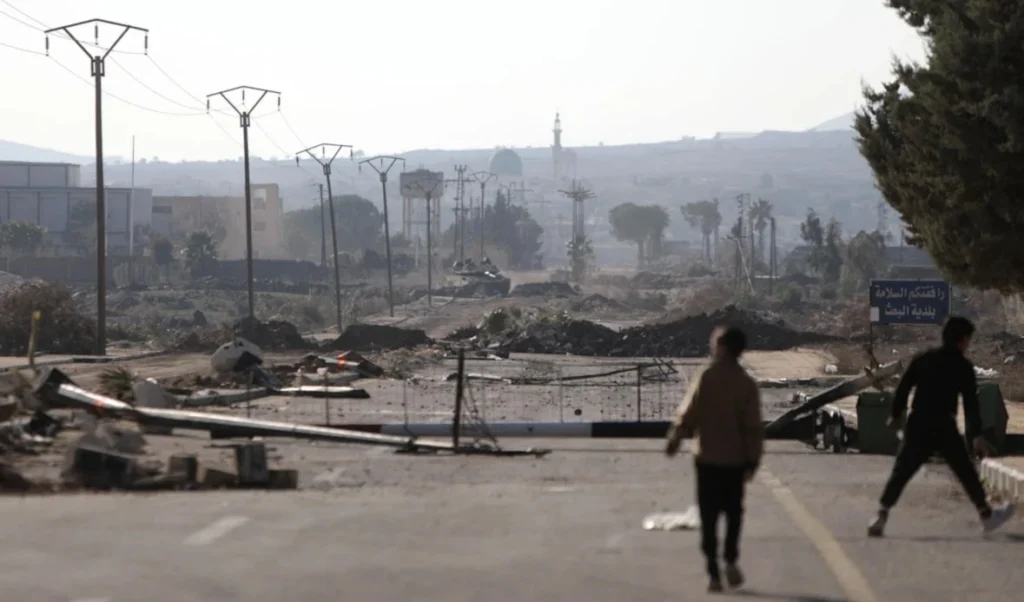
IMAGE: A blocked roadway pictured in Al-Akhbar’s report on Israeli military expansion in southern Syria. (Source: Al-Akhbar)
The present system reverses and expands the same logic. Syrians living east of the line are now being separated from their land by Israeli positions and required to enter an approval process mediated through UNDOF. A right is converted into an exception, an owner becomes an applicant, and access becomes revocable.
Economic access and dependency
The census has also accompanied offers of work and assistance. In February 2025, the Syrian Observatory for Human Rights reported that Israeli forces conducted a census while offering employment and aid in Quneitra communities they had entered. The offers reportedly included daytime work inside Israeli-controlled territory, food, medicine and prospective field clinics—an offer the residents rejected.
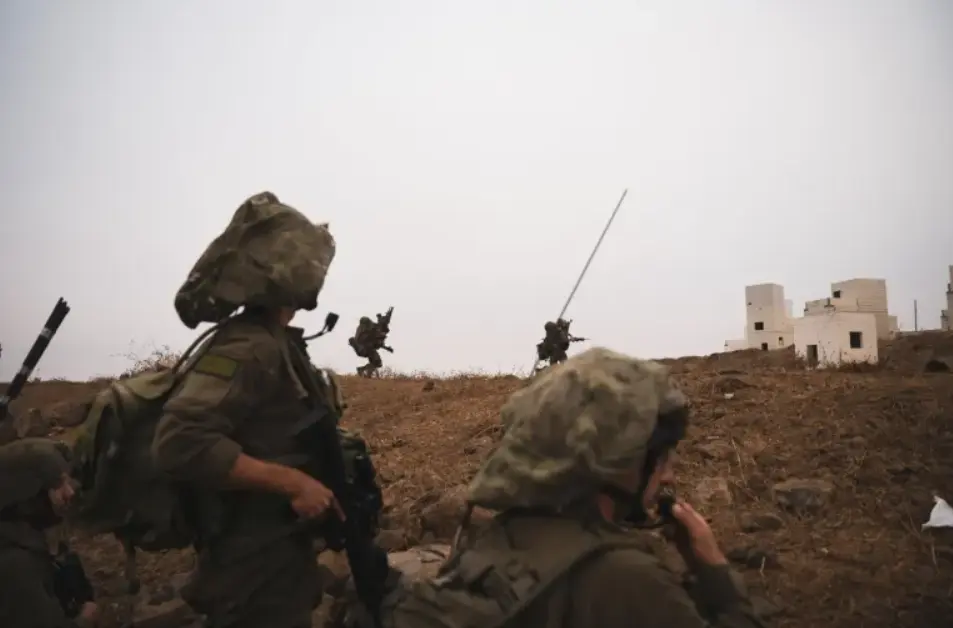
IMAGE: Israeli soldiers pictured in SOHR’s report on population surveys and offers of employment and assistance in Quneitra. (Source: Syrian Observatory for Human Rights)
Further reporting described questionnaires about professions, medical and educational needs, along with named work lists. 963+ reported a proposed labour system involving transport and entry-and-exit permits. Al-Akhbar later reported employment offers subject to Israeli security clearance, alongside meetings concerning work and agricultural trade.
These reported offers placed employment behind named lists, entry permits and Israeli security screening, while the surveys collected information about residents’ occupations and household needs.
This resembles an expanded version of Operation Good Neighbour, through which Israel previously combined humanitarian assistance with relationships among armed factions and local intermediaries in southern Syria. The difference is where that influence is exercised. Israeli troops are no longer cultivating it mainly from across the ceasefire line; in fact, they now conduct surveys, searches and arrests inside the same communities where they offer work and assistance.
Aid and employment become political infrastructure by identifying gatekeepers, producing beneficiary lists and creating relationships in which access to resources passes through the occupying power.
Governing without a government
Israel does not need a single master database to govern in this way. Its apparatus can function through interoperable lists and files maintained by different institutions.
On the agricultural side, local organisations collect names, UNDOF transmits them, cards connect identities to plots and soldiers enforce the conditions. On the security side, patrols photograph faces and search phones, interrogators question detainees about their neighbours, Unit 504 develops sources and Division 210 deploys forces using the resulting intelligence.
Both begin with information and end with an enforceable decision. A farmer is admitted or excluded. A resident passes through a checkpoint or is detained. A detainee’s account becomes the basis for another raid. Employment offers add a developing economic track in which access to work is reportedly conditioned on Israeli screening and movement permission.
Israel has not announced a civil administration in southern Syria, but formal ministries are not required when an occupying force can determine whose name clears a gate, whose land remains accessible and whose relationships become the basis for another raid.
Syrian unions, mukhtars and property documents remain in place, while UNDOF continues to mediate. Yet none holds the final coercive authority. Israel decides whose ownership has practical meaning, whose movement is permitted and whose name becomes a target.
The emerging order may never have a governor, ministries or a declared capital. Its authority is expressed through a farmer list handed to UNDOF, a neighbour’s photograph carried into an interrogation and a security clearance attached to a job. Its authority is expressed through a military record that turns a Syrian’s ownership of Syrian land into permission granted by an occupying army.
The invisible census supplies the knowledge through which this shadow government exercises power. Israel need not formally administer southern Syria to govern essential parts of residents’ lives when its military decides who can reach their land, move through their communities or gain access to work.
READ MORE SYRIA NEWS AT: 21st CENTURY WIRE Syria FILES
SUPPORT OUR INDEPENDENT MEDIA PLATFORM – BECOME A MEMBER @21WIRE.TV
VISIT OUR TELEGRAM CHANNEL
21st Century Wire is an alternative news agency designed to enlighten, inform and educate readers about world events which are not always covered in the mainstream media.
Source: https://21stcenturywire.com/2026/10/01/the-invisible-census-how-israel-is-building-a-shadow-government-in-southern-syria/
Anyone can join.
Anyone can contribute.
Anyone can become informed about their world.
"United We Stand" Click Here To Create Your Personal Citizen Journalist Account Today, Be Sure To Invite Your Friends.
Before It’s News® is a community of individuals who report on what’s going on around them, from all around the world. Anyone can join. Anyone can contribute. Anyone can become informed about their world. "United We Stand" Click Here To Create Your Personal Citizen Journalist Account Today, Be Sure To Invite Your Friends.
LION'S MANE PRODUCT
Try Our Lion’s Mane WHOLE MIND Nootropic Blend 60 Capsules
Mushrooms are having a moment. One fabulous fungus in particular, lion’s mane, may help improve memory, depression and anxiety symptoms. They are also an excellent source of nutrients that show promise as a therapy for dementia, and other neurodegenerative diseases. If you’re living with anxiety or depression, you may be curious about all the therapy options out there — including the natural ones.Our Lion’s Mane WHOLE MIND Nootropic Blend has been formulated to utilize the potency of Lion’s mane but also include the benefits of four other Highly Beneficial Mushrooms. Synergistically, they work together to Build your health through improving cognitive function and immunity regardless of your age. Our Nootropic not only improves your Cognitive Function and Activates your Immune System, but it benefits growth of Essential Gut Flora, further enhancing your Vitality.

Our Formula includes: Lion’s Mane Mushrooms which Increase Brain Power through nerve growth, lessen anxiety, reduce depression, and improve concentration. Its an excellent adaptogen, promotes sleep and improves immunity. Shiitake Mushrooms which Fight cancer cells and infectious disease, boost the immune system, promotes brain function, and serves as a source of B vitamins. Maitake Mushrooms which regulate blood sugar levels of diabetics, reduce hypertension and boosts the immune system. Reishi Mushrooms which Fight inflammation, liver disease, fatigue, tumor growth and cancer. They Improve skin disorders and soothes digestive problems, stomach ulcers and leaky gut syndrome. Chaga Mushrooms which have anti-aging effects, boost immune function, improve stamina and athletic performance, even act as a natural aphrodisiac, fighting diabetes and improving liver function. Try Our Lion’s Mane WHOLE MIND Nootropic Blend 60 Capsules Today. Be 100% Satisfied or Receive a Full Money Back Guarantee. Order Yours Today by Following This Link.


| Visits: | 1,833,575,509 |
| Stories: | 8,713,377 |
Whistler Blowers, Insiders

