

How Israel seeks to reshape Arab classrooms

Freddie Ponton
21st Century Wire
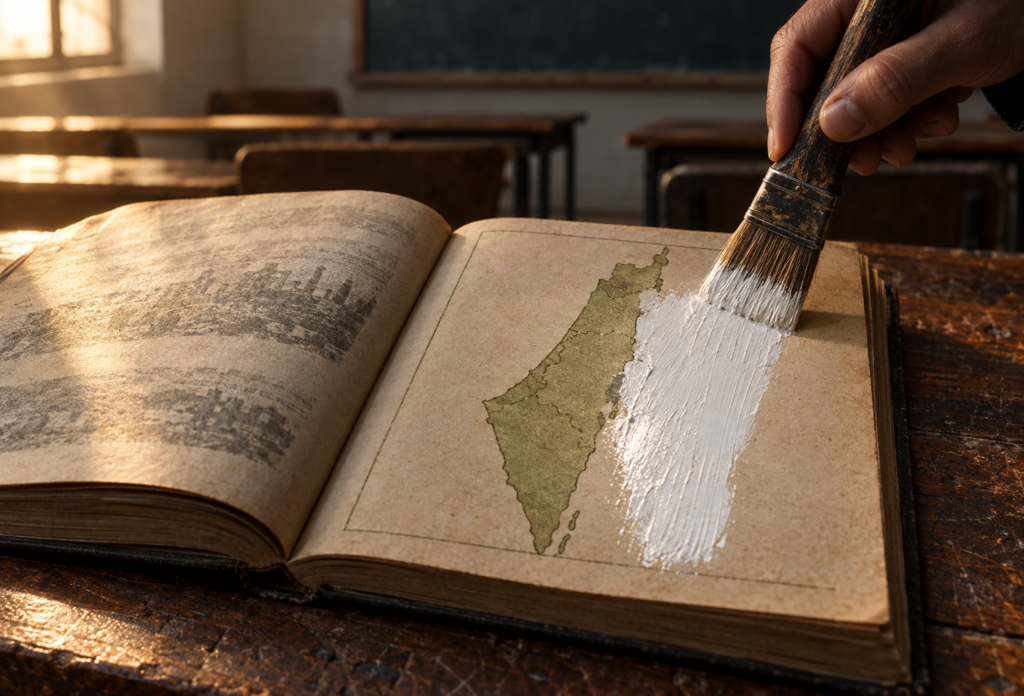
“Muslims will not relinquish Jerusalem.” The sentence appeared in a Saudi schoolbook’s Arabic language exercise, then disappeared from later editions. An Israeli organisation monitoring the books described the removal as deleting a “politically charged reference.” In Jordan, the same organisation recorded another disappearance. Maps bearing the name “Palestine” were replaced with versions leaving the territory unnamed.
These classroom changes open a larger story about who shapes what Arab children learn about their region. A new Arabic Post investigation follows three decades of scrutiny across 17 Arab countries, tracing how assessments of schoolbooks reach Western governments, parliaments and donors with the power to demand changes.
REPORT: Arabic Post traces how Israeli scrutiny of schoolbooks across 17 Arab countries became a network of political and financial pressure. Click on the image to read the report. (Source: Arabic Post)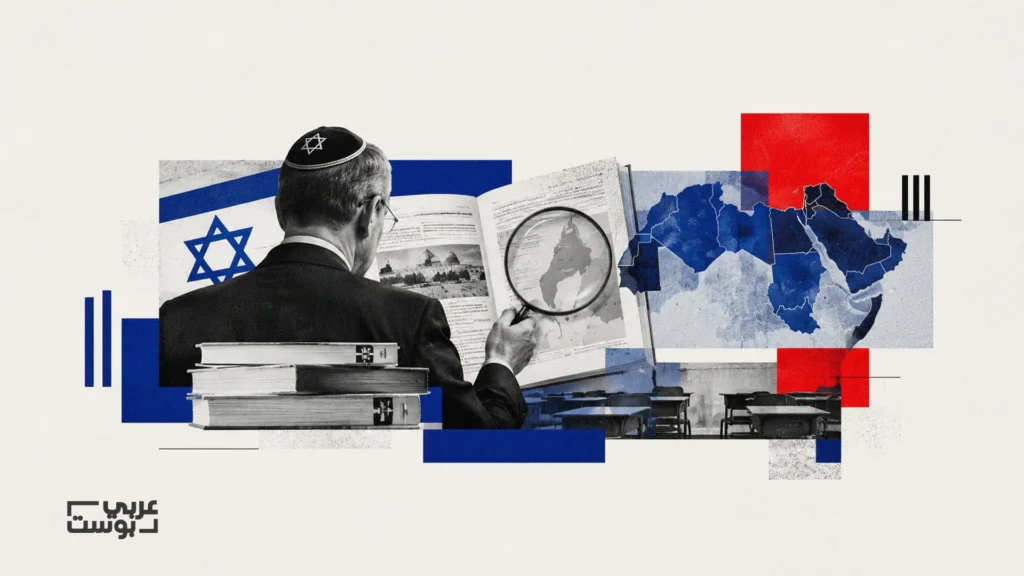
Drawing on government records, parliamentary documents and research publications, the investigation follows a process that begins with collecting books, translating passages and classifying their contents. American and European organisations then help carry the findings into political discussions, where they become demands for revisions, official reviews and conditions on educational funding.
The scrutiny extends beyond individual expressions to maps of historic Palestine, accounts of Jerusalem, descriptions of Zionism, lessons about resistance and religious teachings. The investigation shows how Israel’s pursuit of acceptance reaches into the way neighbouring societies teach their children to understand history.
From schoolbooks to government offices
Arabic Post identifies 10 Israeli research centres and institutions involved in examining Arab educational materials. It also identifies 20 American and seven European organisations and projects, with some branches counted separately. Official Israeli bodies participate too, including the Ministry of Education, the Civil Administration in the West Bank and Knesset committees.
One of the most prominent organisations is IMPACT-se, which describes itself as a non-governmental research and policy institute. Arabic Post found that former founders and current members had worked in Israeli ministries and government. Another participant, the Meir Amit Center, was established within Israel’s intelligence heritage centre and places curriculum analysis within its mission of assessing threats facing Israel.
The investigation traces how several organisations helped produce and circulate a 2017 study of 201 Palestinian textbooks. Commissioned by the Center for Near East Policy Research, with contributions from the Simon Wiesenthal Center and the American Middle East Forum, it was published through BESA, an Israeli research centre. The Meir Amit Center then presented its findings, which included a call for funding countries to demand corrections to textbook content.
Britain provides a documented example of how such findings enter government discussions. According to the investigation, an IMPACT-se report on Palestinian textbooks passed through the Israeli government to British officials. In December 2018, Britain’s Department for International Development (DFID) said the report had raised concerns and that officials had presented specific examples to the Palestinian education minister. In March 2019, Britain announced that it had helped secure an independent textbook review.
In Europe, changes to Palestinian schoolbooks became part of the discussion over financial support. A 2024 agreement between the European Commission and the Palestinian Authority placed curriculum updates among the reforms tied to that support. IMPACT-se, NGO Monitor and the German-Israeli Society sought a more explicit condition. In a June 2024 paper cited by Arabic Post, they urged Germany to make educational funding depend on textbook changes and to check that those changes were carried out.
Through these arrangements and proposals, the content of a schoolbook becomes a question for those who control financial assistance. Education ministries face demands backed by influence over the resources their schools depend on.
The history children inherit
In East Jerusalem, the intervention reaches directly into the books children read. The investigation cites researcher Samira Alayan’s study of textbook censorship. Her analysis of 28 social studies textbooks, supported by interviews, documented the removal of references to Palestinian history, heritage and national narrative from Israeli-modified editions. Material through which children learn about their own society is altered to exclude parts of its history and identity.
A Jordanian history textbook presented the 1994 peace treaty with Israel as a means of establishing borders, recovering land and water rights, and curbing Israeli ambitions. IMPACT-se criticised that account because it portrayed peace as a defensive necessity rather than reconciliation. The objection was not that the textbook omitted the treaty, but that it explained it through Jordan’s national interests.
In Saudi Arabia, IMPACT-se tracked not only the removal of the sentence about Jerusalem but also the replacement of “the Zionist enemy” with “the Israeli occupation” in a history textbook. It described the change as a softening of hostility towards Israel, treating the words children encounter in class as a measure of how they are taught to understand the conflict.
The ambition behind this scrutiny becomes clearer in a July 2024 study cited by Arabic Post, in which IMPACT-se researchers Yonatan Negev and Eldad Pardo argued that portraying Israel as a colonial state reinforces its image as a pariah and challenges its legitimacy. In August, the same researchers proposed regional education based on shared Abrahamic heritage, intended to establish Israel as an authentic, accepted part of the Middle East and move beyond a “cold peace.”
Those studies envisage acceptance reaching beyond government agreements and taking root among future generations. Arabic Post follows the reports, government interventions and funding demands through which that ambition is pursued. Its investigation reveals how foreign political and financial power enters the classroom, seeking to shape how children understand Palestine and the region’s history.
The question is who gets to decide how a society teaches its own history. When financial support becomes leverage over schoolbooks, the power to shape that history moves away from the people whose lives it describes. Palestinian memory then becomes something to negotiate with donors, while acceptance of Israel becomes a measure by which lessons are judged. That is the deeper significance of this investigation. The pressure reaches beyond what governments agree to today and into what children will understand about their past tomorrow.
READ MORE ISRAEL NEWS AT: 21st CENTURY WIRE Israel FILES
SUPPORT OUR INDEPENDENT MEDIA PLATFORM – BECOME A MEMBER @21WIRE.TV
VISIT OUR TELEGRAM CHANNEL
21st Century Wire is an alternative news agency designed to enlighten, inform and educate readers about world events which are not always covered in the mainstream media.
Source: https://21stcenturywire.com/2026/10/06/how-israel-seeks-to-reshape-arab-classrooms/
Anyone can join.
Anyone can contribute.
Anyone can become informed about their world.
"United We Stand" Click Here To Create Your Personal Citizen Journalist Account Today, Be Sure To Invite Your Friends.
Before It’s News® is a community of individuals who report on what’s going on around them, from all around the world. Anyone can join. Anyone can contribute. Anyone can become informed about their world. "United We Stand" Click Here To Create Your Personal Citizen Journalist Account Today, Be Sure To Invite Your Friends.
LION'S MANE PRODUCT
Try Our Lion’s Mane WHOLE MIND Nootropic Blend 60 Capsules
Mushrooms are having a moment. One fabulous fungus in particular, lion’s mane, may help improve memory, depression and anxiety symptoms. They are also an excellent source of nutrients that show promise as a therapy for dementia, and other neurodegenerative diseases. If you’re living with anxiety or depression, you may be curious about all the therapy options out there — including the natural ones.Our Lion’s Mane WHOLE MIND Nootropic Blend has been formulated to utilize the potency of Lion’s mane but also include the benefits of four other Highly Beneficial Mushrooms. Synergistically, they work together to Build your health through improving cognitive function and immunity regardless of your age. Our Nootropic not only improves your Cognitive Function and Activates your Immune System, but it benefits growth of Essential Gut Flora, further enhancing your Vitality.

Our Formula includes: Lion’s Mane Mushrooms which Increase Brain Power through nerve growth, lessen anxiety, reduce depression, and improve concentration. Its an excellent adaptogen, promotes sleep and improves immunity. Shiitake Mushrooms which Fight cancer cells and infectious disease, boost the immune system, promotes brain function, and serves as a source of B vitamins. Maitake Mushrooms which regulate blood sugar levels of diabetics, reduce hypertension and boosts the immune system. Reishi Mushrooms which Fight inflammation, liver disease, fatigue, tumor growth and cancer. They Improve skin disorders and soothes digestive problems, stomach ulcers and leaky gut syndrome. Chaga Mushrooms which have anti-aging effects, boost immune function, improve stamina and athletic performance, even act as a natural aphrodisiac, fighting diabetes and improving liver function. Try Our Lion’s Mane WHOLE MIND Nootropic Blend 60 Capsules Today. Be 100% Satisfied or Receive a Full Money Back Guarantee. Order Yours Today by Following This Link.


| Visits: | 1,834,080,909 |
| Stories: | 8,716,238 |
Whistler Blowers, Insiders

