

Gunboat Diplomacy Reloaded: How the U.S. Stormed the Skipper and Stole Venezuela’s Oil

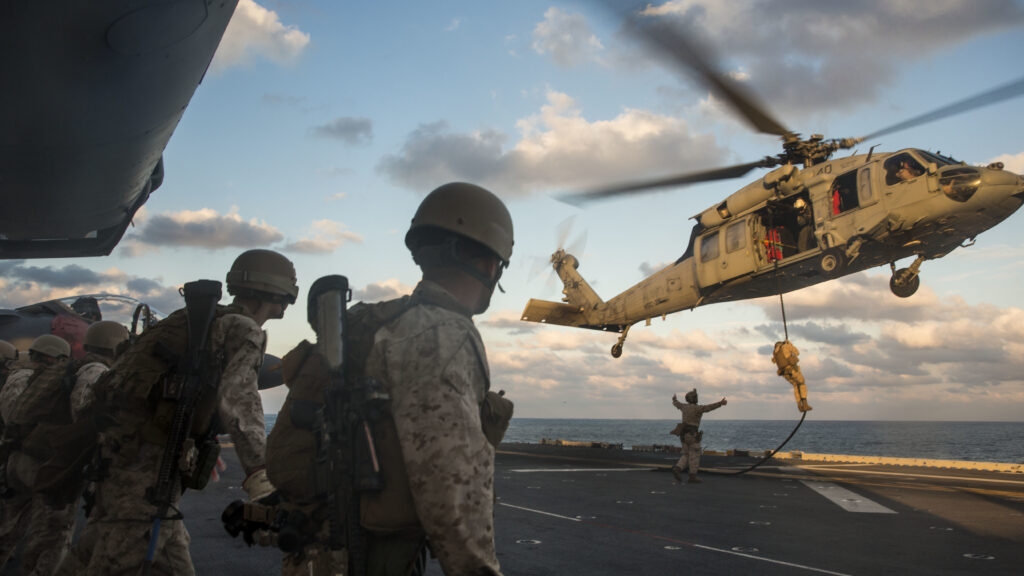
IMAGE: Marines with Security Platoon, Maritime Raid Force, 24th Marine Expeditionary Unit, watch a fellow Marine fast-rope out of an MH-60S Seahawk helicopter (Source: U.S. Marine Corps photo by Cpl. Todd)
Freddie Ponton
21st Century Wire
What happens when the world’s most powerful military seizes nearly two million barrels of crude oil from a civilian‑flagged tanker in peacetime, just off the coast of a sovereign nation? On December 10, 2025, U.S. forces boarded the Skipper, previously known as Adisa and originally The Toyo, in a dramatic operation that President Donald Trump hailed as a decisive strike against illicit networks. Yet in Caracas and across much of Latin America, the seizure looked less like law enforcement and more like a bold act of maritime aggression. Is this a justified crackdown on sanctions evasion, or the latest example of U.S. militarization of foreign policy?
Adding to the unease is the backdrop of a controversial U.S. campaign of maritime strikes in Caribbean and Pacific waters that have killed dozens of people since September. The Trump administration, and especially Secretary of War Pete Hegseth, have publicly described these strikes as targeting “narco‑traffickers,” but, as international reporting shows, no public evidence has been released proving those vessels were actually carrying drugs when struck, and legal experts warn the actions may violate international law.
This article unpacks the Skipper seizure, the contested narratives about narcotics and terrorism that have defined recent U.S. actions, and the broader geopolitical currents swirling around Washington’s campaign against Venezuela. We explore whether this is about narcotics, counterterrorism, and sanctions enforcement, or whether, as critics argue, it is ultimately about controlling Venezuelan natural resources and waging geopolitical pressure far beyond anything publicly justified.
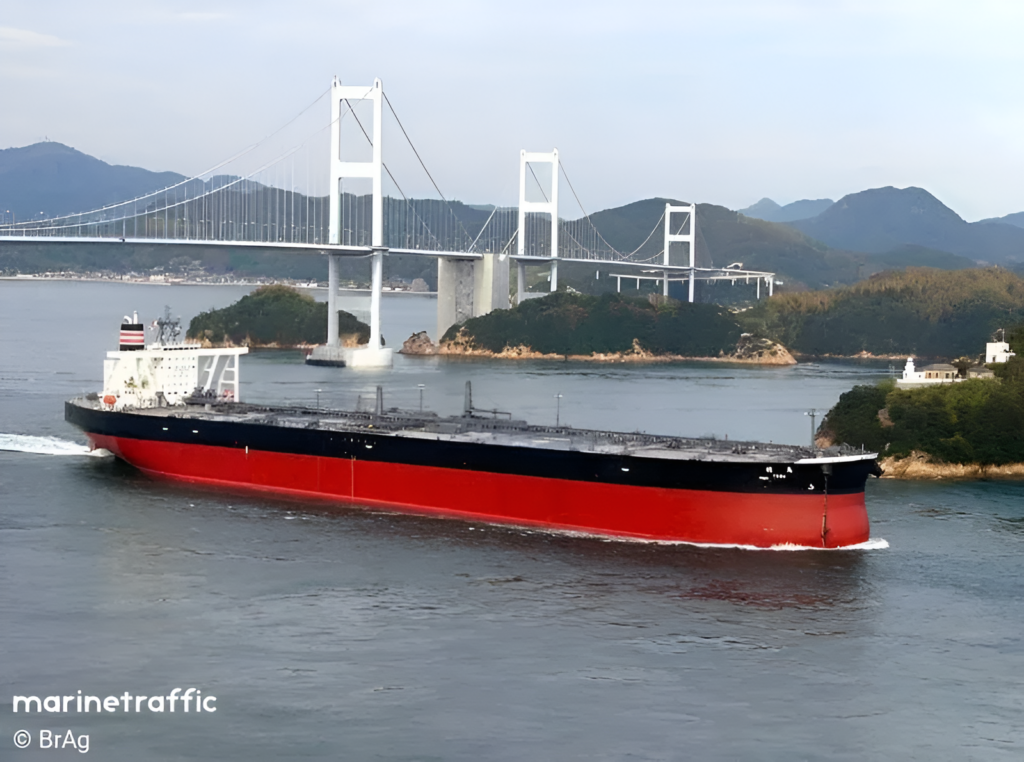
IMAGE: SKIPPER (IMO: 9304667) is a crude oil tanker sailing under the flag of Guyana (Source: Marine Traffic)
A High‑Stakes Raid: The Skipper Seizure and the Shadow of U.S. Military Overreach
The seizure of the Skipper was executed with striking military precision. U.S. Coast Guard helicopters swooped onto the tanker’s deck as Marine and specialized interdiction teams, part of a joint task force spanning the FBI, Homeland Security, and the Department of War, took control of the vessel without resistance. The operation was publicised in dramatic videos of fast‑roping boarding parties descending from the sky.
VIDEO: Special unit of the U.S. Coast Guard’s Maritime Security Response Team (MSRT) boarding the tanker Skipper near the coast of Venezuela.
.
President Trump described the Skipper as “a large tanker, very large, the largest ever seized,” asserting it was acting against a ship involved in sanctions violations and illicit trade. The White House linked the operation to networks tied to Iran’s Revolutionary Guard and Hezbollah, a narrative rooted in a 2022 U.S. Treasury sanctions designation that accused the vessel’s operators of shadowy oil smuggling.
Yet Venezuelan President Nicolás Maduro’s government was unambiguous in its condemnation. Caracas denounced the action as “a blatant theft and an act of international piracy,” and said the seizure exposed Washington’s longstanding objective: to seize Venezuela’s oil wealth under the pretext of countering narcotics and terrorism.
STATEMENT: The Bolivarian Republic of Venezuela Statement regarding the US assault on the Oil Tanker Skipper
SEE MORE: Drugs, Oil and Regime Change: Venezuela and the US Drug War Narrative
This incident did not occur in isolation. Since early September 2025, U.S. forces have launched an unprecedented series of maritime strikes on boats in the Caribbean and eastern Pacific that Washington claims were transporting narcotics. According to PBS reporting in October, at least 87 people have been killed in these strikes, and the U.S. has not publicly provided detailed evidence proving that all targeted vessels were actually carrying drugs at the time of attack.
International rights experts have criticized the campaign, with Volker Türk, the UN High Commissioner for Human Rights, saying that the lethal operations appear to lack legal justification and resemble extrajudicial killings, particularly in international waters where no active armed conflict has been declared.
On Sunday, December 7, 2025, Patrick Hennigsen, the founder of the 21st Century Wire, shared his view on the topic during the Sunday Wire show.
PETE HEGSETH UNDER FIRE: WAR CRIMINAL WITHOUT A WAR
Dive into the mystery of the drug boat explosion and Venezuela’s alleged involvement. Unpack the controversial push to eliminate rules of engagement and embrace overwhelming violence. This clip exposes the risks of unchecked… pic.twitter.com/5wbdZboQav
— Patrick Henningsen (@21WIRE) December 10, 2025
A Sanctions Operation—or a Manufactured Enemy? The Official Narrative Unravels
U.S. authorities have framed the Skipper operation as a lawful enforcement of economic sanctions aimed at disrupting networks tied not only to Venezuela but also to Iranian influence and terrorism financing. The Treasury’s Office of Foreign Assets Control (OFAC) had previously sanctioned the vessel under its former name in 2022, accusing its controllers of participating in an “illicit oil trafficking network” linked to Hezbollah and the Iranian Revolutionary Guard.
Yet the public evidence underpinning many of the administration’s declarations remains opaque. In the ongoing campaign against alleged drug traffickers at sea, U.S. officials have repeatedly asserted that the vessels struck were engaged in narco trafficking, but several independent reports, including one from PBS, have found that officials have not shared underlying evidence with lawmakers or the public to substantiate those claims.
This gap between rhetoric and transparency has inflamed critics. Venezuelan officials, human rights advocates, the United Nations, and some foreign governments argue that Washington’s narrative is a strategic veneer concealing broader geopolitical objectives.
Instead of clear proof of criminal activity, what has emerged is a pattern of lethal force employed without publicly disclosed evidence, and often with devastating consequences for civilians.
The stakes are highest for small fishing communities in the region, many of whose members have been caught up in the violence. In at least one case, Ecuadorian authorities confirmed that a survivor of a U.S. strike was released without prosecution because local authorities found no evidence he had committed a crime, further calling into question Washington’s campaign narratives.
SEE MORE: Unravelling the US Agenda in Venezuela: Fishermen Caught in the Crossfire
These disputes go to the heart of the U.S. government’s public justification for its actions: if the vessels attacked were not demonstrably transporting drugs at the time of engagement, then the legal and moral underpinning of a military interdiction becomes deeply contested.
History Breaks in the Caribbean: The First U.S. Peacetime Attack on an Oil Tanker
The Skipper seizure is historically unprecedented in the context of U.S.–Latin American relations. While the United States has intercepted foreign oil tankers before, for example, during wartime or under international mandates, it has never before used military force in peacetime to seize a commercial vessel’s oil cargo so close to a foreign nation’s coast without multilateral authorization.
Until now, U.S. interventions related to foreign oil have taken place under conditions of war, sanctions regimes backed by international consensus, or at the request of allied governments. What we are witnessing with the Skipper, a unilateral naval seizure involving helicopters, Marines, and intelligence agencies, marks a departure from established norms. Many regional analysts have likened it to an updated form of gunboat diplomacy, where forceful projection of power intersects with economic interests.
This pattern of unilateral action is not new. The United States has previously targeted Venezuelan assets in similarly controversial ways, signaling a recurring approach that blends economic pressure with forceful intervention.
The Skipper seizure is not the first time Washington has targeted Venezuelan assets under controversial circumstances. In a widely criticized move, the U.S. effectively took control of CITGO, Venezuela’s U.S.-based oil subsidiary, seizing its assets and management under sanctions against the Maduro government. Critics argue the action amounted to economic expropriation, highlighting a pattern in which the United States has leveraged legal and financial tools to assert control over Venezuela’s oil resources without recourse to multilateral approval or demonstrated legal necessity
This break with precedent is compounded by the simultaneity of the broader Caribbean and Pacific campaign of maritime strikes. Legal experts have warned that repeatedly using lethal force against civilian vessels under broad drug trafficking claims, especially in the absence of publicly disclosed evidence, risks undermining long‑standing principles of international law.
Moreover, the Skipper’s seizure has sent shockwaves through maritime circles. Shipping sources now report that over 30 sanctioned vessels in Venezuelan waters are reassessing whether to sail at all, fearing further interceptions that could jeopardize cargo, crew, and commercial viability.
Critics of U.S. policy point to a broader strategic picture where economic pressure on Venezuela’s oil sector merges with military assertiveness, raising troubling questions about whether Washington’s objectives exceed mere sanctions enforcement and enter the realm of resource control.
Shockwaves Through the Hemisphere: A Darker Future for Global Energy Routes
The broader repercussions of the Skipper seizure are already taking shape. Shipping companies are recalibrating risk assessments for vessels carrying Venezuelan crude. Freight costs and insurance premiums are rising as carriers contemplate the hazards of operating near U.S. naval patrols. Meanwhile, refiners dependent on heavy crude are watching global markets for signs of tightening supplies.
For Cuba, one of the Skipper’s apparent intended destinations, the loss of Venezuelan crude compounds a grim energy shortfall that has already triggered rolling blackouts and economic strain. For Venezuela, the incident underscores a stark reality: its lifeblood resource remains vulnerable to external force well beyond the realm of sanctions and diplomacy.
In the wider strategic arena, the Skipper incident has reopened age‑old debates about U.S. hegemonic conduct in the Western Hemisphere. Critics argue that the seizure and the pattern of lethal maritime strikes under ambiguous narcotics narratives reveal a willingness to employ military force to achieve geopolitical ends, regardless of legal norms or regional sovereignty.
Whether history ultimately interprets this moment as a necessary enforcement action or a troubling escalation, one thing is certain: the contours of U.S. foreign policy have shifted into a new and more confrontational phase. In a region deeply sensitive to the legacy of intervention, the consequences are likely to echo far beyond the deck of a single tanker.
SEE MORE: Senate Sanctions War by Omission: U.S. Sleepwalking Into Conflict with Venezuela
READ MORE VENEZUELA NEWS AT: 21st CENTURY WIRE VENEZUELA FILES
SUPPORT OUR INDEPENDENT MEDIA PLATFORM – BECOME A MEMBER @21WIRE.TV
VISIT OUR TELEGRAM CHANNEL
21st Century Wire is an alternative news agency designed to enlighten, inform and educate readers about world events which are not always covered in the mainstream media.
Source: https://21stcenturywire.com/2025/12/11/gunboat-diplomacy-reloaded-how-the-u-s-stormed-the-skipper-and-stole-venezuelas-oil/
Anyone can join.
Anyone can contribute.
Anyone can become informed about their world.
"United We Stand" Click Here To Create Your Personal Citizen Journalist Account Today, Be Sure To Invite Your Friends.
Before It’s News® is a community of individuals who report on what’s going on around them, from all around the world. Anyone can join. Anyone can contribute. Anyone can become informed about their world. "United We Stand" Click Here To Create Your Personal Citizen Journalist Account Today, Be Sure To Invite Your Friends.
LION'S MANE PRODUCT
Try Our Lion’s Mane WHOLE MIND Nootropic Blend 60 Capsules
Mushrooms are having a moment. One fabulous fungus in particular, lion’s mane, may help improve memory, depression and anxiety symptoms. They are also an excellent source of nutrients that show promise as a therapy for dementia, and other neurodegenerative diseases. If you’re living with anxiety or depression, you may be curious about all the therapy options out there — including the natural ones.Our Lion’s Mane WHOLE MIND Nootropic Blend has been formulated to utilize the potency of Lion’s mane but also include the benefits of four other Highly Beneficial Mushrooms. Synergistically, they work together to Build your health through improving cognitive function and immunity regardless of your age. Our Nootropic not only improves your Cognitive Function and Activates your Immune System, but it benefits growth of Essential Gut Flora, further enhancing your Vitality.

Our Formula includes: Lion’s Mane Mushrooms which Increase Brain Power through nerve growth, lessen anxiety, reduce depression, and improve concentration. Its an excellent adaptogen, promotes sleep and improves immunity. Shiitake Mushrooms which Fight cancer cells and infectious disease, boost the immune system, promotes brain function, and serves as a source of B vitamins. Maitake Mushrooms which regulate blood sugar levels of diabetics, reduce hypertension and boosts the immune system. Reishi Mushrooms which Fight inflammation, liver disease, fatigue, tumor growth and cancer. They Improve skin disorders and soothes digestive problems, stomach ulcers and leaky gut syndrome. Chaga Mushrooms which have anti-aging effects, boost immune function, improve stamina and athletic performance, even act as a natural aphrodisiac, fighting diabetes and improving liver function. Try Our Lion’s Mane WHOLE MIND Nootropic Blend 60 Capsules Today. Be 100% Satisfied or Receive a Full Money Back Guarantee. Order Yours Today by Following This Link.



| Visits: | 1,756,548,661 |
| Stories: | 8,546,830 |
Whistler Blowers, Insiders


Please. The fake dog toy is all it is. A way to steal money from people. They should be ashamed of themselves. Do not purchase that toy.n you will be sorry. It doesn’t behave like a real dog like their phoney videos.
Trump didn’t drain the swamp. He is a swamp creature who wanted to take over the swamp. Now he is using the United States military to just plain steal from other countries.