

The US Economy Is Stronger After One Year Of The Trump Administration

One year into Donald Trump’s new presidency, the verdict from the data is clear: the apocalyptic consensus forecasts have failed, and the United States stands as the only major developed economy combining strong growth, controlled inflation and fiscal consolidation.
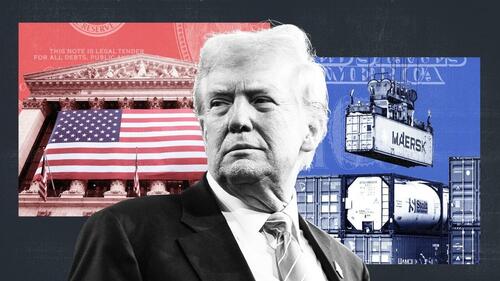
The same analysts and institutions that applauded massive stimulus, monetary excess and regulatory excess under the previous The same analysts and institutions that applauded massive stimulus, monetary excess, and regulatory excess under the previous administration now struggle to explain why the U.S. economy, which they expected to sink into stagflation, is instead outperforming all of its G7 peers. Furthermore, the U.S. peers that followed net-zero, big government and big tax policies are in secular stagnation.
From the “tariff tantrum” to a global surprise
When Trump announced his new wave of tariffs and trade policy, much of the global consensus rushed to predict a disaster. I called it the tariff tantrum. Commentators warned of an inflation surge beyond 2021 levels, 6%–7% Treasury yields, collapsing investment, a recession, and a world turning its back on the United States in favour of supposedly more responsible governments in Europe.
Twelve months later, none of those predictions materialised. Instead, the U.S. 10-year yield has fallen to 4.1%; the U.S. is the only G7 economy growing robustly, while those nations that doubled down on hyperregulation, aggressive climate‑driven restrictions, high taxes and ever‑bigger government spending are stuck in stagnation despite enjoying a very positive tailwind of low oil and gas prices.
The “tariff tantrum” never became the structural shock that critics announced, because tariffs—however debatable on other grounds—do not cause inflation because they do not add currency units to the economy; uncontrolled public spending and monetary excess do.
Growth, investment and a rare fiscal adjustment.
The performance of the U.S. economy in 2025 is extraordinary not just in relative terms, but on its own merits. Real GDP is growing by around 3.8%, with the Atlanta Fed tracking roughly 3.5% annualised in the third quarter, and private investment is expanding at close to double-digit rates. Crucially, this improvement is happening while federal spending is being cut, not expanded as in other peers: public expenditure has fallen by about 3% over the year instead of disguising poor growth with unproductive federal outlays.
All international institutions have had to adjust quickly. The IMF, which initially projected a much weaker performance, now expects U.S. growth of about 2.1% in 2026, and several major research houses have revised their forecasts for 2025 up to around 2.5%, after initially warning of zero or even negative growth. Some economists have publicly acknowledged that the profession misread both the resilience of the U.S. private sector and the real impact of the tariff shock, admitting that from January onwards the consensus The consensus was consistently incorrect about the direction of the economy.
The most important factor is that the American expansion is not due to another wave of debt-fuelled political spending but rather to the recovery of the private sector, investment, trade, and productivity. In a world where most developed nations’ governments responded to every problem with more spending, more debt and more regulation, the new U.S. strategy creates a significant difference, and the results are much better.
Inflation under control
The most significant deviation from the consensus narrative came from inflation. The Keynesian consensus that saw no inflation risk in 2021 when government spending and money supply were soaring unanimously warned in early 2025 that tariffs would push inflation to new annual highs, even above the peaks seen under the previous administration. Instead, by November the consumer price index stands at about 2.7%, below prior expectations of 3.0% and galaxies away from the 6–7% ruin scenario sold to the public.
Core inflation tells the same story. The underlying index, excluding food and energy, is running at around 2.6%, significantly lower than in September and October 2024, when the same commentators enthusiastically defended the Biden‑era mix of giant spending and rapid Fed rate cuts. Over the twelve months to November, the all‑items index has risen 2.7%, after 3.0% in the previous twelve‑month period, and core inflation has increased just 2.6%. There is no sign of a tariff‑induced inflation wave in aggregate prices, only the inertia from the debt and spending binge inherited in 2024.
If anything, the trajectory suggests that as final data come in—particularly for food and energy components—the reported CPI could end up even lower. Independent analysis shows a 2.5% inflation estimate for November.
The lesson is clear: it was never tariffs that drove the global inflation spike, but a combination of uncontrolled fiscal expansion and central banks monetising deficits. The U.S. experience in 2025 proved this point once again.
Deficit, debt, and the politics of discipline.
While many advanced economies continue to drift into deeper deficits and higher debt, the U.S. has managed a rare success: combining growth with early signs of fiscal consolidation. The federal deficit has fallen by roughly 22%, from about 2.07 trillion dollars in November 2024 to approximately 1.6 trillion a year later, thanks to a mix of higher tax and trade revenues and spending cuts. Measured as a share of GDP, the deficit has dropped from a disastrous 7.1% inherited from the previous administration to an estimated 5.9%. Considering that almost 97% of the 2025 budget was already spent when the Trump administration took office, due to prior spending decisions and the continuation bills approved in 2024, the deficit reduction is even more commendable.
The reduction has been accompanied by a major tax reform. Trump has implemented the largest tax cut in decades, bringing the tax wedge on families below 30%, according to estimates from the Tax Foundation. In most OECD economies, policy has been the opposite: higher taxes on work and capital, justified by short‑term revenue needs but negative for investment and productivity.
On the spending side, the numbers are even more remarkable given the starting point. The new administration inherited a budget almost fully pre‑committed. Continuation bills and prior decisions had already locked in around 97% of federal spending. However, federal outlays still fell by 5.6% in the first quarter of 2025 and 5.3% in the second, with total public spending down 3.1% in the first half of the year. Trump has ordered an 8% cut in federal spending for 2026, signalling that fiscal adjustments are a core policy priority.
Debt dynamics are also encouraging. The new administration took office with federal debt around 36.22 trillion dollars and a legacy of 100% of GDP in committed but unfunded liabilities and roughly 1.5 trillion in previously approved obligations. Despite this poisoned inheritance, the debt has stabilised and edged slightly down to about 36.21 trillion, while the debt‑to‑GDP ratio has declined from roughly 122% to 120%, according to the Federal Reserve and independent analysis figures. Even a modest reversal sends a powerful message.
Labour market: native workers improve, and government and immigration shrink.
The labour market picture may be the least understood aspect of the U.S. turnaround. November’s employment report shows the best month for native private‑sector employment in absolute, seasonally adjusted terms since 2015, with real wages rising and a clear shift away from public employment and low‑productivity jobs fuelled by uncontrolled immigration. Weekly real wages are up about 0.8% over the year, and workers in middle- and lower-income categories see real gains of roughly 1.4%. Net real wages after taxes are rising at the fastest pace in years.
The unemployment rate stands at 4.6%, higher than in Canada, the UK, France, Italy and the Eurozone average.
According to household survey data, native employment has increased from around 130.6 million in November 2024 to 133.3 million a year later—an addition of roughly 2.63 million jobs. Over the same period, foreign employment has fallen modestly, by about 21,000, and total public‑sector employment has dropped by 188,000.
This change—more native private-sector jobs and fewer government- and immigration-dependent jobs—is a huge difference compared with Canada, the UK, or most European economies, where employment gains include large public-sector and heavily subsidised job increases. The U.S. experience shows that a combination of deregulation, tax cuts and stricter control of public payrolls can still deliver better jobs and higher real wages for domestic workers.
Trade deals have been a success.
The evidence contradicts the notion that tariffs would destroy America’s position in global trade. The previous administration left behind a massive trade deficit—around 79.8 billion dollars in November 2024, seasonally adjusted, according to the Bureau of Economic Analysis. By September 2025, that deficit had fallen to roughly 52.8 billion, a reduction of about one-third compared with a year earlier.
The combination of targeted tariffs, renegotiated trade agreements, and a clearer defence of domestic industry has improved trade flows without triggering the inflation explosion that many had predicted.
Other improvements that matter.
The Trump administration has moved strongly on several fronts: banning central bank digital currencies, rolling back “woke” regulatory and freedom-of-speech limits, healthcare reform, and committing to scrap ten regulations for every new one approved. In foreign policy, Washington has pushed for a peace agreement in Gaza, a more realistic path to a solution in Ukraine based on pressure and sanctions on Russia, and stronger support for the return to democracy in countries like Venezuela.
The message for conservatives and centrists in Europe and Latin America is strong: If you want growth, jobs, and lower inflation, you cannot simply replicate the bureaucratic, high-tax, high-regulation model that has left much of the developed world stuck in secular stagnation. Trump may not fit the traditional label of a “classical liberal”, but the results of his first year in office show what a truly reformist conservative government can achieve.
For many in the international policy establishment, the uncomfortable reality is that the United States has delivered what others merely promised: stronger growth, controlled inflation, a narrower deficit, a better labour market for domestic workers, and initial stabilisation of debt. This has been achieved not by expanding the state and suppressing price signals, but by cutting taxes, reducing public spending, deregulating and trusting the private sector to respond.
Other advanced economies chose a different strategy: more bureaucracy, higher spending, and aggressive climate and social agendas financed with debt and taxes, and now find themselves in stagnation and a private sector recession despite favourable international energy prices reducing import expenses.
One year of Trump’s new term does not guarantee future success, and risks remain—from global shocks to central bank missteps—but it already offers an empirical challenge to the Keynesian consensus recommendations. If the U.S. had followed the net zero, big government and high tax policy suggestions of the mainstream consensus, it would now be in a disastrous fiscal and growth position, and inflation would be much higher, as the UK proves.
Tyler Durden Mon, 12/22/2025 – 10:45
Source: https://freedombunker.com/2025/12/22/the-us-economy-is-stronger-after-one-year-of-the-trump-administration/
Anyone can join.
Anyone can contribute.
Anyone can become informed about their world.
"United We Stand" Click Here To Create Your Personal Citizen Journalist Account Today, Be Sure To Invite Your Friends.
Before It’s News® is a community of individuals who report on what’s going on around them, from all around the world. Anyone can join. Anyone can contribute. Anyone can become informed about their world. "United We Stand" Click Here To Create Your Personal Citizen Journalist Account Today, Be Sure To Invite Your Friends.
LION'S MANE PRODUCT
Try Our Lion’s Mane WHOLE MIND Nootropic Blend 60 Capsules
Mushrooms are having a moment. One fabulous fungus in particular, lion’s mane, may help improve memory, depression and anxiety symptoms. They are also an excellent source of nutrients that show promise as a therapy for dementia, and other neurodegenerative diseases. If you’re living with anxiety or depression, you may be curious about all the therapy options out there — including the natural ones.Our Lion’s Mane WHOLE MIND Nootropic Blend has been formulated to utilize the potency of Lion’s mane but also include the benefits of four other Highly Beneficial Mushrooms. Synergistically, they work together to Build your health through improving cognitive function and immunity regardless of your age. Our Nootropic not only improves your Cognitive Function and Activates your Immune System, but it benefits growth of Essential Gut Flora, further enhancing your Vitality.

Our Formula includes: Lion’s Mane Mushrooms which Increase Brain Power through nerve growth, lessen anxiety, reduce depression, and improve concentration. Its an excellent adaptogen, promotes sleep and improves immunity. Shiitake Mushrooms which Fight cancer cells and infectious disease, boost the immune system, promotes brain function, and serves as a source of B vitamins. Maitake Mushrooms which regulate blood sugar levels of diabetics, reduce hypertension and boosts the immune system. Reishi Mushrooms which Fight inflammation, liver disease, fatigue, tumor growth and cancer. They Improve skin disorders and soothes digestive problems, stomach ulcers and leaky gut syndrome. Chaga Mushrooms which have anti-aging effects, boost immune function, improve stamina and athletic performance, even act as a natural aphrodisiac, fighting diabetes and improving liver function. Try Our Lion’s Mane WHOLE MIND Nootropic Blend 60 Capsules Today. Be 100% Satisfied or Receive a Full Money Back Guarantee. Order Yours Today by Following This Link.


| Visits: | 1,768,568,263 |
| Stories: | 8,566,780 |
Whistler Blowers, Insiders

