

Polysilicon: An Opportunity To Demonstrate ‘America First’

Authored by Emma Bishop via RealClearPolicy,
If the world’s future is powered by semiconductors and designed by advanced AI chips, then it will be printed on polysilicon; the purest manmade material and the foundation for any semiconductor chip. Without it, advanced technologies and electronics would not exist.
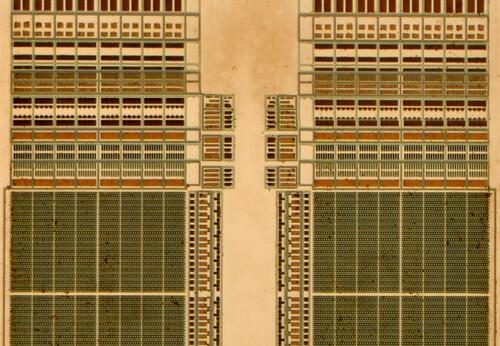
Importantly, the U.S. currently faces a decision: to rely on imported polysilicon from China to unlock the electronic economy, or to protect and expand existing capacity across the U.S. and allied nations to feed the growing demand for chips, and therefore for polysilicon. The ongoing Section 232 investigation into imported polysilicon is at the heart of this opportunity, as it allows the U.S. to confront China’s stranglehold on a key advanced material head-on. The investigation provides the federal government with the opportunity to enforce tariffs, quotas, or other import restrictions on Chinese polysilicon, and raises the question of how strong a stance the administration will take to cut dependence on volatile supply chains for vital technologies.
What makes this Section 232 decision unique is that polysilicon is one of a few materials the U.S. already produces in sufficient quantities. Today, the U.S. has approximately 50,000 metric tons (MT) of active production, with an additional 16,000 MT of announced new capacity and 17,600 MT of idled capacity that could be restarted. This production capacity, bolstered by supply from allies, is sufficient to meet expected U.S. demand.
China controls the polysilicon market and erodes global competition by producing more than double the polysilicon needed to meet global demand. State-backed programs including massive subsidies, limited environmental oversight, and forced labor programs targeting Uyghur workers are taken advantage of by Chinese entities as they produce polysilicon far below free-market prices. Cratering the global price for these materials enables China’s supply chain network to undermine the short- and long-term financial viability of U.S. and allied companies.
This moment demands uncompromising policy to protect American jobs and capabilities while reducing our dependence on the global behemoth that controls these markets, and the Section 232 investigation provides an opportunity to seize it. Yet, at such a critical time, some groups are calling on the administration to implement a tariff-rate quota (TRQ), which guarantees access to underpriced material by designating the amount of Chinese polysilicon that can enter the market duty-free. This approach does nothing to counter China’s anti-competitive, market-manipulative tactics, and instead institutionalizes dependence on an adversary while leaving American industry and workers out to dry. leaving American industry and workers out to dry.
As PV Tech recently noted, policymakers face key design questions for the 232: Will restrictions only cover raw polysilicon or extend to wafers, cells, and modules? Will enforcement differ by region, creating carve-outs for “friendly” exporters? Those questions are irrelevant if the U.S. begins with a quota for Chinese content – undermining the very goal of the Section 232 investigation, which is to address national security vulnerabilities associated with import reliance. In addition, a quota signals an interest in this cheaper material despite the ramifications of this dependence, leading importers to also relabel shipments, reroute through third countries, and exploit country-of-origin loopholes. That is not a trade remedy; it’s a blueprint for circumvention.
As with rare earths, we have seen what happens when the U.S. becomes dependent on a foreign adversary. Repeating mistakes that hurt existing domestic capacity in the interest of cheaper material is a short-term political compromise with long-term implications for U.S. competitiveness and technological leadership. Working closely with our G-7 partners presents an opportunity to coordinate restrictions on Chinese-origin or -linked polysilicon, close circumvention pathways, and create a unified front among free-market economies to prevent dependence on artificially low-cost polysilicon fraught with abusive labor regimes and environmental negligence.
The United States does not need half-measures. It needs clear, uncompromising enforcement that restores domestic market confidence. A full prohibition on imports of Chinese-origin and -linked polysilicon and derivatives ensures a competitive, transparent, and reliable supply chain for the material, unlocking a new era of advanced technologies. Anything less will leave American manufacturing expertise vulnerable, American jobs on the line, and America’s national security at risk.
Emma Bishop is the President of the Advanced Materials Security Council (AMSC) and a Vice President at Venn Strategies. Alex Rubin is a nonresident senior fellow at the Information Technology and Innovation Foundation (ITIF).
Tyler Durden Wed, 12/17/2025 – 21:20
Source: https://freedombunker.com/2025/12/17/polysilicon-an-opportunity-to-demonstrate-america-first/
Anyone can join.
Anyone can contribute.
Anyone can become informed about their world.
"United We Stand" Click Here To Create Your Personal Citizen Journalist Account Today, Be Sure To Invite Your Friends.
Before It’s News® is a community of individuals who report on what’s going on around them, from all around the world. Anyone can join. Anyone can contribute. Anyone can become informed about their world. "United We Stand" Click Here To Create Your Personal Citizen Journalist Account Today, Be Sure To Invite Your Friends.
LION'S MANE PRODUCT
Try Our Lion’s Mane WHOLE MIND Nootropic Blend 60 Capsules
Mushrooms are having a moment. One fabulous fungus in particular, lion’s mane, may help improve memory, depression and anxiety symptoms. They are also an excellent source of nutrients that show promise as a therapy for dementia, and other neurodegenerative diseases. If you’re living with anxiety or depression, you may be curious about all the therapy options out there — including the natural ones.Our Lion’s Mane WHOLE MIND Nootropic Blend has been formulated to utilize the potency of Lion’s mane but also include the benefits of four other Highly Beneficial Mushrooms. Synergistically, they work together to Build your health through improving cognitive function and immunity regardless of your age. Our Nootropic not only improves your Cognitive Function and Activates your Immune System, but it benefits growth of Essential Gut Flora, further enhancing your Vitality.
Our Formula includes: Lion’s Mane Mushrooms which Increase Brain Power through nerve growth, lessen anxiety, reduce depression, and improve concentration. Its an excellent adaptogen, promotes sleep and improves immunity. Shiitake Mushrooms which Fight cancer cells and infectious disease, boost the immune system, promotes brain function, and serves as a source of B vitamins. Maitake Mushrooms which regulate blood sugar levels of diabetics, reduce hypertension and boosts the immune system. Reishi Mushrooms which Fight inflammation, liver disease, fatigue, tumor growth and cancer. They Improve skin disorders and soothes digestive problems, stomach ulcers and leaky gut syndrome. Chaga Mushrooms which have anti-aging effects, boost immune function, improve stamina and athletic performance, even act as a natural aphrodisiac, fighting diabetes and improving liver function. Try Our Lion’s Mane WHOLE MIND Nootropic Blend 60 Capsules Today. Be 100% Satisfied or Receive a Full Money Back Guarantee. Order Yours Today by Following This Link.


| Visits: | 1,767,924,494 |
| Stories: | 8,565,342 |
Whistler Blowers, Insiders

