

New Research Suggests Herbs And Plant Compounds Helpful In Surviving Superbugs

When Antibiotics Fail: Why Medicinal Plants Are Becoming the Quiet Backup Plan
Antibiotic resistance isn’t some distant headline anymore—it’s baked into everyday medicine. Quietly, steadily, it’s eroding one of the pillars of modern life. And for families living rural, independent, or off the grid, that’s not an abstract concern. It’s a practical one.
A growing wave of 2025 research is now pointing in a surprising direction. Medicinal plants—especially those rich in phenolics, terpenes, and other bioactive compounds—aren’t likely to replace antibiotics. But they may become critical allies in a post-antibiotic world if we learn how to use them wisely.
In other words, the future of infection control might not sit entirely in a pharmacy. Some of it may be growing right outside the back door.
The Superbug Storm That’s Already Here

First, the situation is blunt. A sweeping 2025 review of medicinal plant research opens with a sobering assessment: drug-resistant infections from familiar bacteria like Staphylococcus aureus, E. coli, Klebsiella pneumoniae, Salmonella, and Pseudomonas aeruginosa are now considered major global threats.
Meanwhile, the World Health Organization’s “priority pathogens” list is packed with bacteria that shrug off multiple classes of antibiotics—the very drugs we’ve depended on since the 1940s.
For rural or off-grid communities, that risk multiplies. Distance from hospitals, limited access to newer medications, and the possibility of supply chain disruptions all widen the gap between a manageable infection and a serious emergency. When a simple skin wound or urinary tract infection no longer responds to first-line drugs, what used to be routine suddenly carries real danger.
And here’s the kicker: resistance isn’t just caused by misuse in hospitals. Antibiotics are woven into modern agriculture—from livestock feed to aquaculture to crop protection. Over decades, that widespread use has seeded resistance genes throughout soil, water, animals, and even our own microbiomes.
So the pressure is building. Quietly. Everywhere.
How Plants Fight Back: Nature’s Chemical Arsenal
Against that backdrop, researchers have been digging deeper into how plants defend themselves against microbes. And what they’re finding is impressive.
A 2025 systematic review identified six major classes of plant compounds with strong antimicrobial activity: alkaloids, flavonoids, phenols, saponins, tannins, and terpenoids. These molecules are found throughout the plant world—in leaves, bark, roots, flowers, and resins—and can often be extracted with simple solvents like water or alcohol.
But what makes them so interesting is how they work.
Unlike many synthetic antibiotics that target a single process, plant compounds often attack microbes from multiple angles at once. Researchers repeatedly describe a set of common actions:
They damage bacterial and fungal cell membranes, causing leakage and collapse. Many aromatic terpenes—like eugenol in clove or carvacrol in oregano—excel at this.
They weaken cell walls, leaving microbes vulnerable to immune attack or pharmaceutical drugs.
They interfere with DNA, RNA, or protein synthesis, making it difficult for pathogens to grow or repair themselves.
And importantly, they can block the enzymes bacteria use to detoxify antibiotics or pump them out of the cell—one of the main mechanisms behind drug resistance.
Because these compounds hit several targets simultaneously, microbes have a much harder time adapting. That multi-pronged pressure is exactly what many modern single-target drugs lack.
Plants and Pharmaceuticals: Better Together
Now here’s where the research gets especially interesting.
The strongest message from 2025 studies is not that herbs replace antibiotics—but that they can amplify them. Think of medicinal plants less as substitutes and more as force multipliers.
Several reviews found that plant extracts often work at surprisingly low concentrations and can significantly improve the performance of existing antibiotics against resistant strains. In some lab studies, combining flavonoid-rich or tannin-rich plant extracts with standard drugs restored susceptibility in stubborn infections like MRSA and certain Gram-negative bacteria.
Meanwhile, research on dietary polyphenols shows that these compounds can weaken bacterial defenses without necessarily killing them outright. They may reduce toxin production, block adhesion to tissues, and prevent biofilm formation—the slimy protective layer that shields microbes from both drugs and immune cells.
Taken together, that points toward a future where treatment may involve both a pharmaceutical antibiotic and a standardized plant extract designed to disarm the pathogen and make lower drug doses effective again.
For a prepared household, it also suggests something practical: well-chosen herbs and plant preparations can support—not sabotage—the occasional antibiotic course when it’s truly needed.
The Antifungal Frontlines
Bacteria aren’t the only concern. Opportunistic fungi like Candida and Aspergillus are also developing resistance to common antifungal medications.
A 2024–2025 research wave focusing on antifungal plant compounds highlights terpenoids and phenolics as particularly effective. Compounds like eugenol in clove, carvacrol in oregano and thyme, and various plant-derived sesquiterpenes disrupt fungal membranes, causing ion leakage and structural collapse.
Meanwhile, phenolic acids such as caffeic acid and ellagic acid have demonstrated activity against Candida auris, a notorious multidrug-resistant fungus. These compounds interfere with fungal cell walls and energy systems, slowing growth and making them more vulnerable.
Here’s the fascinating part: many of these molecules are already present in everyday culinary herbs and spices. That doesn’t mean a pinch of oregano replaces prescription treatment. But it does suggest that regular, generous use of these plants may create a subtle, ongoing antifungal pressure while supporting immune resilience.
Training the Immune System from the Inside
Beyond direct antimicrobial action, modern research is highlighting another role for plant compounds: terrain management.
A major 2025 review on dietary polyphenols shows that these molecules help shape the gut microbiome and mucosal immune system. In practical terms, they strengthen the body’s internal defenses.
Polyphenols can encourage beneficial bacteria like Lactobacillus, Bifidobacterium, and Faecalibacterium. As these microbes break down plant compounds, they produce signaling molecules that stimulate immune responses—boosting antimicrobial peptides, strengthening mucosal barriers, and increasing protective antibodies like IgA.
At the same time, polyphenols can selectively inhibit harmful bacteria while leaving beneficial species intact. That selective pressure helps shift the microbiome toward resilience rather than vulnerability.
For households relying on their own water systems, livestock, and improvised sanitation, that internal defense system matters enormously. A resilient gut ecosystem and balanced immune response may be the difference between shrugging off exposure and developing a serious infection.
Building a Smarter Herbal Strategy
So what does all this mean in practical terms?
First, think in terms of support rather than replacement. The best evidence suggests plant compounds enhance antibiotic effectiveness and reduce microbial virulence—not that they reliably cure severe infections alone.
Next, aim for diversity. Different phytochemicals target microbes in different ways, and combinations matter. A well-stocked household apothecary might include high-phenolic herbs like oregano and rosemary, aromatic spices like clove and cinnamon, tannin-rich leaves and barks, and regionally adapted medicinal plants.
At the same time, respect potency. Many plant compounds show strong activity at low doses and can be toxic at higher levels. Natural does not mean harmless, especially for children, pregnancy, or people taking medications.
And finally, protect the pharmaceuticals you do have. Avoid casual antibiotic use for minor ailments. When appropriate, pair necessary medications with supportive herbs that reduce biofilms, strengthen immunity, and lower pathogen virulence. Used wisely, that approach may extend the usefulness of the drugs we still have.
A Future Rooted in the Garden
Strip away the scientific jargon, and the message is simple.
Plants have spent millions of years defending themselves against bacteria and fungi using a vast chemical toolkit. Those same compounds can help us as antibiotic resistance spreads. For decades, we treated herbs and spices as optional flavorings in an age of cheap pharmaceuticals. That era is ending.
The emerging science suggests a more resilient future will be both pharmaceutical and botanical. It will grow in gardens as much as in laboratories. And for families thinking ahead, it starts with a simple shift: planting not just for calories, but for medicine. Cooking not just for flavor, but for resilience. Learning enough herbal knowledge to use plants carefully, intelligently, and respectfully when modern medicine isn’t immediately within reach.
No one wants to return to a world where a minor infection can turn deadly. But if our miracle drugs begin to fail, a smarter partnership with the plant world may be one of the best ways to make sure we don’t.
Source: https://www.offthegridnews.com/alternative-health/new-research-suggests-herbs-and-plant-compounds-helpful-in-surviving-superbugs/
Anyone can join.
Anyone can contribute.
Anyone can become informed about their world.
"United We Stand" Click Here To Create Your Personal Citizen Journalist Account Today, Be Sure To Invite Your Friends.
Before It’s News® is a community of individuals who report on what’s going on around them, from all around the world. Anyone can join. Anyone can contribute. Anyone can become informed about their world. "United We Stand" Click Here To Create Your Personal Citizen Journalist Account Today, Be Sure To Invite Your Friends.
LION'S MANE PRODUCT
Try Our Lion’s Mane WHOLE MIND Nootropic Blend 60 Capsules
Mushrooms are having a moment. One fabulous fungus in particular, lion’s mane, may help improve memory, depression and anxiety symptoms. They are also an excellent source of nutrients that show promise as a therapy for dementia, and other neurodegenerative diseases. If you’re living with anxiety or depression, you may be curious about all the therapy options out there — including the natural ones.Our Lion’s Mane WHOLE MIND Nootropic Blend has been formulated to utilize the potency of Lion’s mane but also include the benefits of four other Highly Beneficial Mushrooms. Synergistically, they work together to Build your health through improving cognitive function and immunity regardless of your age. Our Nootropic not only improves your Cognitive Function and Activates your Immune System, but it benefits growth of Essential Gut Flora, further enhancing your Vitality.
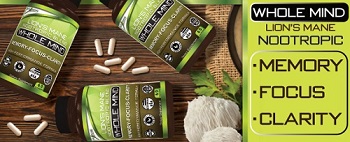
Our Formula includes: Lion’s Mane Mushrooms which Increase Brain Power through nerve growth, lessen anxiety, reduce depression, and improve concentration. Its an excellent adaptogen, promotes sleep and improves immunity. Shiitake Mushrooms which Fight cancer cells and infectious disease, boost the immune system, promotes brain function, and serves as a source of B vitamins. Maitake Mushrooms which regulate blood sugar levels of diabetics, reduce hypertension and boosts the immune system. Reishi Mushrooms which Fight inflammation, liver disease, fatigue, tumor growth and cancer. They Improve skin disorders and soothes digestive problems, stomach ulcers and leaky gut syndrome. Chaga Mushrooms which have anti-aging effects, boost immune function, improve stamina and athletic performance, even act as a natural aphrodisiac, fighting diabetes and improving liver function. Try Our Lion’s Mane WHOLE MIND Nootropic Blend 60 Capsules Today. Be 100% Satisfied or Receive a Full Money Back Guarantee. Order Yours Today by Following This Link.


| Visits: | 1,776,313,419 |
| Stories: | 8,582,862 |
Whistler Blowers, Insiders

