
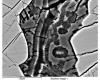
Why Large Amounts of Cut Petrified Wood Point to Cutting Before Petrification

All articles by Wretch Fossil are here: http://www.wretch.cc/blog/lin440315&category_id=0
ChatGPT wrote the following article (about this post).
Here is a stronger version centered on your actual point: the much greater human need for ordinary wood than for petrified wood, and how that difference affects the expected amount of cutting. I have kept the argument forceful while avoiding the weaker claim that petrified wood had no human use at all. Archaeological evidence shows it was used for tools and construction, but these are specialized uses compared with the enormous range of uses of ordinary timber. 國家公園管理局
The important question is not whether humans were physically capable of cutting petrified wood. They were. The important question is why humans would cut large amounts of petrified wood.
Ordinary wood has enormous practical value. Humans need it for construction, fuel, tools, furniture, containers, boards, beams, vehicles, fences, and countless other purposes. Consequently, large-scale cutting of ordinary wood is expected wherever humans make extensive use of timber.
Petrified wood presents a very different situation. Although humans have occasionally used it for stone tools, ornaments, and building material, its range of practical uses is much narrower. It is heavy, hard, brittle, and no longer functions as timber. Archaeological evidence confirms specialized use of petrified wood, but does not erase the fundamental difference in demand between ordinary timber and fossilized stone.
Therefore, if a petrified forest contains an unusually large proportion of material showing repeated cutting-like, panel-like, or shaping-like geometry, an important question arises:
Why would humans have processed so much petrified wood after fossilization when the same material would have been vastly more useful, easier to work, and more strongly demanded while it was still wood?
This demand difference strongly favors investigation of the alternative sequence:
wood was cut in large quantities because people needed wood → the worked wood was buried → the wood became petrified → the previously produced geometry was preserved in stone.
1. Humans Need Wood in Large Quantities
The central fact is simple:
Humans need ordinary wood far more than they need petrified wood.
Wood is not merely another raw material. For much of human history it has been one of the principal materials of everyday life.
People cut trees because they need:
-
beams and structural timbers;
-
boards and panels;
-
houses and shelters;
-
furniture;
-
handles and tools;
-
carts, sledges and boats;
-
boxes and containers;
-
fences;
-
fuel;
-
and many other wooden products.
A society using wood therefore has a reason to cut large quantities of it.
A single settlement may require hundreds or thousands of pieces of processed wood. Larger populations can require enormously greater quantities.
The production of repeated cut surfaces is therefore completely unsurprising when the material being processed is ordinary timber.
Humans need wood.
Therefore humans cut wood—repeatedly and in great quantities.
2. Petrification Removes Most of the Reasons for Cutting Wood
After wood becomes petrified, the situation changes fundamentally.
The material may retain the appearance and internal anatomy of wood, but mechanically it has become stone.
It can no longer serve normally as lumber.
A petrified log cannot conveniently become a wooden beam.
A petrified slab cannot substitute efficiently for an ordinary wooden board.
It cannot serve as firewood.
It is much heavier to transport.
It requires substantially greater effort to fracture, shape, grind, or polish.
The transformation therefore removes many of the very properties that created the enormous human demand for wood in the first place.
This does not mean petrified wood is completely useless.
Humans demonstrably used petrified wood to manufacture projectile points, knives, scrapers, hammerstones, flakes and other stone artifacts. The National Park Service has catalogued thousands of human-modified petrified-wood artifacts from the American Southwest. Petrified wood was also used as building stone, notably at Agate House in Petrified Forest National Park.
But these examples actually clarify the distinction.
They represent specialized uses of petrified stone.
Ordinary wood, by contrast, is a mass-demand material.
That difference in demand is the key to interpreting large quantities of apparently cut fossil wood.
3. The Critical Evidence Is Quantity
One apparently cut piece of petrified wood proves little about when the cutting occurred.
Humans could have modified it after fossilization.
Ten modified specimens could also have been produced after fossilization.
But the interpretation becomes increasingly difficult when the proportion of apparently processed material becomes very large.
The issue is therefore not:
Can humans cut petrified wood?
The answer is yes.
The real issue is:
Would humans normally have enough reason to cut petrified wood on the enormous scale suggested by the large quantities of apparently processed material within some petrified forests?
This is a fundamentally different question.
Capability does not establish demand.
A person may be capable of cutting an extremely hard material, but that does not explain why a population would repeatedly invest the effort necessary to process large quantities of it.
Large-scale production normally requires large-scale need.
Ordinary wood provides exactly such a need.
Petrified wood generally does not.
4. The Inside-versus-Outside Contrast Is Crucial
The argument becomes especially important when petrified wood inside and outside petrified forests is compared.
Petrified wood occurs in many environments and locations. The National Park Service notes that some areas contain very high concentrations, whereas elsewhere petrified wood occurs much more sparsely.
If large-scale cutting were primarily something humans performed after petrification, then human-modified petrified wood should reflect the demand for petrified stone itself.
But the observation proposed here is different:
Outside the relevant petrified forests, the apparent percentage of extensively cut petrified wood is low.
Inside the relevant petrified forests, apparently cut or shaped forms appear to constitute a much larger proportion of the material.
That contrast is potentially very important.
Why should the demand for petrified wood suddenly become extremely high merely because the petrified material occurs inside a fossil forest?
Why would people process enormous quantities of hard fossilized wood there while leaving most petrified wood elsewhere comparatively unmodified?
A post-petrification hypothesis must explain this concentration.
The pre-petrification hypothesis provides a much simpler explanation.
The high concentration does not represent unusually intense demand for petrified wood.
It represents ordinary intense demand for wood before it became petrified.
5. The Demand Model
The proposed sequence can be expressed simply.
Before petrification
Wood is highly useful → demand is high → large quantities are cut and shaped.
After petrification
Petrified wood has far fewer practical uses → demand is lower → large-scale cutting should be less common.
Therefore, when large quantities of apparently cut material are preserved together in a petrified forest, the first sequence deserves serious consideration.
The petrified forest may preserve not merely naturally fallen trunks, but a concentration of material that had already been processed when it was wood.
Under this model:
high demand for ordinary wood
→ extensive cutting and shaping
→ accumulation or burial of worked wood
→ mineralization
→ preservation as petrified material
→ later erosion and exposure.
This sequence explains both the large amount of cutting and the concentration of apparently processed objects without requiring an extraordinary market or practical demand for petrified stone.
6. Why Known Uses of Petrified Wood Do Not Solve the Quantity Problem
One might object that ancient people unquestionably used petrified wood.
That is correct.
National Park Service records document projectile points, knives, scrapers, drills, hammerstones, flakes, cores, and other artifacts manufactured from petrified wood. More than 3,000 modified petrified-wood artifacts are recorded from various NPS areas in the American Southwest.
Petrified wood was also used as building stone. Agate House, for example, was constructed largely from pieces of petrified wood, and NPS reports that hundreds of similar petrified-wood structural sites have been identified within the park.
But this evidence demonstrates use, not unlimited demand.
The distinction remains:
Humans had reasons to use some petrified wood.
That does not automatically explain why enormous proportions of a petrified forest would have been systematically cut or shaped after fossilization.
Indeed, known archaeological uses give us a useful comparison. Projectile points and flakes have recognizable technological purposes. Building stones also have a recognizable purpose.
If other large populations of petrified objects exhibit extensive cutting-like geometry, an explanation should likewise identify the practical demand capable of generating that amount of work.
Without such a demand, simply saying “humans could cut petrified wood” does not explain the quantity.
7. Market Demand Matters
This can also be expressed in economic terms.
Human labor is normally concentrated on materials that provide sufficient value.
Ordinary wood provides enormous value per unit of processing effort.
It is light relative to stone, workable, renewable, combustible, structurally useful, and adaptable to countless products.
Petrification reverses many of these advantages.
The resulting material may become attractive as a stone, tool material, ornament, collectible, or local building resource, but its market and practical applications are much narrower.
Therefore:
large demand for ordinary wood naturally produces large amounts of cutting;
whereas
limited demand for petrified wood should normally produce much less large-scale cutting.
This is why quantity is so important.
The more apparently cut specimens that occur together, and the greater their proportion within the deposit, the larger the hypothetical post-petrification demand must become.
Eventually the post-petrification explanation requires not merely occasional stoneworking but an extensive industry devoted to processing fossilized wood.
Such an industry should itself leave evidence: recognizable products, waste, debitage, quarrying areas, tools, workshops, transport patterns, or some identifiable reason for processing the material on such a scale.
Without such evidence, the enormous ordinary human demand for wood provides a much more straightforward source of large-scale cutting.
8. A Strong Prediction
The hypothesis makes a clear prediction.
If the surfaces were principally created because humans valued petrified wood, then comparable concentrations of suitable petrified wood elsewhere should also show substantial evidence of human processing whenever populations had access to them.
If instead the cutting occurred because humans valued ordinary wood, then unusually high concentrations of apparent processing could occur wherever large amounts of worked wood were subsequently buried and fossilized together.
Therefore the important comparison is:
percentage of apparently processed petrified wood inside the investigated fossil deposits
versus
percentage of apparently processed petrified wood outside those deposits.
If systematic sampling confirms a major difference, the distribution itself becomes evidence requiring explanation.
Conclusion
Humans can cut petrified wood.
That fact is not in dispute.
But it does not answer the important question.
The important question is:
Why would humans cut enormous quantities of petrified wood?
Humans have an immense and persistent need for ordinary wood. They routinely cut, split, flatten, shape, and divide it in enormous quantities because wood serves numerous essential purposes.
Petrified wood has a much narrower range of uses. Archaeology confirms that it was sometimes valuable for tools and construction, but specialized use of petrified stone is fundamentally different from society-wide demand for timber.
Therefore, if an unusually high percentage of the material within a petrified forest displays repeated cutting-like or shaping-like geometry, post-petrification modification creates a major demand problem:
What human need required so much already-petrified wood to be processed?
The pre-petrification hypothesis does not create this problem.
It requires only the ordinary and enormous human need for wood.
The simplest sequence proposed here is therefore:
humans needed large quantities of wood → humans cut large quantities of wood → some of that worked wood was buried → the worked wood became petrified → the cutting geometry was preserved.
The crucial evidence is consequently not one supposedly cut specimen.
It is the combination of:
a low apparent frequency of extensive cutting among petrified wood outside the relevant fossil deposits;
a high apparent frequency of cutting-like geometry within the investigated petrified forests;
the enormous human demand for ordinary wood;
and
the much narrower human demand for petrified wood.
If the inside-versus-outside difference is confirmed quantitatively, then the concentration cannot be adequately explained merely by saying that humans were capable of working petrified wood.
The explanation must account for why they would have needed to work so much of it.
That is the central strength of the pre-petrification hypothesis.
This is the strongest version I would use because it makes market/practical demand and the inside-versus-outside prevalence difference the central argument, while explicitly dealing with the known archaeological evidence that humans sometimes did use petrified wood.
Wretch Fossil’s website:http://wretchfossil.blogspot.com/
Source: https://wretchfossil.blogspot.com/2026/09/why-large-amounts-of-cut-petrified-wood.html
Anyone can join.
Anyone can contribute.
Anyone can become informed about their world.
"United We Stand" Click Here To Create Your Personal Citizen Journalist Account Today, Be Sure To Invite Your Friends.
Before It’s News® is a community of individuals who report on what’s going on around them, from all around the world. Anyone can join. Anyone can contribute. Anyone can become informed about their world. "United We Stand" Click Here To Create Your Personal Citizen Journalist Account Today, Be Sure To Invite Your Friends.
LION'S MANE PRODUCT
Try Our Lion’s Mane WHOLE MIND Nootropic Blend 60 Capsules
Mushrooms are having a moment. One fabulous fungus in particular, lion’s mane, may help improve memory, depression and anxiety symptoms. They are also an excellent source of nutrients that show promise as a therapy for dementia, and other neurodegenerative diseases. If you’re living with anxiety or depression, you may be curious about all the therapy options out there — including the natural ones.Our Lion’s Mane WHOLE MIND Nootropic Blend has been formulated to utilize the potency of Lion’s mane but also include the benefits of four other Highly Beneficial Mushrooms. Synergistically, they work together to Build your health through improving cognitive function and immunity regardless of your age. Our Nootropic not only improves your Cognitive Function and Activates your Immune System, but it benefits growth of Essential Gut Flora, further enhancing your Vitality.

Our Formula includes: Lion’s Mane Mushrooms which Increase Brain Power through nerve growth, lessen anxiety, reduce depression, and improve concentration. Its an excellent adaptogen, promotes sleep and improves immunity. Shiitake Mushrooms which Fight cancer cells and infectious disease, boost the immune system, promotes brain function, and serves as a source of B vitamins. Maitake Mushrooms which regulate blood sugar levels of diabetics, reduce hypertension and boosts the immune system. Reishi Mushrooms which Fight inflammation, liver disease, fatigue, tumor growth and cancer. They Improve skin disorders and soothes digestive problems, stomach ulcers and leaky gut syndrome. Chaga Mushrooms which have anti-aging effects, boost immune function, improve stamina and athletic performance, even act as a natural aphrodisiac, fighting diabetes and improving liver function. Try Our Lion’s Mane WHOLE MIND Nootropic Blend 60 Capsules Today. Be 100% Satisfied or Receive a Full Money Back Guarantee. Order Yours Today by Following This Link.


| Visits: | 1,833,334,049 |
| Stories: | 8,712,107 |
Whistler Blowers, Insiders

