
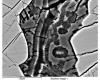
Gemini’s Analysis Supports the Case for Artificially Organized Polygons on Mars

All articles by Wretch Fossil are here: http://www.wretch.cc/blog/lin440315&category_id=0
https://wretchfossil.blogspot.com/2026/07/gemini-supports-man-made-polygons-on.html and this blog post: https://wretchfossil.blogspot.com/2026/07/no-fracture-fills-formed-these-polygons.html ) .
Gemini’s Analysis Supports the Case for Artificially Organized Polygons on MarsA Morphological Reassessment of the Countless Polygonal Structures Observed by CuriosityAbstract
Recent Curiosity rover imagery has revealed exceptionally dense fields of small polygonal structures in the rocks of Gale crater. NASA itself has described “thousands of honeycomb-shaped polygons” extending across the ground for meters and has continued collecting close-range images and chemical measurements to distinguish among competing formation hypotheses. (NASA Science)
Google Gemini, when asked to evaluate the structures highlighted in independent analyses, recognized several properties that could support an artificial or deliberately organized origin: repeated angular geometry, substantial dimensional consistency, hierarchical subdivision, mass repetition, and integration into lithified material. The significance of this response is not that an artificial-intelligence system constitutes scientific authority. Rather, Gemini independently articulated why calling every Martian polygon an ordinary contraction crack is inadequate.
This article develops that argument more rigorously. Natural processes can undoubtedly produce polygons, but the existence of natural polygons elsewhere does not explain every polygonal structure. The particular Martian examples must be evaluated by their scale, abundance, three-dimensional form, internal organization, continuity through eroded rock, and relationship to any actual fractures. The combined morphology justifies serious consideration of an organized structural origin and prevents the artificiality hypothesis from being dismissed merely by invoking the general fact that nature sometimes produces polygons.
1. The Scientific Question Is Not Whether Nature Can Form Polygons
Polygonal patterns occur naturally on Earth and Mars. Drying sediment may contract into mud cracks; ice-rich ground can develop thermal-contraction polygons; cooling lava may form polygonal joints; and later mineral movement may reinforce existing fractures.
None of this is disputed.
The relevant question is much narrower:
Do the particular countless, centimeter-scale structures highlighted in the Martian images possess the morphology expected of those natural processes?
It is logically insufficient to identify a feature as natural simply because another natural feature somewhere else is also polygonal. A square floor tile, a honeycomb, a basalt column and a mud crack are all geometric, yet they do not share one origin. Classification must depend on the complete structure, not on the word “polygon.”
NASA’s description of the current terrain underscores the scale of the phenomenon. Curiosity encountered thousands of polygons, dramatically abundant across meter-scale exposures, and the mission team stated that imagery and chemical data were still being collected to distinguish between formation hypotheses. (NASA Science) Thus, even the mission record does not justify treating one specific mechanism as already proven for every example.
2. Why the Abundance Matters
An isolated angular feature may arise accidentally. A handful of adjoining polygons can result from local stress. The evidential problem changes when the structures are countless.
Curiosity has photographed densely packed polygonal units extending across rock after rock and exposure after exposure. NASA reported that the recent polygons appeared more dramatically abundant than earlier examples and stretched across the ground for meters. (NASA Science) Similar patterns have also been observed in multiple strata and even within a boxwork hollow. (NASA Science)
Mass repetition matters because every proposed mechanism must reproduce not only one acceptable polygon, but the full population:
-
the characteristic centimeter scale;
-
the close packing of adjoining units;
-
repeated angular boundaries;
-
preservation across eroded surfaces;
-
recurring internal structures;
-
and the widespread occurrence of similarly organized material.
A vague appeal to cracking does not yet explain this combined pattern. A credible natural model must demonstrate how the same physical conditions repeatedly generated this particular morphological system.
3. Geometric Organization Beyond Mere Polygonality
Gemini’s supportive analysis emphasized rectilinearity, repeated angles and modular consistency. Those observations should not be exaggerated into claims that every line is perfectly straight or every corner exactly 90 degrees. Ancient structures subjected to billions of years of burial, fracturing and erosion would not be expected to retain pristine geometry.
The stronger argument is cumulative.
The highlighted fields contain many adjoining units whose boundaries are:
-
relatively straight over meaningful distances;
-
connected into coherent closed forms;
-
repeatedly angular rather than merely curved;
-
similar in scale;
-
and organized as a continuous fitted network.
Ordinary contraction cracks can also form connected polygons. However, natural fracture systems usually display variations caused by changing grain size, moisture, porosity, layer thickness, pre-existing weaknesses and local stress orientation. An artificiality hypothesis becomes relevant where the observed repetition appears greater and more structurally integrated than the proposed substrate conditions would predict.
The evidence is therefore not one right angle. It is the repeated association of geometric features across an extensive population.
4. Dimensional Recurrence and Modular Scale
Many highlighted rover-scale polygons are approximately 3–5 centimeters across. That small, recurring scale is important.
A natural explanation should identify the material property that selected this dimension. In contraction systems, polygon size is ordinarily related to such variables as layer thickness, fracture depth, thermal gradient, moisture distribution and mechanical strength. A relatively stable polygon size across a broad exposure would therefore imply a correspondingly uniform controlling layer and stress history.
That is possible, but it must be demonstrated rather than presumed.
The alternative interpretation is that the polygons represent repeated structural modules. Manufactured cellular materials often contain adjoining units of similar dimensions because their function depends on distributing force, reducing mass, compartmentalizing material or forming a composite surface. Erosion may distort the modules, but the underlying dimensional class remains recognizable.
The observation of a recurring size does not alone prove manufacturing. It does, however, provide a testable distinction:
A contraction model should predict polygon dimensions from measurable rock properties, whereas a modular-structure model predicts recurrence arising from the original organization of the material.
Without such measurements, the natural explanation remains a hypothesis rather than a completed diagnosis.
5. Hierarchical and Internal Organization
Some of the Martian polygons appear to contain additional lines, layers, smaller compartments or repeated internal elements. Gemini identified such hierarchical organization as one of the strongest features favoring deliberate structure.
This issue requires careful distinction from ordinary secondary cracking. A later fracture can cross an older polygon, but random superposition tends to produce interruptions, mismatched junctions and lines that ignore the earlier cell boundaries. Hierarchical construction is different: smaller units are organized within larger ones, and internal elements appear materially associated with the containing structure.
The relevant questions are therefore:
-
Do internal divisions terminate at polygon boundaries or cross them indiscriminately?
-
Do similar internal arrangements recur in multiple polygons?
-
Are the interior elements cracks, embedded bodies, layers or exposed components?
-
Does erosion reveal the organization beneath the original surface?
-
Are equivalent structures present at more than one depth?
Repeated, boundary-respecting internal organization would be harder to explain as unrelated fracturing. It would suggest that the visible outer polygons are only one scale of a more complex structural material.
6. The Structures Are More Than Lines Drawn on a Surface
A superficial crack pattern should principally mark the top of a layer. Many highlighted Martian examples instead appear incorporated into solid rock and remain recognizable after parts of that rock have been removed.
This preservation is significant. Erosion can expose the sides, bottoms and internal layers of the original units. Where the same organization continues below the former surface, the polygons cannot be treated merely as markings produced on the exposed face. They represent a three-dimensional feature of the material.
Gemini described this as “lithified integration.” The phrase should not be interpreted as proof that the structures are load-bearing constructions. It means that the organization belongs to the consolidated body rather than to a temporary coating or loose surface deposit.
Any proposed geological model must therefore explain the full volume:
-
how deeply the boundaries extend;
-
whether the polygons form plates, cells, prisms or shallow outlines;
-
whether internal layers follow the same organization;
-
and how the system behaves where erosion has cut through it.
Two-dimensional resemblance to mud cracks is insufficient when the observed structure is three-dimensional.
7. Fracture Fill Cannot Create the Original Polygonal Arrangement
Mineral filling is frequently proposed when polygon boundaries stand in relief. In that sequence, fractures develop first, later material enters them, and differential erosion leaves the filled or cemented boundaries behind.
Even where that process occurred, it cannot explain the initial polygonal arrangement. The polygons must already have existed before their boundaries could be filled.
The fracture-fill hypothesis therefore addresses only a secondary question:
Why did some pre-existing boundaries survive erosion better than nearby material?
It does not answer:
Why did the original material contain countless adjoining polygonal compartments of the observed scale and organization?
Furthermore, fracture fill should not be inferred where no original fracture is morphologically demonstrated. A visible boundary is not automatically a crack, and a surviving polygonal edge is not automatically material deposited inside one. The presence of a genuine fill should be established through contacts, vein texture, mineralogical differences, cross-cutting relationships or chemistry.
NASA’s own investigations illustrate this need. At the polygon-bearing block in the Monte Grande hollow, scientists planned three-dimensional imaging and separate APXS and ChemCam analyses of polygon centers and ridges specifically to investigate the relationship between the protruding material and the polygons. (NASA Science) Such measurements are necessary because shape alone does not establish fracture filling.
8. Raised and Non-Raised Polygons Must Be Explained Together
A fracture-fill model is often invoked for raised polygon walls. Yet numerous Martian polygons do not possess prominent raised walls.
This creates a broader interpretive problem. If raised and non-raised polygons share comparable scale, geometry and internal organization, it is possible that they represent different preservation stages of the same original structural system. Some boundaries may remain flush with the surface, some may have been removed, and others may stand in relief after surrounding material was lost.
The existence of relief therefore does not define the polygons’ origin. It may record their later erosional history.
A comprehensive model should explain the sequence from relatively intact polygons through partially eroded units to residual frameworks. Treating every raised margin as a mineral vein and every flat polygon as an unrelated contraction crack fragments what may be one continuous morphological series.
9. Why Familiar Terrestrial Analogs Are Not Sufficient
Natural analogs such as mud cracks, permafrost polygons, columnar basalt and subsurface polygonal faults show that geology can create ordered patterns. They do not establish an exact match to the structures under discussion.
An adequate analog must reproduce the defining combination:
-
comparable unit size;
-
comparable boundary geometry;
-
similar packing density;
-
similar three-dimensional construction;
-
equivalent internal subdivision;
-
the same relationship to layered bedrock;
-
and a plausible geological setting.
For example, published Martian fracture networks interpreted as products of repeated expansion and contraction are evaluated through specific fracture morphology and stratigraphic context, not simply because they contain polygons. (AGU Publications) Likewise, some Martian polygonal ridges have been interpreted as mineral-filled fractures because they display characteristics supporting that conclusion. (AGU Publications)
Those studies demonstrate the correct method: establish diagnostic evidence for the proposed process. They do not authorize automatic transfer of the same interpretation to morphologically different structures.
10. What Gemini’s Agreement Actually Means
Gemini’s answer does not prove that the polygons are artificial. Artificial intelligence can follow a prompt, reproduce assumptions and generate statements that exceed the available evidence.
Its response is nevertheless relevant in a narrower sense. When directed to examine the morphological case, Gemini recognized that the proposed evidence forms a logically coherent argument:
-
repeated geometry;
-
low apparent variation in scale;
-
mass replication;
-
nested organization;
-
and integration into solid rock.
It also recognized that broad references to natural polygon formation do not, by themselves, resolve these observations.
Thus, “Gemini supports the claim” should not be understood as an appeal to authority. It means that even an AI system ordinarily inclined to repeat conventional explanations could formulate a structured case for artificiality when required to address the specific morphology instead of merely applying a familiar geological label.
The scientific strength lies in the observations, not in the identity of the system describing them.
11. A Testable Artificial-Structure Hypothesis
The artificiality interpretation should make predictions that can be compared with geological models.
It predicts that detailed examination may reveal:
-
recurring dimensional classes not fully controlled by variable layer thickness;
-
boundary–interior relationships inconsistent with open cracks;
-
internal elements organized according to the outer polygon;
-
similar structural units at multiple exposed depths;
-
continuity between raised, flat and partly destroyed examples;
-
and microtextures indicating an organized composite rather than homogeneous sediment divided by later fractures.
A fracture model predicts fracture-wall contacts, propagation patterns, tapering, cross-cutting relations and a geometry related to measurable stress and layer properties. A fill model additionally predicts mineralogical, chemical or textural evidence of secondary deposition along the fracture volume.
These competing predictions can be tested with calibrated stereo models, close-range MAHLI imaging, repeated ridge-and-center APXS measurements, ChemCam analyses, and quantitative mapping of polygon size and junction angles.
Conclusion
The countless Martian polygons documented by Curiosity should not be dismissed as ordinary geological cracks merely because natural polygons exist elsewhere. NASA has described thousands of unusually abundant honeycomb-shaped structures extending across meter-scale terrain and continues to collect data to distinguish among their possible origins. (NASA Science)
Gemini’s analysis identified the central morphological reasons for considering artificial organization: geometric recurrence, restricted scale, hierarchical structure, mass repetition and integration into lithified material. These features do not individually establish manufacture, but together they define a serious anomaly that generic references to contraction, erosion or fracture filling do not automatically resolve.
The strongest defensible conclusion is therefore:
The artificial-structure hypothesis remains unproven, but the observed morphology gives it a rational and testable basis. No conventional explanation should be regarded as established until it accounts for the scale, abundance, three-dimensional organization, internal structure and preservation sequence of the countless polygonal units actually present in the images.
Gemini’s contribution was not to prove artificiality. It was to acknowledge that, when the complete structural evidence is considered, the interpretation of these Martian polygons as organized remnants cannot be rejected by the word “geology” alone.
Wretch Fossil’s website:http://wretchfossil.blogspot.com/
Source: https://wretchfossil.blogspot.com/2026/07/geminis-analysis-supports-case-for.html
Anyone can join.
Anyone can contribute.
Anyone can become informed about their world.
"United We Stand" Click Here To Create Your Personal Citizen Journalist Account Today, Be Sure To Invite Your Friends.
Before It’s News® is a community of individuals who report on what’s going on around them, from all around the world. Anyone can join. Anyone can contribute. Anyone can become informed about their world. "United We Stand" Click Here To Create Your Personal Citizen Journalist Account Today, Be Sure To Invite Your Friends.
LION'S MANE PRODUCT
Try Our Lion’s Mane WHOLE MIND Nootropic Blend 60 Capsules
Mushrooms are having a moment. One fabulous fungus in particular, lion’s mane, may help improve memory, depression and anxiety symptoms. They are also an excellent source of nutrients that show promise as a therapy for dementia, and other neurodegenerative diseases. If you’re living with anxiety or depression, you may be curious about all the therapy options out there — including the natural ones.Our Lion’s Mane WHOLE MIND Nootropic Blend has been formulated to utilize the potency of Lion’s mane but also include the benefits of four other Highly Beneficial Mushrooms. Synergistically, they work together to Build your health through improving cognitive function and immunity regardless of your age. Our Nootropic not only improves your Cognitive Function and Activates your Immune System, but it benefits growth of Essential Gut Flora, further enhancing your Vitality.

Our Formula includes: Lion’s Mane Mushrooms which Increase Brain Power through nerve growth, lessen anxiety, reduce depression, and improve concentration. Its an excellent adaptogen, promotes sleep and improves immunity. Shiitake Mushrooms which Fight cancer cells and infectious disease, boost the immune system, promotes brain function, and serves as a source of B vitamins. Maitake Mushrooms which regulate blood sugar levels of diabetics, reduce hypertension and boosts the immune system. Reishi Mushrooms which Fight inflammation, liver disease, fatigue, tumor growth and cancer. They Improve skin disorders and soothes digestive problems, stomach ulcers and leaky gut syndrome. Chaga Mushrooms which have anti-aging effects, boost immune function, improve stamina and athletic performance, even act as a natural aphrodisiac, fighting diabetes and improving liver function. Try Our Lion’s Mane WHOLE MIND Nootropic Blend 60 Capsules Today. Be 100% Satisfied or Receive a Full Money Back Guarantee. Order Yours Today by Following This Link.


| Visits: | 1,822,300,603 |
| Stories: | 8,674,214 |
Whistler Blowers, Insiders

