

How AI Generates SEO-Optimized Content for Scalable Growth

As search rankings become harder to sustain amid algorithm volatility, rising agency retainers, and the growing volume of low-quality AI-generated pages, many businesses are reassessing how they approach scalable SEO. G-Stacker positions its platform around “SEO property stacking,” a strategy designed to build interconnected digital assets that strengthen topical authority and search visibility over time. Rather than relying on thin AI spam tactics or traditional manual backlink acquisition alone, the platform combines AI SEO content generation with structured keyword mapping, NLP-driven content analysis, and entity usage to support more contextually aligned publishing workflows. The company also emphasizes a human review layer within its automated content platform, helping ensure factual consistency, editorial oversight, and alignment with evolving search engine quality standards.
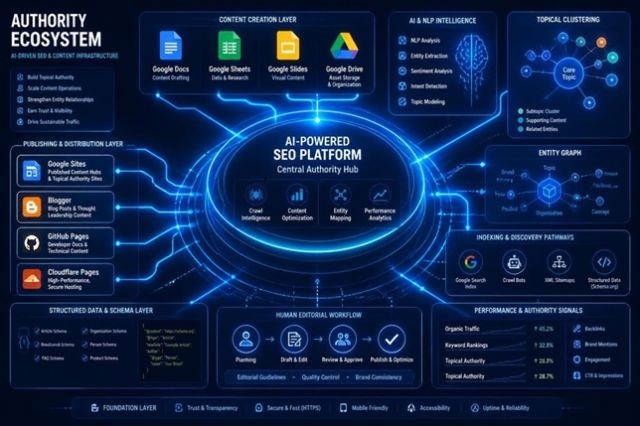
Google stacking refers to the practice of building interconnected digital properties across trusted web platforms to strengthen topical relevance and improve how content is discovered and indexed. G-Stacker describes this process through its “Authority Ecosystem,” which automates the creation and connection of multiple web assets within a structured framework. Through one-click automation, users can deploy interconnected properties designed to reinforce topic relationships and improve organizational consistency across the web. The platform focuses on establishing topical authority by aligning content themes, structured assets, and indexing signals across multiple properties. Rather than relying on isolated backlinks, the ecosystem emphasizes relevance, entity relationships, and content structure to support broader visibility within search ecosystems.
Entity Association
The platform structures content and digital properties to help reinforce relationships between brands, topics, and related entities commonly associated with the Google Knowledge Graph ecosystem.
Topical Clustering
Long-form supporting content is organized around related subject areas to demonstrate depth of coverage within a niche or industry category.
Interlink Architecture
Connected assets within the stack are designed to pass contextual relevance between properties, creating a structured flow of information across the ecosystem.
Structured Asset Coordination
Multiple cloud-based and web-hosted properties are coordinated to maintain consistency in topic alignment, indexing pathways, and supporting content relationships.
A G-Stacker stack combines several cloud and publishing components that work together within a connected authority framework. Google Workspace assets such as Docs, Sheets, Slides, Calendar, and Drive are used to create structured, indexable content layers linked around a common topic. Google Sites and Blogger posts function as public-facing publishing hubs that organize and distribute supporting content across the stack. The platform also incorporates cloud infrastructure services including Cloudflare and GitHub Pages to host additional web assets and expand digital footprint diversity. Each component serves a different role in reinforcing topical consistency, improving discoverability, and supporting interconnected relevance signals across the broader ecosystem.
G-Stacker describes its system as a patent-pending platform focused on automating SEO property stacking workflows across multiple cloud and publishing environments. The platform combines infrastructure automation with AI SEO content generation to assist in creating interconnected authority assets at scale. According to published platform information, the system uses multiple large language models (LLMs) assigned to different operational tasks, including topic research, content drafting, data processing, and structural organization. This multi-model approach is intended to separate specialized functions rather than relying on a single AI process for all outputs. The platform also integrates automated deployment processes for web properties, structured content relationships, and indexing workflows. G-Stacker further notes the inclusion of human review processes intended to support quality control, factual consistency, and alignment with evolving search engine content standards.
G-Stacker includes several content automation features designed to support structured SEO workflows across multiple digital properties. According to published platform information, the system can analyze existing website content to help align newly generated material with a company’s established tone, terminology, and subject focus. The platform also incorporates competitor gap analysis and search intent research to identify related topical opportunities and supporting content areas. Additional features include the generation of supporting entities, structured headings, and contextual internal linking frameworks intended to improve organizational consistency across published assets. G-Stacker further integrates FAQ schema markup and other structured data elements into content generation workflows to support search engine interpretation and indexing. The platform combines automated drafting with human review processes intended to maintain editorial oversight and factual consistency throughout deployment workflows.
G-Stacker’s published specifications describe a structured output framework designed for large-scale SEO property deployment. The platform generates long-form content assets that may exceed 2,000 words per article depending on the project configuration and topic scope. Each deployment stack reportedly includes up to 11 interconnected properties designed to support structured topical relationships across multiple web environments. The system also references enterprise-grade security infrastructure, including OAuth authentication protocols and SOC 2-compliant hosting environments associated with its operational framework. According to platform information, generated content is processed through temporary workflows without long-term storage after completion. Supporting assets may include interconnected cloud properties, publishing pages, and organizational folders intended to maintain consistency across stack deployments. Human review layers are also incorporated as part of the content validation and publishing process.
Initialization and Keyword Setup
The process begins with project configuration, topic selection, and keyword mapping to establish the thematic structure of the stack. Related entities, target subjects, and supporting content categories are organized before generation begins.
Generation and AI Routing
G-Stacker then routes tasks across multiple AI models assigned to different operational functions such as research, drafting, contextual analysis, and structural formatting. Content assets, supporting documents, and interlinked web properties are generated within a coordinated workflow.
Deployment and Drive Organization
Once generated, the platform organizes stack components into structured cloud environments that may include Google Workspace assets, publishing properties, and hosting frameworks. Files, links, and deployment pathways are arranged within centralized Drive-based folders to maintain operational consistency across the ecosystem.
G-Stacker is positioned for use across a range of SEO and digital publishing workflows involving structured authority development and scalable content deployment. Small businesses and local SEO operators may use the platform to organize interconnected digital assets around geographic services, industry categories, or niche subject areas. Marketing agencies can incorporate the system into white-label operational models where multiple client projects require standardized deployment structures and coordinated publishing workflows. SEO professionals may also use the platform as part of broader technical or content-focused strategies involving entity relationships, topical clustering, and structured indexing support.
The platform’s architecture is designed around operational scalability rather than single-page optimization workflows alone. Published information also indicates support for centralized management of content assets, cloud properties, and deployment structures within one ecosystem. Across different user categories, the platform is primarily positioned as an infrastructure and workflow solution for managing large-scale authority-focused publishing operations.
G-Stacker’s framework is structured around interconnected authority assets rather than duplicate content deployment or isolated backlink acquisition methods. The platform emphasizes topical organization, entity relationships, and structured publishing environments designed to support evolving AI-driven search ecosystems, including AI Overviews, conversational search interfaces, and answer-engine optimization workflows. Its use of SEO optimized content automation allows organizations to coordinate multiple digital properties and long-form content assets within centralized deployment structures. The platform also incorporates scalable workflow management intended to reduce manual coordination across content generation, property setup, and publishing organization. In addition, the inclusion of human review processes reflects a hybrid operational approach where automated systems are combined with editorial oversight and structured quality-control procedures.
G-Stacker includes integration and management features designed to support organizations operating across multiple brands, client accounts, or deployment environments. According to published platform information, the system supports multi-brand management workflows that allow separate projects to maintain distinct structures, content settings, and organizational configurations. The platform also references REST API functionality intended to support automation and integration with external systems or operational pipelines. In addition, users can configure individual design systems and separate brand profiles to maintain consistency across different digital properties and publishing environments. These features are positioned as part of the platform’s broader infrastructure and workflow management framework for scalable SEO operations.
How does G-Stacker organize multiple SEO properties within a single deployment?
G-Stacker structures digital assets into interconnected environments that may include Google properties, hosted pages, publishing platforms, and cloud-based resources. The platform organizes these assets within centralized project structures to maintain consistency across deployment workflows, topic alignment, and supporting content relationships.
What is the impact of entity-based structuring within SEO property stacks?
Entity-based structuring helps associate brands, services, and related concepts across interconnected assets. According to the platform’s published framework, this approach is used to reinforce topical relationships and contextual consistency throughout generated content and linked web properties.
How does G-Stacker support multi-client or agency-based operations?
The platform includes multi-brand management functionality that allows agencies or operators to maintain separate project environments, brand profiles, and deployment structures. Different clients or campaigns can be organized independently while remaining within the same operational system.
Why should organizations use structured cloud assets as part of content deployment?
Structured cloud assets such as Google Docs, Slides, Sheets, and Drive folders can function as supporting components within broader authority ecosystems. G-Stacker uses these environments to organize interconnected content layers and maintain structured pathways between digital properties.
How does the platform handle AI model specialization during generation workflows?
Published platform information states that G-Stacker routes different operational tasks through multiple large language models. Separate AI systems may be assigned to research, drafting, structural formatting, or data processing functions rather than relying on one model for all stages.
What is the role of deployment automation within the G-Stacker workflow?
Deployment automation is used to coordinate the creation, organization, and publishing of interconnected digital assets. This includes property setup, content distribution, structured linking, and file organization across supported cloud and publishing environments.
How does G-Stacker address content handling and infrastructure security?
The platform references enterprise-oriented infrastructure practices including OAuth authentication workflows and SOC 2-compliant hosting environments. According to published specifications, generated content is processed through temporary operational workflows without permanent storage after generation is completed.
As search technologies continue evolving toward entity recognition, contextual indexing, and AI-assisted discovery, platforms focused on structured digital ecosystems are becoming part of broader discussions around scalable SEO infrastructure. G-Stacker presents an operational framework centered on coordinated cloud assets, interconnected publishing environments, and automated deployment workflows designed to support topical organization across multiple web properties. The platform’s use of AI-assisted generation, structured content relationships, and centralized asset management reflects ongoing industry interest in combining automation with editorial oversight. By integrating cloud-based infrastructure, multi-model AI workflows, and organized deployment systems, G-Stacker contributes to the growing category of platforms focused on authority-based search strategies and scalable digital publishing operations within increasingly AI-driven search environments.
Anyone can join.
Anyone can contribute.
Anyone can become informed about their world.
"United We Stand" Click Here To Create Your Personal Citizen Journalist Account Today, Be Sure To Invite Your Friends.
Before It’s News® is a community of individuals who report on what’s going on around them, from all around the world. Anyone can join. Anyone can contribute. Anyone can become informed about their world. "United We Stand" Click Here To Create Your Personal Citizen Journalist Account Today, Be Sure To Invite Your Friends.
LION'S MANE PRODUCT
Try Our Lion’s Mane WHOLE MIND Nootropic Blend 60 Capsules
Mushrooms are having a moment. One fabulous fungus in particular, lion’s mane, may help improve memory, depression and anxiety symptoms. They are also an excellent source of nutrients that show promise as a therapy for dementia, and other neurodegenerative diseases. If you’re living with anxiety or depression, you may be curious about all the therapy options out there — including the natural ones.Our Lion’s Mane WHOLE MIND Nootropic Blend has been formulated to utilize the potency of Lion’s mane but also include the benefits of four other Highly Beneficial Mushrooms. Synergistically, they work together to Build your health through improving cognitive function and immunity regardless of your age. Our Nootropic not only improves your Cognitive Function and Activates your Immune System, but it benefits growth of Essential Gut Flora, further enhancing your Vitality.

Our Formula includes: Lion’s Mane Mushrooms which Increase Brain Power through nerve growth, lessen anxiety, reduce depression, and improve concentration. Its an excellent adaptogen, promotes sleep and improves immunity. Shiitake Mushrooms which Fight cancer cells and infectious disease, boost the immune system, promotes brain function, and serves as a source of B vitamins. Maitake Mushrooms which regulate blood sugar levels of diabetics, reduce hypertension and boosts the immune system. Reishi Mushrooms which Fight inflammation, liver disease, fatigue, tumor growth and cancer. They Improve skin disorders and soothes digestive problems, stomach ulcers and leaky gut syndrome. Chaga Mushrooms which have anti-aging effects, boost immune function, improve stamina and athletic performance, even act as a natural aphrodisiac, fighting diabetes and improving liver function. Try Our Lion’s Mane WHOLE MIND Nootropic Blend 60 Capsules Today. Be 100% Satisfied or Receive a Full Money Back Guarantee. Order Yours Today by Following This Link.


| Visits: | 1,804,681,004 |
| Stories: | 8,639,084 |
Whistler Blowers, Insiders

