

What’s it going to take to get to mass strikes?

This article What’s it going to take to get to mass strikes? was originally published by Waging Nonviolence.

On Jan. 23, Minnesotans will witness a new tactical experiment in resisting authoritarian consolidation: a one-day call for no work, no school, no shopping — an economic blackout across the state (www.iceoutnowmn.com).
The call is coming from a rapidly growing coalition that includes the Amalgamated Transit Union Local 1005, Service Employees International Union Local 26, UNITE HERE Local 17, Communications Workers of America Local 7250, the Saint Paul Federation of Educators, the Minneapolis Federation of Educators, the Minnesota AFL-CIO, Sunrise Movement, and grassroots groups like Tending the Soil, among others.
That breadth matters — it’s not just a tiny group but an array of organized, powerful entities.
The action carries momentum. It follows the extreme violence carried out by ICE and other immigration agents in Minnesota — and the courageous, sustained pushback by Minnesotans who have stepped in to protect one another. The Jan. 23 one-day economic blackout is not the only tactic on the table. It sits alongside legal challenges, corporate pressure campaigns targeting ICE enablers, mutual aid and direct services, physical interventions, and more.
This is how real movements tend to move: not in a straight line, but through overlapping experiments.
The Jan. 23 action also follows another experiment: the Jan. 20 one-minute walkout spearheaded by the Women’s March (www.freeameri.ca). As their call put it: “A free America begins the moment we refuse to cooperate. This is not a request. This is a rupture. This is a protest and a promise. In the face of fascism, we will be ungovernable.”
Each of these actions carries explicit hopes. In the case of Jan. 23, the call forces businesses into a decision. Do you close your doors and publicly stand with the people? Or do you stay open — and, by extension, stand with ICE?
That binary creates a reckoning. And organizers are backing it up with follow-through: coordinated corporate campaigns each day leading up the Jan. 23 against companies like Target, Home Depot, Enterprise, Hilton and Delta — strategies aligned with the “10 Rules for #ICEOut” campaigns, encouraging us to do things like not transport, not house, and not feed ICE and immigration enablers.
Strikes are hard — which is why they matter
One reason strikes loom so large in our collective imagination is that as singular tactics — especially if you ignore the prep work that went into them — they can generate enough power to win on their own. As labor historian Jeremy Brecher explained in an interview last week, “strikes provide a possible alternative when institutional means of action prove ineffective. In many countries, where democratic institutions have been so weakened or obliterated that they are unable to disempower tyranny, such methods have been used effectively.”
In 1980, the Solidarity strike in Poland forced the ruling Polish United Workers’ Party to recognize the first independent union in the Eastern Bloc. Shipyard workers occupied a strategically critical industry. The government was forced to literally come to them. Strike leader Lech Wałęsa insisted negotiations be broadcast over loudspeakers so workers could hear every word — a guardrail against backroom deals. The initial strike set off mass work stoppages across the country, generating pressure the regime could not contain.
Strikes can be phenomenally powerful. They are also extraordinarily difficult to pull off.
Previous Coverage
 What would a general strike in the US actually look like?
In the United States, labor law actively constrains them. For the roughly 10 percent of workers who are unionized, the National Labor Relations Board tightly regulates when and how strikes are legally protected. “Economic strikes” over wages and working conditions may be allowed, depending on the sector and timing. Take the current Starbucks strike against its union-busting and poor treatment of workers, where strikes have spread to 145 stores in more than 100 cities. Political strikes — those aimed directly at government policy — are much more limited under the law.
That is likely why the Jan. 23 action carefully avoids calling itself a strike. The legal risks are real. Employers can retaliate. Unions can face devastating penalties.
Which is also why so many consequential strikes in U.S. history have been wildcat or technically illegal. Labor rights in this country were not granted because they were lawful; they were won because workers took them. We see this today among workers facing extreme conditions — such as Pineros y Campesinos Unidos del Noroeste, who helped lead the Dec. 18 “Day Without an Immigrant” strike.
The scale of the challenge is sobering. In 2024, only 271,500 workers participated in a strike. In a working population of 161.6 million, that’s less than 0.16 percent of U.S. workers!
Layer on top of that the atomization of work: subcontracting, gig labor, remote jobs, fractured schedules, deliberate employer strategies to keep workers disconnected from one another — plus cultural and racial divisions that make shared language and trust harder to build.
None of this makes strikes impossible. It does explain why they are rare.
How people actually get ready to strike
Jane McAlevey’s work has reshaped how many unions think about striking. One of the challenges they often talk about is the difference between “activists” and “leaders.”
Activists are people who do things. They show up early, volunteer readily, take risks, and often carry much of the visible work of a campaign. Leaders, by contrast, are the people who are already trusted. They are the people who are naturally turned to — people who others listen to.
This distinction matters deeply when it comes to strikes. A strike led by activists can look energetic and inspiring, but it will rarely be durable. A strike led by leaders is slower to launch, harder to coordinate, and far more powerful because it rests on deeper relationships and trusts.
This lesson is taught by Bargaining for Common Good/ACRE: movements don’t win strikes because a committed minority is heroic; they win because an organized majority is prepared. This is a challenge for many activists who nobly hope that “if we call it, they will come.”
Previous Coverage
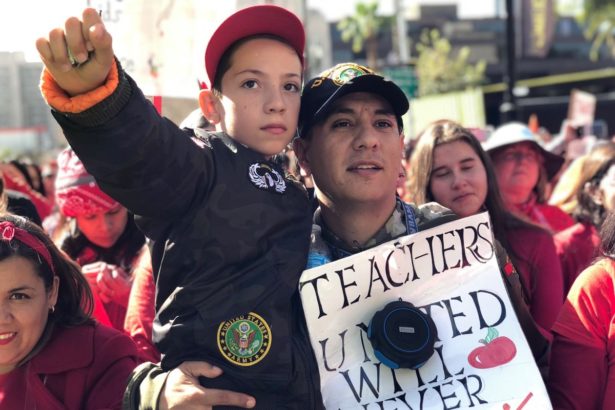 Labor organizer Jane McAlevey on why strikes are the only way out of our current crisis
McAlevey’s approach has another deceptively simple core lesson: people do not jump from anger straight into a strike. “The job isn’t to stand around waiting for the spark to light the prairie fire. We need to figure out how to arrange the kindling, and we should’ve started yesterday,” she urged.
Instead, successful campaigns use repeated, escalating “structure tests.” Small collective risks taken together. Visible proof that “we can do this.” Each test builds confidence, discipline and organization — the muscle memory required when the stakes rise.
We do a petition. One day we all wear stickers. We take group photos. And then we carefully assess who has and has not participated — tracking our numbers, who we don’t have with us and need to move.
Poland offers a stark illustration. In 1976, spontaneous strikes against food price hikes were brutally repressed. Workers were fired, isolated and driven underground. The lesson was painful but clarifying: revolt without preparation is a gift to a repressive opponent.
So Solidarity spent years on slow, unglamorous work. Legal defense funds for fired workers. Family support networks. Underground newspapers. A worker-run media ecosystem. A Workers’ Defense Committee that practiced coordination under pressure.
By the time a respected crane operator, Anna Walentynowicz, was fired in 1980 allegedly over a minor infraction (she was truly fired for her organizing), the infrastructure for a mass strike was already in place. The spark landed where there was fuel.
Why U.S. general strikes don’t get “called”
Kim Moody, one of the leading writers about mass strikes in the U.S., explains: “General strikes or mass strikes are seldom simply ‘called’ from above — and those that are tend to be called off just as easily.”
Further, a tiny centralized group calling a general strike rarely has the capacity to echo across a country with nearly 350 million people.
There have been hundreds of calls for general strikes in recent decades — during the WTO protests in Seattle, Occupy Wall Street, the Trump inauguration, COVID-19, after January 6. None traveled very far.
This is a vast country, with uneven organizing capacity, fragmented crises and a relentless churn of emergencies that make sustained coordination difficult.
Moody’s research shows that the mass strikes that do happen tend to emerge suddenly but not magically. Seattle’s 1919 general strike started with one shipyard plant, then other shipyard plants, then roiled across the city and spread wider. The 1934 San Francisco general strike was sparked by the killing of two longshoremen and expanded beyond that sector.
Stan Weir, who participated in the 1946 Oakland General Strike, described it this way:
“The Oakland General Strike was an extension of the national strike wave. It was not a ‘called’ strike. … Hundreds of workers passing through downtown Oakland on their way to work became witness to police herding a fleet of scab trucks. … The witnesses got off their vehicles and did not return. The city filled with workers… and then organized themselves.”
Though these strikes often felt like a lit match, they had some necessary pre-built kindling: 1) local centers of workplace organizing, often unions 2) networks watching what others were doing and a sense of solidarity, and 3) resources and readiness to weather repression, including strike funds, deep community caring, and capacity to handle incoming state violence.
Take any one of those away, and mass strikes collapse before they begin.
So where does that leave us?
Whether the United States is prepared for larger strikes remains an open question. We are out of practice. We are under lots of strains and have frayed bonds. But authoritarian consolidation has rapidly changed what is possible.
There is serious organizing underway to explore this.
The United Auto Workers’ call for a 2028 general strike is one example. It is credible precisely because it works around the legal limitations of purely “economic strikes” by aligning contracts to collectively expire on May 1 — International Workers’ Day. This synchronizes legally protected contract fights. That kind of coordination takes years. Cities that do not align contracts in the next 18 months may not be positioned to participate.
Efforts like May Day Strong are helping build toward that horizon, while also supporting nearer-term escalation. They have helped provide backbone support for actions like Jan. 23, encouraging local structure tests leading up to May 1 this year — a day when some locales may strike, depending on readiness and conditions. They have a Jan. 21 mass call to join their efforts.
Waging Nonviolence depends on reader support. Make a donation today!
Other groups anxious to move even faster have organized: The General Strike has invited people to declare their intentions to join a general strike by signing strike cards. This has less structure in place, but more passionate urging for a tactic we shouldn’t leave off the table.
One take away from these fast-moving, wild times is that anything is possible. We can prepare ourselves by supporting these structure tests, encouraging relationship building, connecting with leaders across sectors, and dreaming of more muscular tactics to create a meaningful democracy.
My own group, Freedom Trainers, is beginning to offer community strike readiness workshops. (Sign up and we’ll let you know when they’re ready.) We have created some trainings for the Jan. 23 economic blackout.
This is what preparation looks like. Not proclamations. Not wishful thinking. But experiments, alignment, discipline and patience.
History suggests that when mass strikes come, they rarely announce themselves in advance. They arrive when enough people have practiced refusing — together — and suddenly discover they no longer have to ask.
This article What’s it going to take to get to mass strikes? was originally published by Waging Nonviolence.
People-powered news and analysis
Source: https://wagingnonviolence.org/2026/01/mass-strike-preparation-ice/
Anyone can join.
Anyone can contribute.
Anyone can become informed about their world.
"United We Stand" Click Here To Create Your Personal Citizen Journalist Account Today, Be Sure To Invite Your Friends.
Before It’s News® is a community of individuals who report on what’s going on around them, from all around the world. Anyone can join. Anyone can contribute. Anyone can become informed about their world. "United We Stand" Click Here To Create Your Personal Citizen Journalist Account Today, Be Sure To Invite Your Friends.
LION'S MANE PRODUCT
Try Our Lion’s Mane WHOLE MIND Nootropic Blend 60 Capsules
Mushrooms are having a moment. One fabulous fungus in particular, lion’s mane, may help improve memory, depression and anxiety symptoms. They are also an excellent source of nutrients that show promise as a therapy for dementia, and other neurodegenerative diseases. If you’re living with anxiety or depression, you may be curious about all the therapy options out there — including the natural ones.Our Lion’s Mane WHOLE MIND Nootropic Blend has been formulated to utilize the potency of Lion’s mane but also include the benefits of four other Highly Beneficial Mushrooms. Synergistically, they work together to Build your health through improving cognitive function and immunity regardless of your age. Our Nootropic not only improves your Cognitive Function and Activates your Immune System, but it benefits growth of Essential Gut Flora, further enhancing your Vitality.

Our Formula includes: Lion’s Mane Mushrooms which Increase Brain Power through nerve growth, lessen anxiety, reduce depression, and improve concentration. Its an excellent adaptogen, promotes sleep and improves immunity. Shiitake Mushrooms which Fight cancer cells and infectious disease, boost the immune system, promotes brain function, and serves as a source of B vitamins. Maitake Mushrooms which regulate blood sugar levels of diabetics, reduce hypertension and boosts the immune system. Reishi Mushrooms which Fight inflammation, liver disease, fatigue, tumor growth and cancer. They Improve skin disorders and soothes digestive problems, stomach ulcers and leaky gut syndrome. Chaga Mushrooms which have anti-aging effects, boost immune function, improve stamina and athletic performance, even act as a natural aphrodisiac, fighting diabetes and improving liver function. Try Our Lion’s Mane WHOLE MIND Nootropic Blend 60 Capsules Today. Be 100% Satisfied or Receive a Full Money Back Guarantee. Order Yours Today by Following This Link.


| Visits: | 1,769,826,073 |
| Stories: | 8,569,902 |
Whistler Blowers, Insiders

