

Why the Future of AI Will Not Be Bigger Models. It Will Be Systems That Can Actually Work.

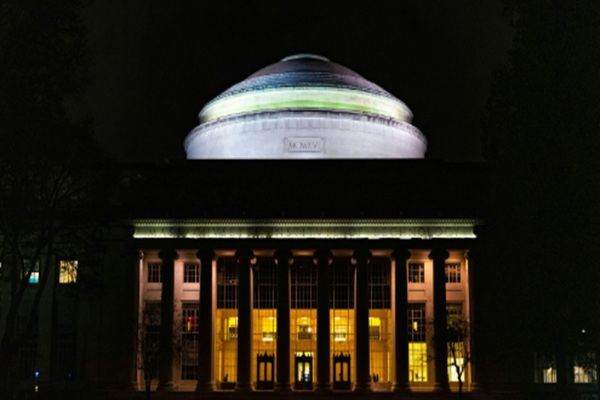
At MIT’s packed Kresge Auditorium this fall, a few hundred researchers, executives, and students gathered for what felt less like a conference and more like an intervention. The inaugural MIT Generative AI Impact Consortium Symposium opened with a premise few in the room wanted to admit: generative AI has moved at blazing speed, yet most organizations still have no idea what to do with it.
MIT Provost Anantha Chandrakasan described the moment bluntly. Generative AI is moving too fast for the world’s collective wisdom to keep pace. The concern was echoed by MIT President Sally Kornbluth, who warned that society will rely on AI systems for critical decision-making sooner than many expect. The challenge, she said, is figuring out how to manage the “magic” so that it becomes consistently reliable.
Keynotes from leaders across robotics, machine learning, healthcare, and enterprise innovation made one thing clear. The next leap in AI will not come from building even larger language models. The real breakthrough will come from building systems that are capable of functioning in real-world environments.
Yann LeCun, chief AI scientist at Meta, argued that current models are impressive but fundamentally incomplete. He believes the future rests in building “world models,” systems that learn through perception and interaction the way a young child does. A four-year-old has experienced nearly as much visual data as the largest AI models, he noted, yet that child can generalize and adapt in ways no model today can match.
Rather than memorize patterns, world models understand cause and effect. A robot powered by one of these systems could learn a new task simply by experiencing it. That shift, LeCun argued, would unlock what companies have been asking for since the earliest days of generative AI. Not answers, not summaries, but adaptable intelligence.
Tye Brady, chief technologist at Amazon Robotics, shared a similar view. Amazon is already using generative AI in its warehouses to orchestrate the movement of robots and materials. The next frontier, he said, is collaborative robotics that allow humans to work more efficiently by letting machines handle the physical and cognitive load. Generative AI, he added, is the most transformative technology he has experienced in his career.
The symposium kept returning to the same theme. Progress is happening rapidly, but the future of AI will not be defined by scale or novelty. It will be defined by integration. The companies that win the next decade will not be the ones with the most models. They will be the ones that figure out how to connect AI to workflows, guardrails, and human responsibility.
That message resonates far beyond academia, particularly inside large enterprises now facing the limits of traditional optimization. For all the promises of AI, most organizations still struggle with repetitive work, siloed processes, and the slow handoff between teams.
This is where a new category of AI systems is gaining traction. According to Sean Iannuzzi, Global AI CoE Practice Lead at NewRocket, a shift is already underway inside leading enterprises as they adopt “digital employees,” AI agents designed to work across systems, learn from outcomes, and execute operational tasks that humans are unable to scale.
“Digital employees are not another wave of automation; they represent a new layer of operational intelligence,” Iannuzzi said. “They operate across systems, learn from outcomes, and act within defined guardrails of trust and accountability.”
Unlike copilots that assist individuals, digital employees function as contributors inside the business. They carry identity, follow rules, escalate issues, and complete multi-step workflows from start to finish. To Iannuzzi, the significance is not that these agents can perform tasks. It is that they can do so reliably and transparently.
“This shifts the limits of what an enterprise can achieve. We used to measure progress by how much humans could optimize within their bandwidth. Now it is defined by how effectively digital employees and humans collaborate to create outcomes neither could deliver alone.”
The timing aligns with what MIT speakers insisted throughout the symposium. The next phase of generative AI will require systems that integrate into the fabric of real operations. LeCun’s world models are a vision of what that might look like in robotics and embodied AI. Digital employees represent a parallel evolution inside enterprise software.
Both perspectives reject the hype cycle that has dominated the last three years. They point toward a future where the winners will be organizations that redesign how work is done rather than those that simply adopt the latest model.
In that sense, 2026 may become the year generative AI stops being an experiment and starts becoming infrastructure. Not because the models have become magical, but because leaders are finally learning to build systems around them that can sustain real-world complexity.
Anyone can join.
Anyone can contribute.
Anyone can become informed about their world.
"United We Stand" Click Here To Create Your Personal Citizen Journalist Account Today, Be Sure To Invite Your Friends.
Before It’s News® is a community of individuals who report on what’s going on around them, from all around the world. Anyone can join. Anyone can contribute. Anyone can become informed about their world. "United We Stand" Click Here To Create Your Personal Citizen Journalist Account Today, Be Sure To Invite Your Friends.
LION'S MANE PRODUCT
Try Our Lion’s Mane WHOLE MIND Nootropic Blend 60 Capsules
Mushrooms are having a moment. One fabulous fungus in particular, lion’s mane, may help improve memory, depression and anxiety symptoms. They are also an excellent source of nutrients that show promise as a therapy for dementia, and other neurodegenerative diseases. If you’re living with anxiety or depression, you may be curious about all the therapy options out there — including the natural ones.Our Lion’s Mane WHOLE MIND Nootropic Blend has been formulated to utilize the potency of Lion’s mane but also include the benefits of four other Highly Beneficial Mushrooms. Synergistically, they work together to Build your health through improving cognitive function and immunity regardless of your age. Our Nootropic not only improves your Cognitive Function and Activates your Immune System, but it benefits growth of Essential Gut Flora, further enhancing your Vitality.

Our Formula includes: Lion’s Mane Mushrooms which Increase Brain Power through nerve growth, lessen anxiety, reduce depression, and improve concentration. Its an excellent adaptogen, promotes sleep and improves immunity. Shiitake Mushrooms which Fight cancer cells and infectious disease, boost the immune system, promotes brain function, and serves as a source of B vitamins. Maitake Mushrooms which regulate blood sugar levels of diabetics, reduce hypertension and boosts the immune system. Reishi Mushrooms which Fight inflammation, liver disease, fatigue, tumor growth and cancer. They Improve skin disorders and soothes digestive problems, stomach ulcers and leaky gut syndrome. Chaga Mushrooms which have anti-aging effects, boost immune function, improve stamina and athletic performance, even act as a natural aphrodisiac, fighting diabetes and improving liver function. Try Our Lion’s Mane WHOLE MIND Nootropic Blend 60 Capsules Today. Be 100% Satisfied or Receive a Full Money Back Guarantee. Order Yours Today by Following This Link.


| Visits: | 1,753,929,496 |
| Stories: | 8,542,369 |
Whistler Blowers, Insiders

