

The Quiet Rise of Personalized Skincare Powered by Health Data

People are moving away from trying random creams or following one-size-fits-all advice. Instead, more and more are using their own health information—like sleep patterns, stress levels, and diet — to guide what they put on their skin. This data helps people understand their skin better and make choices that actually work for them.
In this article, we’ll explore how personalized skincare is rising, what health data makes it possible, and the challenges.
Why Skincare Is Becoming Personal
.jpg)
Here’s why skincare is becoming personal.
Skin Reflects Individual Health
Our skin is like a mirror for what’s happening inside our bodies. Stress, sleep, diet, hydration, and hormones can all show up on the skin, sometimes in subtle ways, sometimes more obviously.
For example, lack of sleep might make dark circles appear or skin look dull. Eating a lot of sugar may trigger breakouts for some people. Hormonal changes during periods, pregnancy, or menopause can alter oil production and sensitivity.
Because everyone’s body reacts differently, a product that works for one person might be useless—or even harmful—for someone else. People are realizing that skincare needs to fit not just their skin type but their overall lifestyle and internal health. This understanding is making routines more thoughtful.
Selman AKINCI, Co-Founder at Doctor Adam, mentions, “Instead of blindly following advice, people want tools, products, and advice that respond to their body’s signals. This helps them maintain healthy skin over the long term.”
Growing Awareness of Skin Diversity
Skin diversity goes far beyond just tone or shade. It includes texture, sensitivity, oiliness, dryness, thickness, and how the skin reacts to the environment. Many traditional skincare products were designed with limited types of skin in mind, leaving some users frustrated or even causing irritation.
Consumers today are more aware that their needs are unique, and they are seeking solutions that recognize differences rather than ignore them.
For example, someone with sensitive skin may need fragrance-free products with fewer active ingredients, while someone with oily skin may need lightweight, oil-controlling formulations. Cultural shifts and social media have also helped people recognize that skin needs vary widely, encouraging brands to offer more targeted options.
Data and Tracking Are More Accessible
In the past, understanding skin patterns meant trial and error, guesswork, and patience. Today, technology allows people to track habits, health signals, and even environmental conditions that affect skin.
Htet Aung Shine, Co-Founder of NextClinic, mentions, “Wearable devices monitor sleep, heart rate, activity, and stress, while apps track diet, water intake, and mood. Skin imaging devices can document changes in pores, texture, or pigmentation over time. This data helps users identify patterns and see how lifestyle choices affect their skin.”
For example, someone may notice that stress triggers breakouts or that certain foods worsen redness. By having access to this kind of information, people can make informed decisions, adjusting their routines based on real patterns rather than assumptions.
Desire for Efficiency
Trial and error is frustrating, expensive, and time-consuming. People are tired of buying multiple products that may not work for them, only to abandon them after a few weeks. Personalized skincare addresses this problem by creating routines based on actual needs, reducing unnecessary purchases and wasted effort.
For example, a person with combination skin may need different products for morning and evening routines, or for winter versus summer, rather than applying the same cream daily. Efficiency also comes from having fewer products with targeted effects, meaning people don’t have to juggle dozens of creams, serums, and masks.
Personalized routines save time, money, and stress while increasing the likelihood of seeing results. This efficiency is a major reason why more people are turning to personalized skincare solutions.
Health-Driven Approach
Skincare is no longer purely cosmetic. People are looking at it as part of overall health and wellbeing. Preventing issues like dryness, premature aging, and irritation has become just as important as treating existing problems. Personalized skincare focuses on maintaining healthy skin over time rather than addressing only visible issues.
For example, someone may use antioxidants to prevent damage from sun exposure or targeted hydration to support skin elasticity as they age. This approach aligns with a broader wellness mindset, where habits, diet, and lifestyle choices are considered alongside products.
How Technology Enables Personalization
Let’s talk about how technology enables personalization.
Wearables Track Health Signals
Wearables like smartwatches, fitness trackers, and sleep monitors have become everyday tools for many people. They track activity levels, heart rate, sleep quality, and even stress indicators. This information provides insight into how lifestyle impacts the skin.
For example, poor sleep may lead to dullness, inflammation, or acne flares, while high stress can trigger redness or breakouts. By collecting this data, AI tools or skincare apps can provide tailored recommendations, such as adjusting routines after a stressful week or suggesting hydration strategies.
Sanam Zahedi, M.D, Owner & Plastic Surgeon of Sanam Zahedi, MD – Zahedi Plastic Surgery, says, “Wearables allow users to see patterns they may not have noticed on their own, linking habits with visible changes in skin. This creates a feedback loop where people can make adjustments and see the results, making skincare more responsive and personal.”
Smart Mirrors and Skin Imaging
Smart mirrors and apps with skin imaging technology can scan the face, detect changes in texture, wrinkles, pores, or dark spots, and track progress over time. These tools allow users to understand the specific conditions of their skin at any moment.
For example, a user may see that their skin becomes drier during winter or that pigmentation worsens after sun exposure. With this information, routines can be adjusted to meet immediate needs rather than following generic recommendations.
Regular imaging creates a historical record of the skin’s health, which helps users notice trends, make informed choices, and select products suited to current conditions. The result is a routine that feels customized and dynamic, adapting to the skin as it changes.
AI-Powered Recommendations
Artificial intelligence can analyze large amounts of data from users’ skin scans, health tracking, and lifestyle habits. AI can identify patterns, predict skin reactions, and recommend products or routines that fit the individual.
For example, an AI may notice that someone’s skin tends to get oily on weekends after poor sleep or stress and suggest lighter products or specific treatments. These systems go beyond guesswork, offering data-driven suggestions tailored to the user’s life.
Evan Miller, Product & Visual AI Researcher at CheckSkin AI, adds, “AI recommendations can adapt over time as new data comes in, refining advice to match evolving skin needs. This makes the user feel supported with insight that is personalized rather than generic.”
Challenges and Limitations
Here are some challenges.
Data Accuracy and Interpretation
Even with advanced devices, data can sometimes be misleading. Wearables may misread heart rate, sleep, or stress levels, and skin imaging apps may misclassify conditions. DMR Aesthetics: Dahlia Rice, M.D.- Double chin reduction surgeon, says, “If recommendations are based on inaccurate data, users may apply the wrong products, waste money, or worsen skin issues.”
Interpreting patterns also requires caution; not all changes in the skin are related to lifestyle factors — some may be medical conditions requiring professional attention. Users must understand that technology provides guidance, not absolute answers. Brands and developers must ensure data quality, provide context, and help users understand limitations to prevent frustration or harm.
Privacy Concerns
Personalized skincare relies on sensitive data, including skin images, health habits, and lifestyle patterns. If this information is mishandled, it can lead to breaches of privacy or misuse. Users need clear information about how their data is collected, stored, and used, as well as control over sharing or deleting it.
Without trust in data handling, users may be hesitant to adopt personalized solutions. Companies have a responsibility to implement robust security measures and transparent policies.
Accessibility and Cost
Many personalized skincare solutions involve custom formulations, smart devices, or subscription services, which can be expensive. Not everyone can afford these tools, creating a gap between those who benefit and those who do not. This raises questions about accessibility and equity.
People in different regions or with limited budgets may miss out on personalized care, making generic solutions the only option. Addressing cost and availability is critical if personalized skincare is to reach a broader audience and provide meaningful improvements for more people.
Over-Reliance on Technology
When users rely too heavily on apps, AI, or devices, they may lose touch with their own awareness of their skin. They might follow recommendations blindly without noticing changes or understanding their skin’s needs.
This over-reliance can reduce confidence in personal judgment and lead to frustration when technology fails or data is inaccurate. Maintaining balance between human intuition and technological guidance is essential.
Rapidly Changing Products and Trends
The personalized skincare market is evolving quickly, with new devices, formulas, and services appearing frequently. Products that are cutting-edge today may become outdated tomorrow. Users may feel pressure to keep up with trends or continually invest in new tools.
Consistency is important for skin health, so frequent changes can undermine results. Brands and users need to focus on long-term routines rather than chasing the latest trend, ensuring that personalization supports lasting improvements rather than temporary fixes.
Wrap Up
When you take care of your skin today, you’re not just picking a cream off the shelf — you’re learning what your skin really needs. By paying attention to your habits, your sleep, your stress, and even the environment around you, you can choose products and routines that actually work for you.
Technology can help guide you, but the real difference comes from noticing how your skin responds and making small changes that fit your life. Personalized skincare puts you in control, helping your skin stay healthy and balanced in a way that matches you — not anyone else.
Anyone can join.
Anyone can contribute.
Anyone can become informed about their world.
"United We Stand" Click Here To Create Your Personal Citizen Journalist Account Today, Be Sure To Invite Your Friends.
Before It’s News® is a community of individuals who report on what’s going on around them, from all around the world. Anyone can join. Anyone can contribute. Anyone can become informed about their world. "United We Stand" Click Here To Create Your Personal Citizen Journalist Account Today, Be Sure To Invite Your Friends.
LION'S MANE PRODUCT
Try Our Lion’s Mane WHOLE MIND Nootropic Blend 60 Capsules
Mushrooms are having a moment. One fabulous fungus in particular, lion’s mane, may help improve memory, depression and anxiety symptoms. They are also an excellent source of nutrients that show promise as a therapy for dementia, and other neurodegenerative diseases. If you’re living with anxiety or depression, you may be curious about all the therapy options out there — including the natural ones.Our Lion’s Mane WHOLE MIND Nootropic Blend has been formulated to utilize the potency of Lion’s mane but also include the benefits of four other Highly Beneficial Mushrooms. Synergistically, they work together to Build your health through improving cognitive function and immunity regardless of your age. Our Nootropic not only improves your Cognitive Function and Activates your Immune System, but it benefits growth of Essential Gut Flora, further enhancing your Vitality.
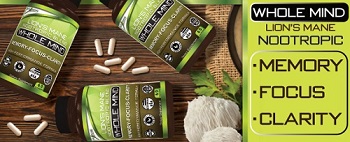
Our Formula includes: Lion’s Mane Mushrooms which Increase Brain Power through nerve growth, lessen anxiety, reduce depression, and improve concentration. Its an excellent adaptogen, promotes sleep and improves immunity. Shiitake Mushrooms which Fight cancer cells and infectious disease, boost the immune system, promotes brain function, and serves as a source of B vitamins. Maitake Mushrooms which regulate blood sugar levels of diabetics, reduce hypertension and boosts the immune system. Reishi Mushrooms which Fight inflammation, liver disease, fatigue, tumor growth and cancer. They Improve skin disorders and soothes digestive problems, stomach ulcers and leaky gut syndrome. Chaga Mushrooms which have anti-aging effects, boost immune function, improve stamina and athletic performance, even act as a natural aphrodisiac, fighting diabetes and improving liver function. Try Our Lion’s Mane WHOLE MIND Nootropic Blend 60 Capsules Today. Be 100% Satisfied or Receive a Full Money Back Guarantee. Order Yours Today by Following This Link.


| Visits: | 1,773,404,070 |
| Stories: | 8,576,841 |
Whistler Blowers, Insiders

