

Iceland’s EU Referendum and the Battle for the Arctic Gate

Freddie Ponton
21st Century Wire
On 29 August, Icelanders will decide whether their country should reopen negotiations to join the European Union. A Yes would reopen accession talks suspended in 2013; any resulting treaty would face a second referendum, according to the Government of Iceland’s referendum guidance. Recent polling reported by Politico has left the two camps finely balanced, even as opposition to membership itself remains clearer. That distance between the ballot and the destination is central to the Yes campaign, yet accession talks exert their own political gravity.
Officials begin reconciling laws and interests, compromises acquire institutional sponsors, and the argument gradually moves from whether talks should begin to whether Iceland should reject the agreement they have produced.

IMAGE: Prime Minister Kristrún Frostadóttir speaks at Hólar as Iceland approaches a referendum on reopening negotiations that could lead to EU membership (Source: Visir)
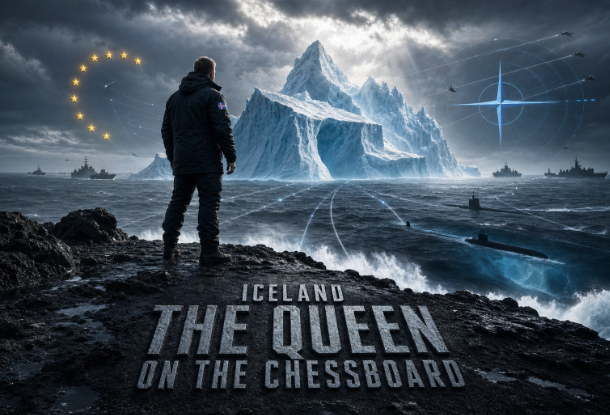
Haraldur Ólafsson, chairman of the No campaign Heimssýn, describes sovereignty as Iceland’s queen on the chessboard. “This is like losing your queen,” he told The Reykjavík Grapevine. “You don’t know how you’ll be checkmated, but you know it’s not good to lose her. Even if she’s blocked behind pawns and you’re not going to use her in the next three moves.”
The metaphor reaches beyond fisheries, agriculture and the euro because Iceland occupies a square whose value has risen sharply. It lies between Greenland and Britain, across a maritime corridor used by Russia’s Northern Fleet to enter the North Atlantic, whose importance is documented in an independent strategic assessment of the GIUK gap and in NATO’s account of its patrols there. Iceland has no standing army, but its airfields, ports, radars, cables and surrounding waters are becoming more deeply integrated into NATO’s northern defence. The European Union, meanwhile, has placed Icelandic accession inside its Arctic strategy, concluded a security partnership with Reykjavík and begun cooperating with Iceland on the assessment of foreign information interference.

IMAGE: Heimssýn chairman Haraldur Ólafsson, left, with Norwegian No to EU leader Einar Frogner during a visit to Norway in April 2026 (Source: Image from Eivind Formoe via Nei til EU)
These developments converge around a referendum whose political environment reaches far beyond the arguments visible in the campaign. European institutions have declared an interest in the outcome, whilst NATO is extending the military architecture built around Icelandic territory, and Iceland’s rules leave important areas of referendum finance and online campaigning outside effective oversight. Icelanders need to know who is seeking to shape their decision, which interests are engaged and whether their institutions leave them genuinely free to choose. No foreign actor acquires a privileged claim on that choice by presenting itself as an ally, partner or protector.
Respecting a choice while promoting it
The clearest statement of European intent appears in a European Parliament resolution adopted on 26 November 2025. Paragraph (ab) welcomes Iceland’s intended referendum and promises to respect the result “as democratically expressed by the Icelandic people.” Within the same sentence, Parliament asks EU institutions to “engage proactively with the Icelandic Government to promote the benefits of potential EU membership,” while offering assistance against “hybrid threats and foreign interference.”
DOCUMENT: European Parliament resolution (P10_TA(2025)0298) on the EU’s diplomatic strategy and geopolitical cooperation in the Arctic. Paragraphs (ab) and (ac) place the promotion of Icelandic membership, protection from foreign interference and the EU–Iceland security partnership in direct sequence. (Source: EURPARL)
TA-10-2025-0298_EN
The promise concerns the verdict after it has been delivered, leaving Parliament free to influence how Icelanders reach it. The EU’s evident interest in enlargement is joined here to a protective role around the referendum’s information environment, bringing the institution that promotes membership close to the authority through which legitimate persuasion may be distinguished from hostile foreign activity.
Urmas Paet, the resolution’s rapporteur, stated the desired direction plainly: “I hope to see Iceland, Norway and Greenland joining the EU in the near future,” according to EU Perspectives. As the parliamentarian responsible for shaping the institution’s Arctic policy, he was giving public expression to a preference already visible in the text.
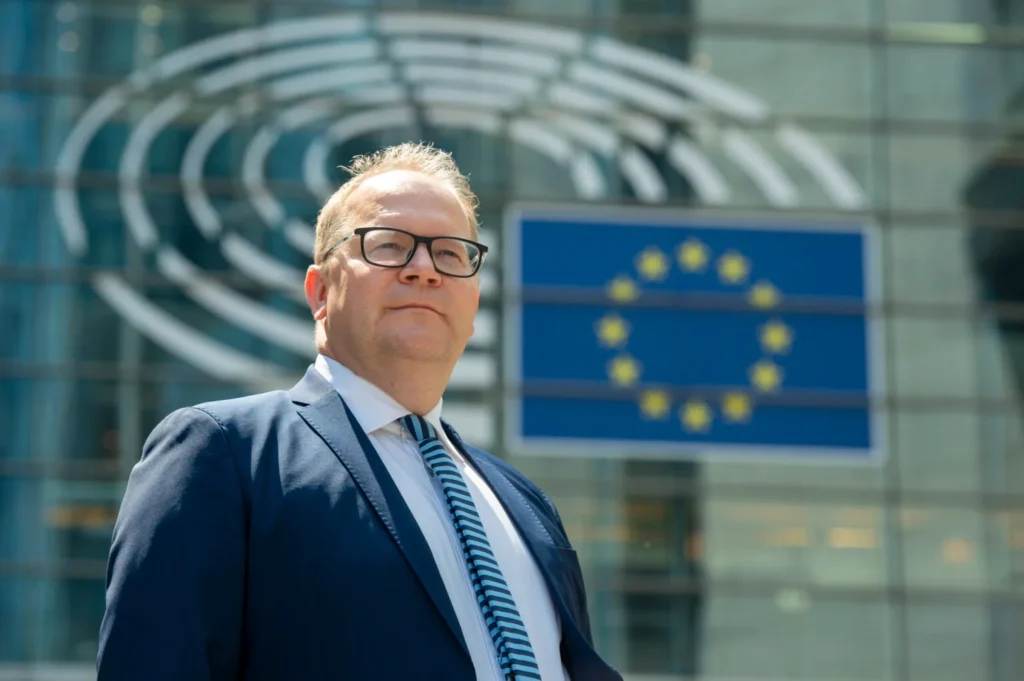
IMAGE: Arctic strategy rapporteur Urmas Paet (Renew Europe, Estonia), called Icelandic accession a “major win” for the European Union. (Source: EuPerspectives)
In paragraph (ac) of the same resolution, Parliament welcomes Iceland’s decision to pursue a security and defence partnership with the EU, describing the resulting agreement as “fundamental for future EU–Iceland relations.” Elsewhere, the resolution says Greenland, Iceland and Norway manage the Arctic’s largest sustainable fisheries, while placing hydrocarbons, rare earth elements, renewable energy, data centres and submarine cables within Europe’s security and strategic-autonomy calculations. It describes the Greenland–Iceland–United Kingdom gap as a “maritime transit corridor indissociable from EU interests”. In Parliament’s account, Russian military expansion, China’s growing regional presence and retreating sea ice have transformed the Arctic into an arena of strategic competition.
Icelandic accession appears within the programme intended to answer that diagnosis, alongside resources, infrastructure, maritime access and Parliament’s call for the EU to assume “a more prominent role in the Arctic”.
The EU cannot credibly present itself as a neutral guardian of the referendum while instructing its institutions to promote one outcome. Parliament instead joins membership advocacy to an Arctic programme serving acknowledged European interests, then places assistance against foreign interference alongside both. Within months, the same security language had entered a formal partnership with the country preparing to vote. The EU, while advocating a Yes, had therefore moved closer to the machinery through which external influence on the referendum would be identified and assessed.
The square that commands the sea
During the Second World War, Winston Churchill quoted the warning that “whoever possesses Iceland holds a pistol firmly pointed at England, America, and Canada.” Eight decades later, control is exercised less through occupation than through access to runways and harbours, sensor networks, submarine detection and the cables carrying communications across the Atlantic. The technology surrounding Iceland has changed repeatedly, yet the geography that gives it value has not.
The Greenland-Iceland-United Kingdom gap joins Arctic waters to the open Atlantic and forms the route along which NATO monitors Russian naval movement. When NATO’s Military Committee visited Iceland in June, its deputy chair, Lieutenant General Winston P. Brooks, called the country, “here at the heart of the GIUK Gap,” the “eyes and the ears of NATO in the North.” Iceland’s four radar sites and control centre contribute to the alliance’s recognised air picture, while allied aircraft rotate through Keflavík to police Icelandic airspace. Iceland has no armed forces of its own, yet it has become integral to the systems through which NATO’s forces see, arrive and operate.
Iceland’s formal demilitarisation has coexisted with a steadily enlarging operational role. Harbours, runways, fuel, sensors and protected communications can determine whether allied forces reach the theatre and understand what awaits them there. Iceland supplies those conditions while allied states provide most of the platforms, allowing protection and dependence to develop together. Iceland’s government itself identifies NATO membership and the 1951 bilateral defence agreement with the United States as the fundamental pillars of national security.
Germany and Iceland gave the arrangement greater depth in October 2025 by agreeing to expand cooperation in maritime logistics, air and sea surveillance, critical infrastructure and cyber security. The German Defence Ministry said German combat vessels, submarines and supply ships would use Iceland as a northern port of call, while German P-8A Poseidon maritime patrol aircraft would be able to operate from Keflavík. The agreement was signed for Iceland by Foreign Minister Þorgerður Katrín Gunnarsdóttir, one of the government’s strongest advocates of renewed EU negotiations.

IMAGE: Foreign Minister Þorgerður Katrín Gunnarsdóttir and German Defence Minister Boris Pistorius deepen German access to Iceland’s strategic infrastructure.(Source: Image from Stjórnarráðs Íslands via Iceland Review)
The same minister advancing Iceland towards negotiations with Brussels was therefore opening Icelandic infrastructure to a deeper military relationship with one of the EU’s most powerful NATO members. In her portfolio, the European and Atlantic tracks were clearly not competing alternatives; they were moving forward together.
Iceland is developing its first formal defence policy around the same functions. Host-nation support, radar and communications, cyber defence, critical infrastructure and underwater surveillance allow it to deepen its contribution without establishing an army. The Government of Iceland announced an unmanned surveillance submarine to strengthen the monitoring of submarine cables and ports, extending the security field beneath the water where civilian communications and military awareness increasingly occupy the same seabed. Iceland may remain a country without armed forces, but its territory, infrastructure and institutions are increasingly being reorganised to support those of its allies.
NATO is now turning those Icelandic capabilities into an integrated system for surveillance and military operations across the High North. A clear example of that would be the Arctic Sentry operation in Iceland launched in February, which integrates national activities across the High North under Joint Force Command Norfolk. Six Swedish Gripen fighters deployed to Keflavík as air policing became part of a wider effort joining surveillance, exercises and readiness.
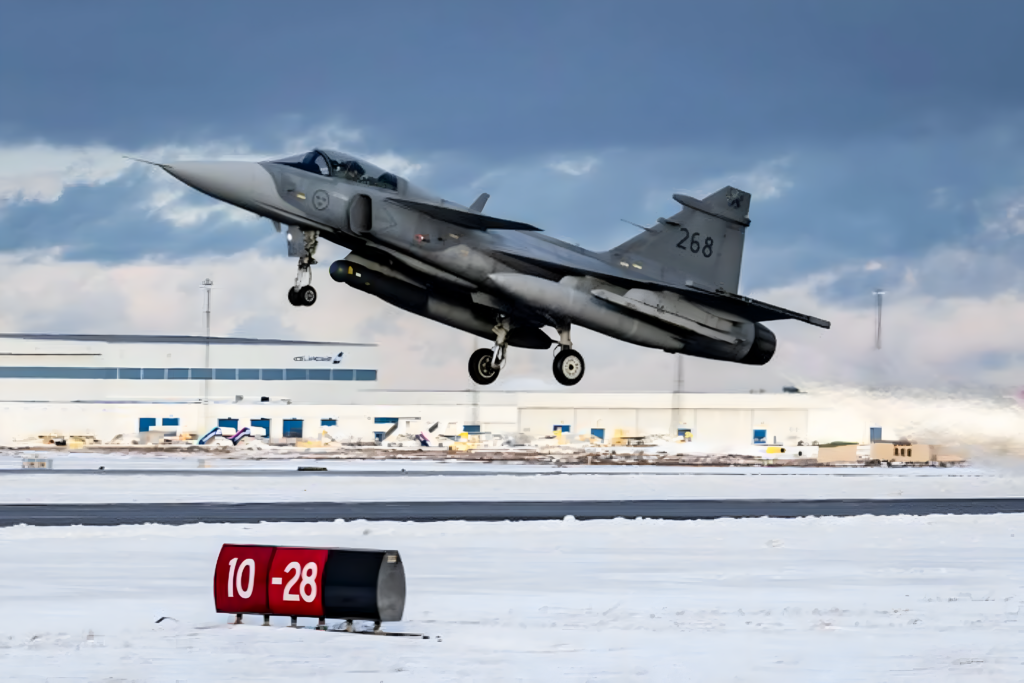
IMAGE: Six Swedish JAS 39 Gripen fighters deployed to Keflavík for NATO Air Policing under Arctic Sentry. (Source: Swedish Armed Forces)
Task Force X-Arctic extends the architecture through networked uncrewed systems, sensors and rapid data-sharing. NATO’s research vessel Alliance sailed towards Iceland for the opening phase of an eighteen-month programme testing whether those technologies can provide persistent awareness under Arctic conditions, detailed in Allied Command Transformation’s project paper.
DOCUMENT: NATO Allied Command Transformation, Task Force X-Arctic. The project paper describes an integrated, data-centric surveillance system tested around Iceland through uncrewed platforms and sensors. (Source: ACT NATO)
Task Force X-Arctic
In July, Iceland joined Germany, Canada, Norway and Denmark in a Maritime Security Partnership. The Canadian Department of National Defence describes its purpose as strengthening maritime-domain awareness, information-sharing and operational coordination across the North Atlantic and Arctic. ArcticToday reports a wider focus on navigation, anti-submarine coordination and undersea infrastructure. Centred on the North Atlantic and the GIUK gap, the framework relies on Icelandic ports, airspace and logistical support, turning the island from territory to be defended into an operational platform from which allied powers can observe and coordinate activity across the ocean.
No document examined for this article shows NATO campaigning directly in the referendum. The alliance’s relevance arises from the structure forming around Icelandic choice. Founding membership of NATO and a bilateral defence agreement with the United States already secure Iceland’s place in the allied system; deeper surveillance, logistical dependence and operational integration make a change of direction harder without disrupting systems on which Icelandic security has come to rely. That dependence explains why the alignment of fewer than 400,000 people commands such attention, and why Parliament’s Arctic strategy places Icelandic membership beside security, infrastructure and strategic autonomy.
Security becomes political language
The EU–Iceland Security and Defence Partnership, signed in March, carries that convergence from Parliament’s resolution into bilateral policy. It covers maritime security, cyber threats, emerging technologies, critical infrastructure, crisis management and economic security.
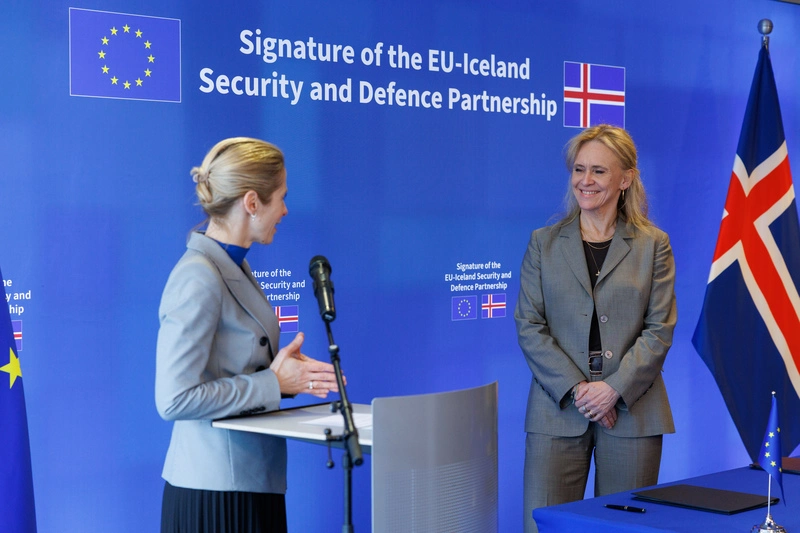
IMAGE: Iceland and the EU sign a security partnership extending cooperation into foreign-information interference. (Source: European Council)
Paragraph 35 commits Iceland and the EU to consultation on hybrid threats, including disruptions to digital networks, energy production and underwater infrastructure. Paragraph 37 goes further, providing for shared assessments of Foreign Information Manipulation and Interference (FIMI), and possible joint action against its perpetrators, giving the EU a formal place inside the machinery for identifying external interference during a referendum in which the European Parliament has instructed EU institutions to promote one outcome
DOCUMENT: EU–Iceland Security and Defence Partnership. Paragraphs 35 and 37 establish consultation on hybrid threats and cooperation over Foreign Information Manipulation and Interference during the year of Iceland’s referendum. (Source: EUROPA)
Council document ST-14421-2025-INIT (FIMI cooperation)
The partnership rests partly on threats described by NATO governments. In April, the British Ministry of Defence said allied forces had spent more than a month tracking three Russian submarines in the North Atlantic, including an Akula-class attack submarine and two vessels it connected to GUGI, a unit from Russia’s deep-sea programme. Defence Secretary John Healey said the deployment sought to “track and to deter any malign activity.” Britain did not release the intelligence behind every part of its account; however, its description was later repeated in a joint statement by the United Kingdom, Norway and the Netherlands to the OSCE. The episode gives the partnership’s security rationale a concrete basis, while leaving Iceland dependent on intelligence controlled largely by the same governments expanding their military presence around the island.
The submarine operation provides a clear reason for Iceland to cooperate with its partners on undersea security. The concern arises when the EU–Iceland partnership extends that cooperation into the political information space. Iceland will assess foreign interference together with the EU while the European Parliament is openly promoting the benefits of Iceland joining it. The irony is difficult to miss—the EU is helping Iceland identify improper foreign influence during a referendum in which its own Parliament has instructed EU institutions to promote the benefits of membership.
Prime Minister Kristrún Frostadóttir has recognised the sensitivity, warning that interference will not be tolerated “whether from the European Union, China, Russia or the United States.” Icelandic authorities also asked the European Commission privately to stay out of the referendum, according to two EU officials cited by Euractiv. Iceland’s Foreign Ministry declined to comment. The European Commission responded that it “never intervenes in national elections or in referenda in any way” and that the choice belonged to the Icelandic people alone.
The Commission’s denial is difficult to reconcile with what Icelanders were already hearing from Europe. Enlargement Commissioner Marta Kos did more than welcome the referendum. She presented the EU as an anchor of prosperity, values and security, told RÚV that “creative solutions” could be found for Icelandic fisheries and agriculture, and estimated that negotiations might be completed within two years of a Yes.
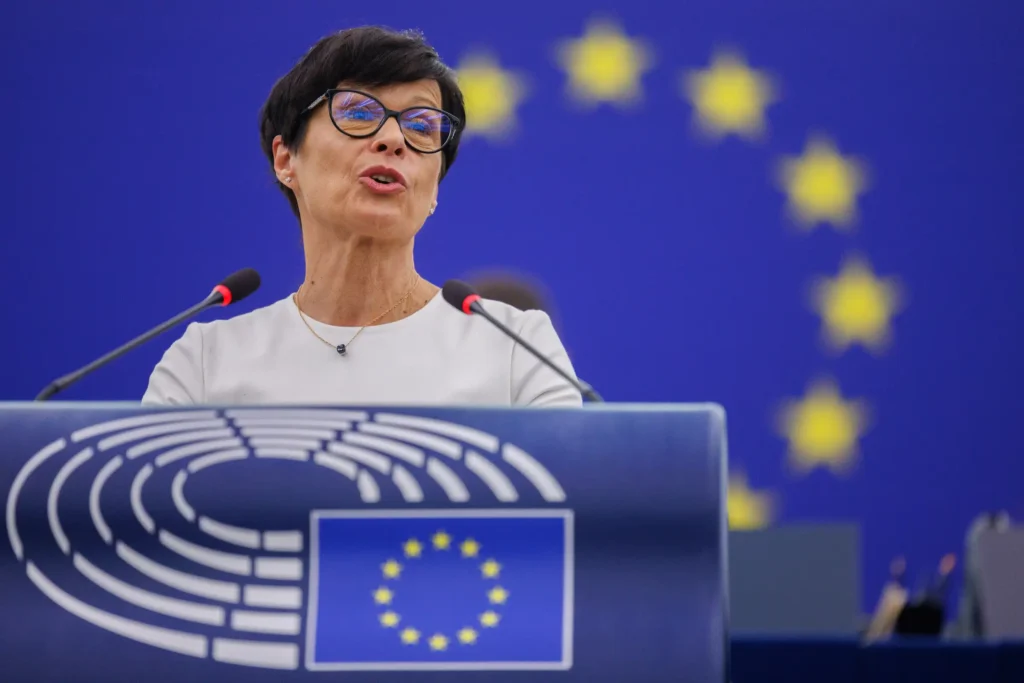
IMAGE: EU Enlargement Commissioner Marta Kos addresses Icelandic concerns over fisheries and agriculture during the referendum campaign. (Source Rúv)
French Foreign Minister Jean-Noël Barrot then told Icelanders they had “absolutely nothing to lose” by reopening talks, while Parliament’s Arctic rapporteur, Urmas Paet, had already expressed his hope that Iceland would join the EU.
Their interventions took place in public, but openness did not make them neutral. Kos addressed the issues most likely to deter Icelandic voters, Barrot dismissed the risk of restarting talks, and Paet stated the destination he wanted. The Commission had denied intervening in the referendum while its own enlargement commissioner was already addressing Icelandic voters’ principal concerns and making a public case for renewed negotiations.
Trump’s pursuit of Greenland, and his refusal at the time to rule out coercion, struck at the foundations of Iceland’s security relationship with the United States. Prime Minister Kristrún Frostadóttir called his conduct “unacceptable” and later acknowledged that the crisis had “definitely hit a nerve,” exposing how quickly pressure on Greenland could unsettle Iceland’s own sense of security. Supporters of renewed negotiations seized on that rupture to present closer European alignment as protection from an increasingly unreliable Washington. The coalition had already promised a referendum by the end of 2027, but Greenland supplied the fear that could accelerate it and the language through which European alignment could be sold as protection, turning a crisis created in Washington into leverage for Brussels.
The campaign’s unguarded doors
Iceland has strong protections for administering the referendum, but they extend unevenly to the campaign seeking to determine its outcome. Organisations, informal initiatives and online campaigners can raise and spend money without disclosing its origin, leaving voters unable to see who is financing the arguments placed before them.
The extent of that exposure is documented in a needs assessment report by the OSCE Office for Democratic Institutions and Human Rights. ODIHR expressed high confidence in Iceland’s electoral administration but found far weaker protections governing referendum finance, online campaigning and media regulation. Political parties must disclose their finances and observe restrictions on prohibited funding sources, while civil-society organisations, informal initiatives and other non-party campaigners face no equivalent system. They are subject to no campaign-specific donation or spending limits, no dedicated disclosure requirements and no comparable oversight. Iceland’s Auditor General told ODIHR that while every vote will be counted under close supervision, the authorities have no means of tracing much of the money used to influence the referendum’s outcome.
DOCUMENT: ODIHR Needs Assessment Mission Report, Iceland referendum, 29 August 2026. The report identifies gaps in campaign-finance oversight, donor disclosure, online campaigning and cooperation with major digital platforms. (Source: ODIHR)
Iceland 2026 Referednum_NAM Report_31.07.2026
The regulatory weakness extends online. The EU Digital Services Act has not yet been incorporated into the EEA framework and therefore does not apply in Iceland. Its current status appears in the EFTA EEA-Lex record, while ODIHR says Iceland consequently lacks formal cooperation mechanisms with the largest technology platforms. Transparency around online political advertising and voter targeting remains incomplete as the referendum attracts wider geopolitical attention. EU cooperation against foreign information interference is arriving during a campaign in which Iceland lacks some of the legal instruments intended to make that interference visible.
The government awarded ten million krónur each to Heimssýn on the No side and Evrópuhreyfingin on the Yes side, attaching accounting conditions to those grants, according to RÚV. The symmetry applies only to the public funds and the two organisations selected to receive them. Other organisations entered the campaign outside that channel, free to raise larger private sums under rules that do not require the same transparency.
Ten million krónur in public funding went to each side of Iceland’s referendum campaign, creating a symmetry that ended where private money began. The grants awarded to Heimssýn on the No side and Evrópuhreyfingin on the Yes side came with accounting conditions, but organisations operating beyond that arrangement could raise larger sums without identifying their donors. According to RÚV, these were the rules under which the referendum would proceed.
When RÚV questioned campaign organisations about their finances, SJÁ reported raising 27.3 million krónur from individuals and companies but withheld their identities because disclosure was not required. Evrópuhreyfingin would not publish its wider financial information, and Young Europeanists took the same position. SJÁ also acknowledged that the governing Social Democratic Alliance and Reform Party had emailed members encouraging support for its campaign. The governing parties could direct their supporters towards a privately financed organisation whose donors the public was not allowed to see.

IMAGE: RÚV found that referendum campaign groups could conceal donors, donations and wider accounts under Iceland’s existing rules. (Source: Graphics from Sigurður Kristján Þórisson via Rúv)
The groups denied receiving foreign money, and RÚV reported no evidence that they had, but the authorities have no means of verifying assurances offered by organisations they cannot compel to disclose their donors. Most No organisations questioned by RÚV said they intended to publish their finances, while several Yes organisations relied on the absence of any legal obligation to keep theirs private.
Iceland’s failure to expose online campaign money and voter targeting has opened another path for outside authority. The EU Digital Services Act remains outside the EEA framework, according to the EFTA EEA-Lex record, leaving Iceland without the formal platform relationships and advertising disclosures identified by ODIHR. Yet incorporating the DSA would not simply illuminate who pays to reach Icelandic voters. It would draw their political speech into a disputed European enforcement system that requires the largest platforms to mitigate broadly defined risks to civic discourse and elections.
The choice being created is therefore a false one between domestic opacity and supranational control, allowing campaign organisations to conceal money and targeting while Brussels offers an information regime capable of deciding which political speech constitutes a threat.
Outside scrutiny had already exposed a loaded premise in the referendum itself. The government proposed asking Icelanders whether accession negotiations should be “continued” even though no negotiations were under way, prompting the Venice Commission to warn that the wording could misrepresent the existing legal and political position. Parliament replaced “continued” with “start again,” correcting a question that risked steering voters through a false account of the choice before them. The Commission corrected a misleading question and left Icelanders to decide the rest
DOCUMENT: Venice Commission urgent opinion on Iceland’s referendum question. The opinion examines whether the original wording accurately described the status of accession negotiations and recommends clearer alternatives or substantially fuller voter information. (Source: Venice Commission)
URGENT OPINION
The queen still moves
Icelanders are not choosing between Europe and isolation. Their country already belongs to the European Economic Area and the Schengen area, works extensively with EU institutions, helped found NATO and is deepening its role in North Atlantic defence. Much of that cooperation will continue whatever happens on 29 August. The referendum asks the narrower and more consequential question of whether an already integrated country should place its future inside a formal process directed towards EU membership.
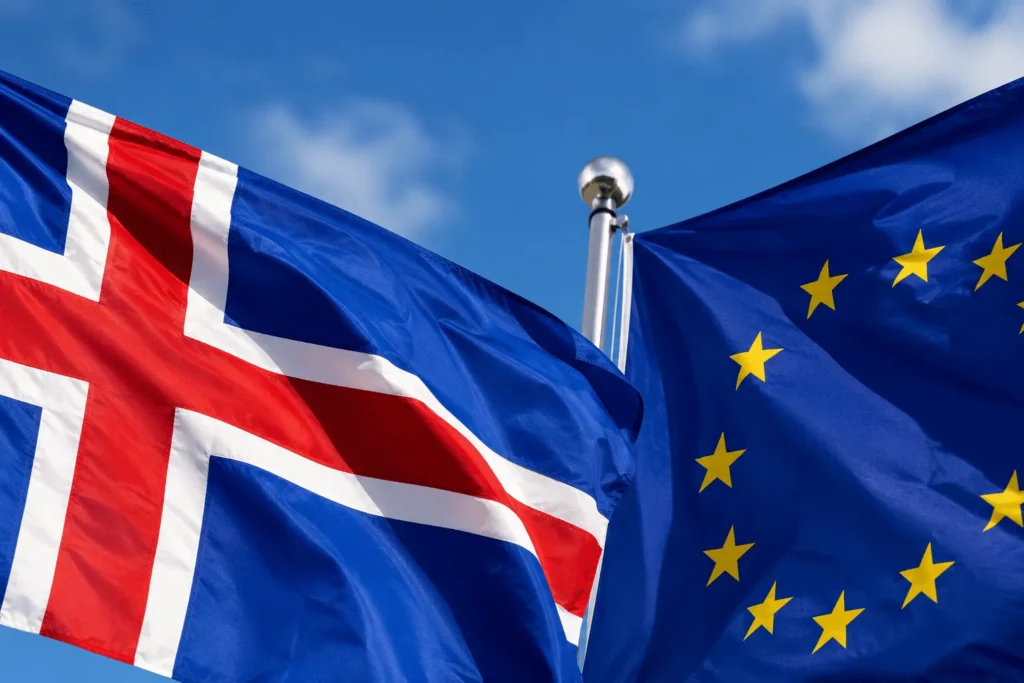
IMAGE: Icelanders living or travelling abroad cast absentee ballots ahead of the 29 August referendum on reopening EU accession negotiations. (Source: Iceland Review)
A Yes would open negotiations with European institutions that have already declared their preferred outcome, tied Icelandic membership to their Arctic interests, entered the country’s system for assessing hybrid threats and intervened publicly in a campaign whose financial safeguards remain incomplete. A No would leave Iceland facing the same security pressures, dependence on allies and weaknesses in the protection of its infrastructure and democratic debate. Whatever Icelanders decide, their government remains responsible for exposing the interests and money seeking to shape that decision.
Ólafsson’s queen represents the freedom that Iceland still holds. The country can cooperate without surrendering political control, seek protection without allowing dependence to dictate national policy and enter commitments that remain subject to democratic reconsideration.
The ballot asks whether accession negotiations should begin again, but this investigation has shown how much has already gathered around that narrow choice. Washington created the crisis, NATO defines much of Iceland’s security architecture and Brussels has made clear where it wants the process to end. Iceland has allowed campaign money and digital influence to remain partly hidden as those powers press closer.
The queen remains in Icelandic hands, but the board on which she moves is already being arranged by others.
READ MORE EUROPE NEWS AT: 21st Century Wire Europe Files
SUPPORT OUR INDEPENDENT MEDIA PLATFORM – BECOME A MEMBER @21WIRE.TV
VISIT OUR TELEGRAM CHANNEL
21st Century Wire is an alternative news agency designed to enlighten, inform and educate readers about world events which are not always covered in the mainstream media.
Source: https://21stcenturywire.com/2026/08/17/icelands-eu-referendum-and-the-battle-for-the-arctic-gate/
Anyone can join.
Anyone can contribute.
Anyone can become informed about their world.
"United We Stand" Click Here To Create Your Personal Citizen Journalist Account Today, Be Sure To Invite Your Friends.
Before It’s News® is a community of individuals who report on what’s going on around them, from all around the world. Anyone can join. Anyone can contribute. Anyone can become informed about their world. "United We Stand" Click Here To Create Your Personal Citizen Journalist Account Today, Be Sure To Invite Your Friends.
LION'S MANE PRODUCT
Try Our Lion’s Mane WHOLE MIND Nootropic Blend 60 Capsules
Mushrooms are having a moment. One fabulous fungus in particular, lion’s mane, may help improve memory, depression and anxiety symptoms. They are also an excellent source of nutrients that show promise as a therapy for dementia, and other neurodegenerative diseases. If you’re living with anxiety or depression, you may be curious about all the therapy options out there — including the natural ones.Our Lion’s Mane WHOLE MIND Nootropic Blend has been formulated to utilize the potency of Lion’s mane but also include the benefits of four other Highly Beneficial Mushrooms. Synergistically, they work together to Build your health through improving cognitive function and immunity regardless of your age. Our Nootropic not only improves your Cognitive Function and Activates your Immune System, but it benefits growth of Essential Gut Flora, further enhancing your Vitality.

Our Formula includes: Lion’s Mane Mushrooms which Increase Brain Power through nerve growth, lessen anxiety, reduce depression, and improve concentration. Its an excellent adaptogen, promotes sleep and improves immunity. Shiitake Mushrooms which Fight cancer cells and infectious disease, boost the immune system, promotes brain function, and serves as a source of B vitamins. Maitake Mushrooms which regulate blood sugar levels of diabetics, reduce hypertension and boosts the immune system. Reishi Mushrooms which Fight inflammation, liver disease, fatigue, tumor growth and cancer. They Improve skin disorders and soothes digestive problems, stomach ulcers and leaky gut syndrome. Chaga Mushrooms which have anti-aging effects, boost immune function, improve stamina and athletic performance, even act as a natural aphrodisiac, fighting diabetes and improving liver function. Try Our Lion’s Mane WHOLE MIND Nootropic Blend 60 Capsules Today. Be 100% Satisfied or Receive a Full Money Back Guarantee. Order Yours Today by Following This Link.


| Visits: | 1,829,264,604 |
| Stories: | 8,688,699 |
Whistler Blowers, Insiders

