

JD Vance’s Gaza ‘Miracle’ Is a Statistical Lie


Freddie Ponton
21st Century Wire
JD Vance claimed that more aid is entering Gaza now than at any point in the last five years. The public documentary record from the UN and frontline humanitarian agencies, as reflected in the updates of the United Nations Office for the Coordination of Humanitarian Affairs (OCHA) for the occupied Palestinian territory) points in the opposite direction. JD Vance said Gaza aid is better than ever. The record says otherwise.
The record clearly says otherwise, and taken together, the documents we are providing today show a shrinking flow of humanitarian cargo, collapsing health and food systems, and a ceasefire that is failing on its own terms rather than delivering a surge in relief.
VIDEO: Clip from Vice President JD Vance’s remarks at the Turning Point USA (TPUSA) event “This Is the Turning Point Tour,” Akins Ford Arena at the Classic Center, University of Georgia, Athens, Georgia, April 14, 2026. (Source: Caught On The Hill | Drope Site)
Vice President JD Vance — complicit in the deliberate restriction of essential food, shelter, and medicine to 2 million Palestinian civilians, including a million children— falsely claimed yesterday that more aid is entering Gaza now than at any point in the last five years.… https://t.co/fZJtHnVNVS pic.twitter.com/ibUUlXIqum
— Drop Site (@DropSiteNews) April 16, 2026
.
The Trump administration is not a bystander to Gaza’s starvation campaign; it is its political guarantor, and Vance is one of the slickest salesmen for the siege. Once Washington helps seal the crossings, arm the enforcers and whitewash the hunger, complicity no longer fits because this is cover for engineered starvation.
OCHA shows the trend
The first test for Vance’s claim is simple. Has humanitarian access to Gaza actually improved over recent months, or has it deteriorated? OCHA April 20026 situation reports give a clear answer. In early 2026, UN‑tracked humanitarian cargo entering Gaza did not rise to record levels. It declined from January to February and declined again in March, while the reach of food assistance also dropped after January.
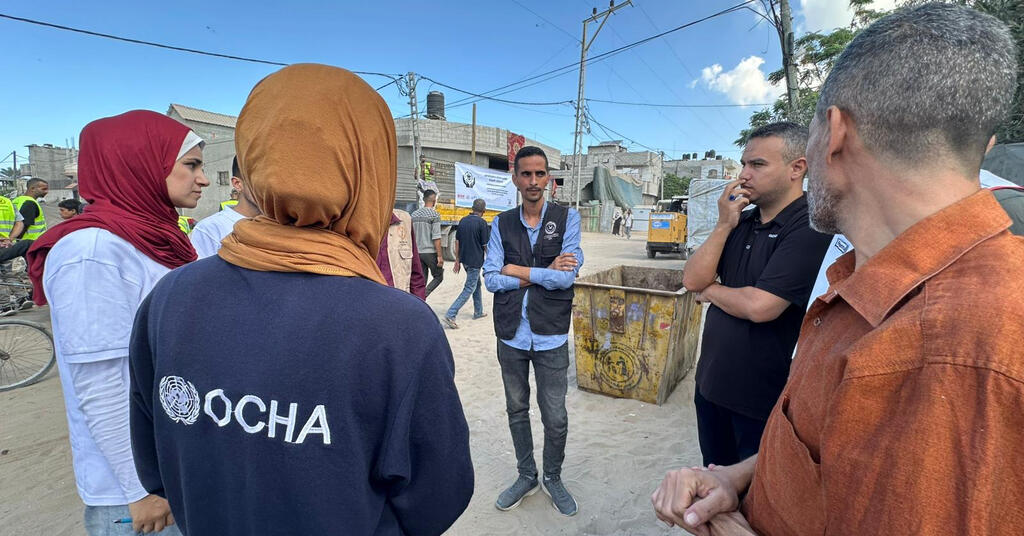
Earlier in the ceasefire period, the picture was different. At the end of January, OCHA reported a stronger week in which large volumes of pallets were offloaded and collected through both Kerem Shalom and Zikim, with both crossings functioning for aid.
Another January update noted that in the first three months after the ceasefire, Gaza received roughly 54,000 metric tons of aid a month, about three times the average monthly volume during the seventy‑eight‑day blockade that preceded it, underlining that even the “good weeks” were only a rebound from near‑total closure, not a five‑year high.
When the regional escalation began at the end of February, that fragile improvement quickly reversed. In March 2026, OCHA reported that only 3,424 pallets of UN and partner aid were offloaded between 27 February and 5 March, a sharp drop that shows just how thin the pipeline became once restrictions tightened again.
Later reports (April 2026) describe a narrowing corridor. By March, Kerem Shalom was left as the only cargo crossing consistently available for humanitarian agencies, and OCHA noted that the closure of other routes was limiting the volume of aid that could enter the strip.
Based on the 2 April 2026 situation report on ReliefWeb, across the period from October 2025 to the end of March 2026, OCHA counted roughly 380,000 pallets of humanitarian cargo collected in Gaza and stressed that less than one per cent of UN‑tracked consignments were intercepted or looted in transit.
The pattern is unmistakable. Within the ceasefire period itself, access did not steadily improve. It moved from a relatively better January, with multiple crossings operating and volumes recovering from a total blockade, to a tighter system in March and April that relied largely on a single gate.
Against that background, the idea that Gaza is experiencing the best aid access of the past five years (‘thanks to the US’) reads less like optimism and more like a denial of the UN’s own reporting.
WHO shows what that trend does to bodies
OCHA’s graphs become real when you look at the World Health Organization (WHO) description of Gaza’s health system. In its 4 March flash update, WHO says that almost half of essential medicines and around two-thirds of medical consumables in Gaza were already completely out of stock. At the same time, the WHO reports that hundreds of pallets of lifesaving medical supplies were waiting outside Gaza or stuck at the crossing, approved on paper but not yet available to the hospitals that needed them.
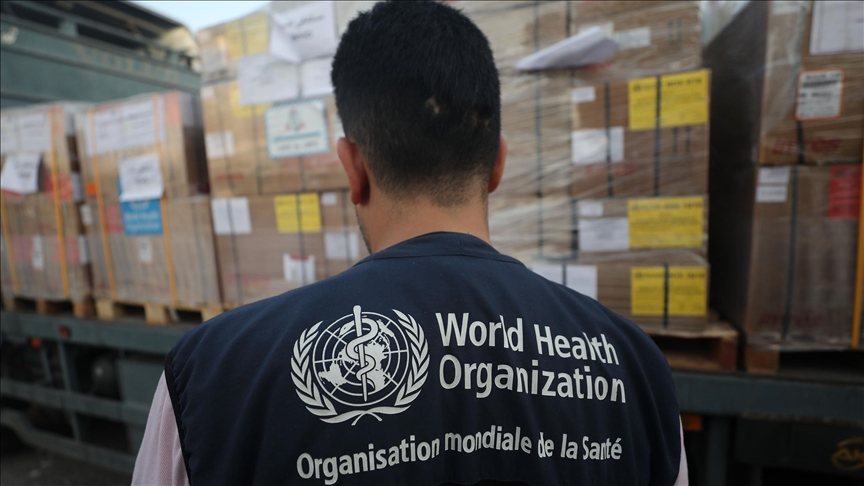
WHO also records a halt in fuel entry to Gaza at the end of February, just as health facilities, which rely almost entirely on fuel for electricity, were trying to maintain basic services, as the same 4 March 2026 WHO flash update makes clear. It notes that fuel had to be rationed from existing stocks to keep critical functions running.
A later OCHA update released on April 10 confirms that some diesel entered in early April but describes continued constraints and stop‑start deliveries, underscoring that fuel access is episodic and politically controlled, not steadily improving. On top of this, medical evacuations through Rafah and Kerem Shalom were suspended, despite tens of thousands of patients needing treatment that simply does not exist inside Gaza, from advanced surgery to cancer care. OCHA’s April reporting adds that a brief evacuation on 5 April moved just 17 patients and 33 caregivers through Rafah, before WHO suspended its support to medical evacuations again on 6 April after a contractor providing services to the organisation in Gaza was killed.
These are not abstract supply‑chain issues, as they translate into postponed operations, equipment failures, and patients turned away because there is nothing left to give them. When a politician then tells the public that aid is flowing better than ever, he is not just getting the trend wrong. He is smoothing over a documented reality in which people are being denied medicines and evacuations that could keep them alive.
WFP shows how hunger is engineered
The same logic appears in food. In March, the World Food Programme (WFP) warned that it had been unable to bring new food supplies into Gaza for weeks because the crossings were closed to both humanitarian and commercial cargo.
Inside Gaza, only a limited amount of food remained, while a far larger quantity of WFP food was positioned outside the strip, ready to move if the authorities allowed it in. This was clearly articulated and described in the WFP story “Risk of famine across all of Gaza, May 2025 report. That gap between available food and blocked entry is the core of the story. Families in Gaza were cutting rations and facing soaring prices, not because the world had run out of food, but because the system controlling the borders was preventing it from reaching them.
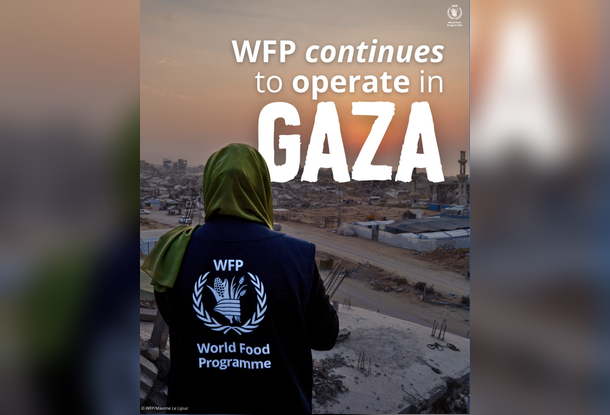
WFP’s market observations describe exactly what you would expect in that situation, with the cost of basic staples spiking and ordinary people forced to spend far more for far less, as described in the WFP Palestine Food Security Analysis – Market Monitor, March 2026. A concurrent OCHA update issued in April adds that damage to the electricity line supplying southern desalination sharply reduced drinking water for about 500,000 people, while cooking gas shortages forced nearly half of Gaza’s population to burn waste for cooking, a measure of how far basic living conditions have regressed. A follow‑up situation report released by the World Food Programme in early April described the same pattern of obstacles and shortages, showing that the late‑March crisis was not a brief anomaly but an ongoing restriction regime.
Anera, the American Near East Refugee Aid field reporting, brings the same reality down to a more granular level. Its March 2026 situation report describes Kerem Shalom as the only goods crossing and says it is still not operating at the scale required to meet needs.
In an April infographic, Anera summarises its work since October 2023, listing large cumulative totals for meals, water, and consultations, but it also shows only nine trucks in the pipeline at that moment, a revealing snapshot of how thin the near‑term lifeline really is.

IMAGE: Aid delivered in Gaza as of April 12, 2026, with some highlights since 2023 (Source: ANERA)
A system that leaves food and supplies waiting outside Gaza while the price of flour and gas explodes inside is not a system that can credibly be described as delivering unprecedented relief. It is a system that manufactures scarcity, then asks the world to believe that scarcity is somehow a sign of progress.
The scorecard delivers the verdict
To understand how all these threads fit together, it helps to look at the joint humanitarian scorecard compiled by major aid groups such as Norwegian Refugee Council (NRC), Oxfam, Save the Children, Refugees International (RI) and Danish Refugee Council (DRC). Rather than applying an external ideological test, it measures the ceasefire against its own written promises, including minimum aid levels, restored basic services, and improved movement (as set out in the report.
DOCUMENT: Humanitarian Scorecard – Six Months in, Gaza Ceasefire is Failing” (Source: Save the Children’s Resource Centre)
GazaScorecard2026FINAL-1
The result is a failing overall score and a zero for humanitarian access, after examining months of performance since the ceasefire took effect.
The scorecard notes that the supposed minimum standard of hundreds of humanitarian trucks a day has not been met, and that commercial entries, while sometimes rising, are not a substitute for monitored relief, a dynamic emphasised in the UN posting of the report on the UN Question of Palestine website. It also stresses that key crossings remain closed or heavily restricted, leaving Kerem Shalom as the single inconsistent entry point for most cargo.
In describing looting and diversion, it concludes that only a tiny fraction of aid has been intercepted, undermining claims that chaos inside Gaza is the main reason supplies fail to reach people (as reflected in the ReliefWeb mirror “Humanitarian Scorecard – Six Months in, Gaza Ceasefire is Failing” at ReliefWeb).
UN reporting echoes this, stating that less than one percent of UN‑tracked aid has been intercepted or looted during the ceasefire period, reinforcing the point that the main brake on relief is policy, not theft (see OCHA’s Gaza Humanitarian Response Situation Report No. 66).
What this document provides is not fresh outrage, but an audit. It connects the shrinking cargo volumes that OCHA records, the medical collapse that WHO describes, and the hunger that WFP warns about, and it asks whether the ceasefire is delivering what it promised. It answers that it is not.
Once that conclusion is on the table, it becomes much harder to treat any glowing description of the situation as a simple error or a difference of opinion. It starts to look like a deliberate refusal to acknowledge an evidence‑based verdict.
When words erase suffering
All of this leads back to Vance’s statement. This is not about his personality, but truly about what happens when a senior official describes a besieged population as if it were finally being relieved, precisely while the most authoritative reports show the opposite.
Nor did the ceasefire bring normality. OCHA reported on 10 April that airstrikes, shelling, and gunfire were continuing across Gaza and that 736 Palestinians had been killed since the ceasefire was announced in October 2025, while the UN human rights office said six months on that Palestinians across Gaza remained unsafe as Israeli attacks continued. At this stage, we must assume that the effect is not merely to misinform, but to dull public sensitivity to deprivation that has already been measured and recorded in painstaking detail.
What makes JD Vance’s remarks so repellent is not only that they are false. It is that they cheapen the suffering of people trapped inside a catastrophe that has been documented again and again by doctors, aid workers, and the very institutions tasked with tracking hunger, collapse, and death.
To look at that record and still suggest things are getting better is not a harmless political exaggeration. It is moral cowardice.
There is something especially rotten about using power and distance to talk over the pain of people who have neither. Undermining someone else’s suffering is among the lowest forms of dishonesty. It reveals not just indifference, but a serious failure of integrity, and a willingness to treat human misery as a communications shield.
If Vance does not know the facts, that is ignorance of a shocking kind for a man in his position. If he does know them and says this anyway, that is worse. In either case, the result is the same. The truth is buried, the public is misled, and the suffering of Palestinians is made easier to dismiss.
The people of Gaza are not living inside a talking point. They are living inside the realities described in these documents, where crossings close, medicines run out, food is held at the border, and promises on paper dissolve at the first test. For health, that now includes not only WHO but also Médecins Sans Frontières (MSF), whose staff describe critical shortages of supplies across Gaza’s hospitals, and the United Nations Children’s Fund (UNICEF), which warns of famine risks for children across the strip.
That is why claims like Vance’s cannot be allowed to pass unchallenged, because the record exists. The numbers are already written, and pretending otherwise is not just bad politics; it is an erasure of lives that are already hanging by a thread.
READ MORE PALESTINE NEWS AT: 21st CENTURY WIRE PALESTINE FILES
SUPPORT OUR INDEPENDENT MEDIA PLATFORM – BECOME A MEMBER @21WIRE.TV
VISIT OUR TELEGRAM CHANNEL
21st Century Wire is an alternative news agency designed to enlighten, inform and educate readers about world events which are not always covered in the mainstream media.
Source: https://21stcenturywire.com/2026/04/16/jd-vances-gaza-miracle-is-a-statistical-lie/
Anyone can join.
Anyone can contribute.
Anyone can become informed about their world.
"United We Stand" Click Here To Create Your Personal Citizen Journalist Account Today, Be Sure To Invite Your Friends.
Before It’s News® is a community of individuals who report on what’s going on around them, from all around the world. Anyone can join. Anyone can contribute. Anyone can become informed about their world. "United We Stand" Click Here To Create Your Personal Citizen Journalist Account Today, Be Sure To Invite Your Friends.
LION'S MANE PRODUCT
Try Our Lion’s Mane WHOLE MIND Nootropic Blend 60 Capsules
Mushrooms are having a moment. One fabulous fungus in particular, lion’s mane, may help improve memory, depression and anxiety symptoms. They are also an excellent source of nutrients that show promise as a therapy for dementia, and other neurodegenerative diseases. If you’re living with anxiety or depression, you may be curious about all the therapy options out there — including the natural ones.Our Lion’s Mane WHOLE MIND Nootropic Blend has been formulated to utilize the potency of Lion’s mane but also include the benefits of four other Highly Beneficial Mushrooms. Synergistically, they work together to Build your health through improving cognitive function and immunity regardless of your age. Our Nootropic not only improves your Cognitive Function and Activates your Immune System, but it benefits growth of Essential Gut Flora, further enhancing your Vitality.

Our Formula includes: Lion’s Mane Mushrooms which Increase Brain Power through nerve growth, lessen anxiety, reduce depression, and improve concentration. Its an excellent adaptogen, promotes sleep and improves immunity. Shiitake Mushrooms which Fight cancer cells and infectious disease, boost the immune system, promotes brain function, and serves as a source of B vitamins. Maitake Mushrooms which regulate blood sugar levels of diabetics, reduce hypertension and boosts the immune system. Reishi Mushrooms which Fight inflammation, liver disease, fatigue, tumor growth and cancer. They Improve skin disorders and soothes digestive problems, stomach ulcers and leaky gut syndrome. Chaga Mushrooms which have anti-aging effects, boost immune function, improve stamina and athletic performance, even act as a natural aphrodisiac, fighting diabetes and improving liver function. Try Our Lion’s Mane WHOLE MIND Nootropic Blend 60 Capsules Today. Be 100% Satisfied or Receive a Full Money Back Guarantee. Order Yours Today by Following This Link.


| Visits: | 1,797,176,197 |
| Stories: | 8,622,663 |
Whistler Blowers, Insiders

