

Has Trump Lost His Last Off‑Ramp in Isfahan, Iran?

Freddie Ponton
21st Century Wire
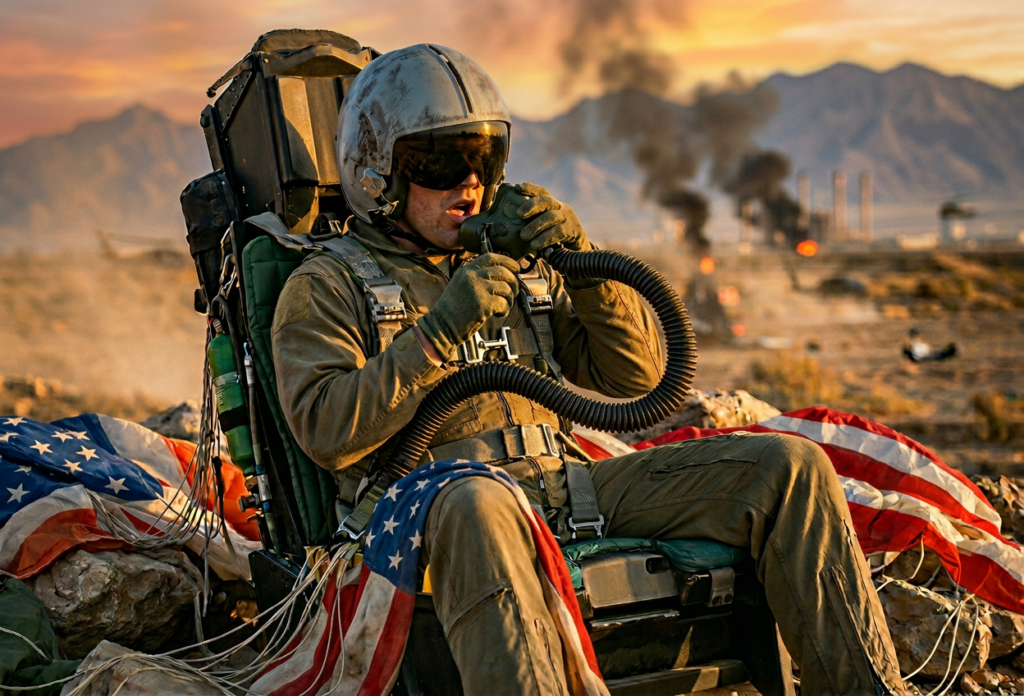
Washington’s public line is tidy enough to fit inside a briefing note. An F-15E Strike Eagle was downed over Iran, one crew member was recovered, the second crew member was later pulled out, and the United States carried out a difficult but successful Combat Search and Rescue operation inside hostile territory. That much explains why HH-60G Pave Hawk rescue helicopters, pararescue jumpers, and support aircraft were in the air. What it does not explain is why the episode ended with a special operations wreck field near Shahreza that included two MC-130J Commando II aircraft and three MH-6 Little Bird helicopters, platforms associated with CSAR missions but also deep raid architecture. It also does not explain reporting that pointed to a much larger force package, including scores of special operators and enablers, which is operationally irrational if the mission began and ended with retrieving one isolated airman.

IMAGE: Airmen from the Kentucky Air National Guard’s 123rd Special Tactics Squadron prepare to conduct combat search-and-rescue from an MH-6M Little Bird that was offloaded from an MC-130J Commando II during Exercise Agile Chariot near Riverton, Wyoming, May 2, 2023 (Source: 123RD Airwing Lift)
CENTCOM’s credibility problem matters here because it had already spent the war minimizing or denying uncomfortable loss narratives around F-15 incidents and a far more contested air war than the public had been led to believe.
This is the first point readers should keep in view. The issue is not whether a rescue happened, because one clearly did. The issue is whether that rescue was the whole mission, and the evidence says it was not.
Even mainstream military reporting has now accepted the basic point that Washington initially tried to blur. Military Times reported that the F-15E Strike Eagle fighter was brought down by enemy fire and that rescue assets, including HH-60G Pave Hawks supported by an HC-130, were operating deep inside Iran under difficult combat conditions to recover the crew. That matters because it gives the entire episode a harder factual floor. Once, even establishment military reporting is describing a hostile shootdown followed by a deep rescue effort inside Iranian territory, the official image of a tightly controlled battlespace begins to crack. (Video Source: GeoInsider | X)
More footage emerging from southern Iran allegedly showing a US Combat Search and Rescue (CSAR) mission in progress. Visible in the footage is an HC-130 a specialized aircraft used to refuel rescue helicopters mid-air. pic.twitter.com/UseDo0gMAC
— GeoInsider (@InsiderGeo) April 3, 2026
The rescue package itself was not unusual. Air Force Special Operations Command (AFSOC) had already publicly rehearsed the same MC-130J and Little Bird improvised-strip profile during Exercise Agile Chariot in Wyoming in 2023. What made this episode different was some details, including the target of the recovery. The missing crewman was a colonel serving as the F-15E’s Weapon Systems Officer (WSO) who ultimately had command and control (C2) for this air support operation deep into Iranian airspace, a sign that far more was at stake than an ordinary extraction. Add the reported presence of Tier One operators such as SEAL Team 6, and in some accounts Delta Force, rather than a standard Ranger-style security screen, and the official rescue narrative begins to look incomplete, if not incoherent.
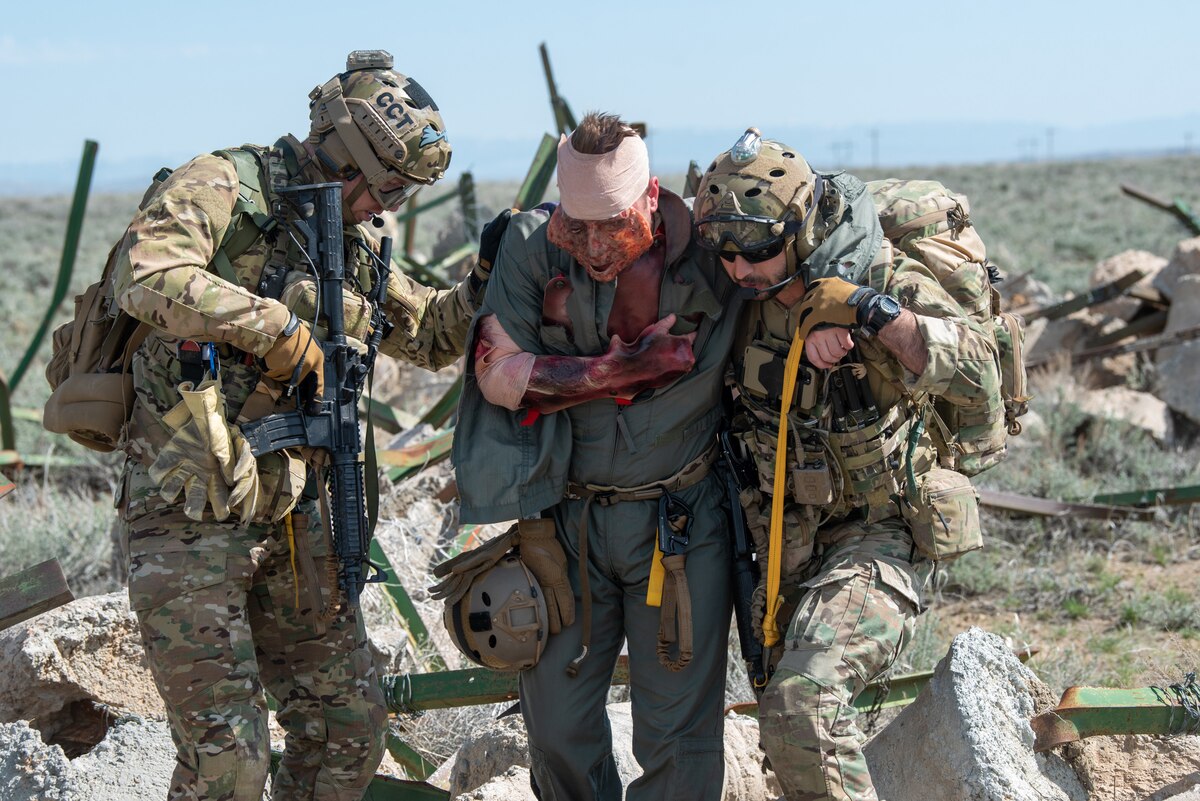
IMAGE: Airmen with the Kentucky Air National Guard’s 123rd Special Tactics Squadron help a simulated injured pilot during Exercise Agile Chariot near Riverton, Wyoming, May 2, 2023 (Source: 123RD Airwing Lift)
Two missions in one battlespace
The cleanest reading of the timeline is that two related but distinct missions unfolded in the same window. One was a genuine Combat Search and Rescue effort for the downed F-15E crew, and the footage of low-flying Pave Hawks taking small-arms fire over southern Iran fits that part of the story. The other was the Shahreza special operations package, whose size, aircraft mix, and forward arming and refuelling site make little sense if the operation truly ended with a single rescued Weapons Systems Officer.
This distinction matters; however, we do not have to deny that the United States mounted a real rescue effort to conclude that Washington used that rescue as cover, justification, or political camouflage for a covert action. Undeniably, these two missions were not improvised cousins but parts of the same special operations architecture. The HH‑60 Pave Hawks and pararescue teams fit the profile of a genuine CSAR run. The Shahreza package, by contrast, looks like a JSOC raid that was already on the rails and then re‑tasked into a rescue when the F‑15E went down. In that frame, the colonel’s extraction is the salvage job that replaced an operation aimed at the Isfahan nuclear corridor, not the total of what the force was built to do.
No serious reader needs specialist military training to understand what happened. A mission to recover one hidden airman does not logically end with multiple clandestine transports, Little Birds, a forward staging strip, abandoned high-end gear, and a wreck field that looks like the remains of a failed raid.
Why Isfahan matters
The geography strips away much of the spin. The crashed F-15E was tied to the Isfahan area, while the Shahreza site sat within operational distance of the Isfahan nuclear complex and the buried tunnel infrastructure that had already drawn attention because much of Iran’s near-bomb-grade uranium was believed to be concentrated there. Isfahan was not just another dot on the map. It was one of the most sensitive nuclear nodes in the country.
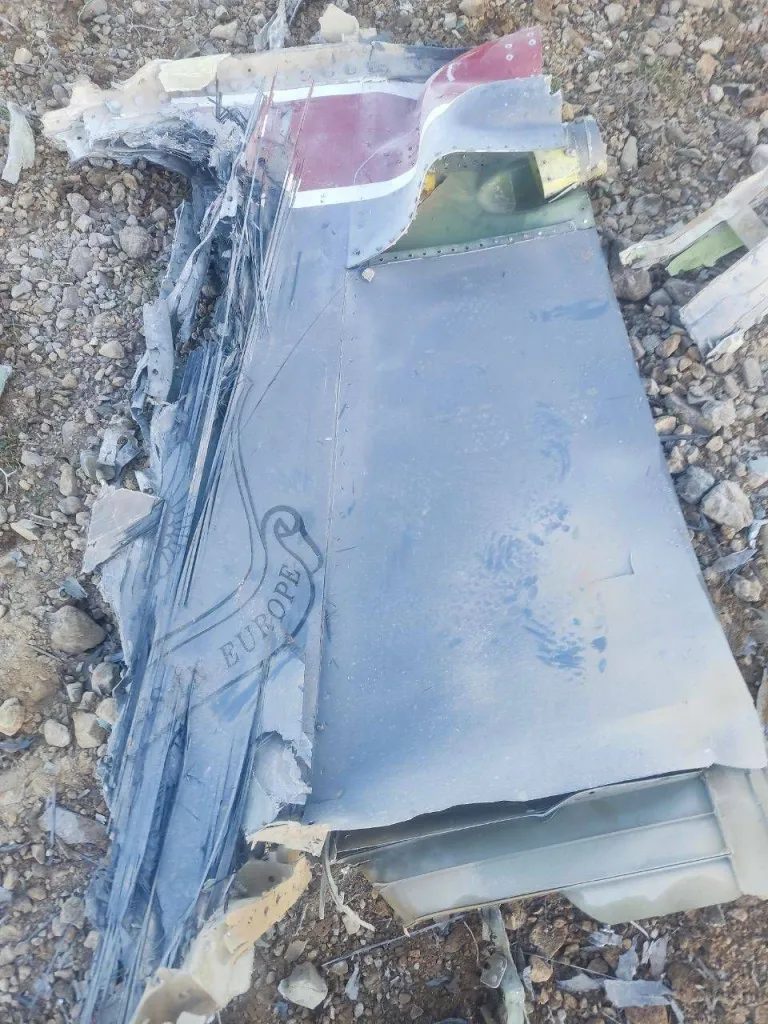
IMAGE: A picture released by Iranian state media displays what seems to be the tailfin of an F-15E. Iranian state media
That fact gives the larger mission a strategic logic that the official rescue story cannot supply. Reporting before this episode had already described debate in Washington over ways to disable, seize, or otherwise neutralize Iran’s enriched uranium stockpile, particularly in and around Isfahan. Once a special operations forward site appears in that same corridor, and once a heavy special operations package is found wrecked there, the burden shifts onto Washington to explain why this was merely a rescue and not something larger.
In a recent interview with Judge Napolitano, Scott Ritter, a former United States Marine Corps intelligence officer who later served as a weapons inspector for the United Nations Special Commission from 1991 to 1998, argued that the MC-130J loadout does not look configured for a simple one-man recovery. He is at least professionally familiar with the kinds of specialist teams and equipment such missions require. In that interview, the reported presence of only three Little Birds, together with Trump’s own references to extra “sensitive equipment” onboard, is used to suggest that at least one aircraft may have sacrificed helicopter space for specialist payloads and personnel. Although that does not prove the package was carrying gear for the seizure of enriched uranium from a bunker complex near Isfahan. It does, however, make far more sense of why the force mix appears to have included specialists such as EOD-capable teams and why the overall package looked heavier, more specialized, and more politically sensitive than a straightforward rescue should have required.
The downed F-15E also fits more neatly when read as a gate opener rather than an isolated misfortune. If a larger special operations package was meant to move into the Isfahan battlespace, then a prior effort to suppress or probe Iranian air defenses in the same zone makes far more sense than the idea that unrelated rescue assets and unrelated clandestine transports simply converged there by coincidence. Critical Threats and other reporting from the period also undercut the fantasy of uncontested American air dominance by showing that Iranian defenses remained active enough to hit US aircraft despite repeated triumphalist messaging.
The larger significance of the shootdown lies in what it revealed about the battlefield itself. The Middle East Insider argued that the loss exposed the resilience of Iranian air defenses after weeks of American efforts and claims that those systems had been effectively degraded or suppressed. That point cuts directly into the public narrative of air dominance. It suggests that any follow-on mission moving through the same corridor may have been built on a dangerously optimistic assumption that Iranian defenses had already been blunted enough to allow a deeper operation to proceed. If that assumption were false, then the disaster near Shahreza stops looking like an isolated accident and starts looking like the foreseeable result of a mission pushed into airspace Washington did not truly control.
The Aircraft tell the story
The wreckage is where the Pentagon story begins to collapse under its own weight. The aircraft at the Shahreza site were not ordinary cargo haulers but MC-130J Commando II special operations transports, identifiable in part through the six-bladed Dowty R391 composite propellers rather than the older four-bladed metal propellers seen on legacy Hercules variants. That matters because the United States did not lose generic airlift. It lost specialist platforms designed to insert and support Combat Search and Rescue (CSAR) and covert teams in denied territory. (Video source: Gerry Nolan | X)
New footage from the wreckage field in Isfahan where America’s special operations C130 aircraft burned on Easter Sunday.
Acres of molten aluminium, shredded airframe, classified avionics reduced to burnt wire across the Iranian desert. This should have never happened. This is… https://t.co/leyeFJhix8 pic.twitter.com/aXkU1fU3zu
— Gerry Nolan (@RealGerryNolan) April 5, 2026
The unit trail points in the same direction. Open source analysis tied gear seen in footage from the site to Air Force Special Operations Command, while broader staging patterns through RAF Mildenhall and the United Kingdom showed that 352nd Special Operations Wing capabilities had already been moving toward the theatre in the months before the mission collapsed. That makes Shahreza look less like an improvised rescue escalation and more like the activation of a capability that had already been pre-positioned for exactly this kind of operation.
Additional footage from the same window shows a US Air Force Special Operations Command CASA C‑295W making a low pass over Iran, a rare appearance of that aircraft type that aviation outlets and OSINT analysts have tied to AFSOC’s 427th Special Operations Squadron, The low-flying C-295, a tactical transport built to operate from short, rough strips and to fly low‑level tactical profiles, carrying up to a company’s worth of troops or several tonnes of cargo in and out of austere airfields, deserves more attention than it has received for the same reason. (Video source: Egypt’s Intel Observer)
Footage shows a U.S. Air Force Special Operations Command (AFSOC) CASA C-295W making a low pass during the CSAR operation in Iran.
This aircraft is operated by the 427th Special Operations Squadron (427 SOS), a highly classified U.S. Air Force unit under Air Force Special… pic.twitter.com/NU7tySflZz
— Egypt’s Intel Observer (@EGYOSINT) April 5, 2026
Flight history and open-source tracking tied aircraft of that type, including tail number 17-0601 associated with the 427th Special Operations Squadron, to special operations use, which makes the outbound low-altitude C-295 footage look less like a random transport sighting and more like part of an emergency extraction chain after the Shahreza site was compromised. When the aircraft types, the unit signatures, and the staging pattern all point toward special operations aviation, the public is no longer dealing with a rescue story that grew unusually large. It is dealing with a raid package that went bad.
What the wreckage and the deception really show
The wreckage does not require us to make the maximal claim to make the strongest case. The aircraft does not have to have been cleanly blown out of the sky for Washington’s version to fail. Visible combat damage and ballistic punctures in the fuselage are enough to show that the aircraft came under hostile fire before or during the abandonment and destruction sequence. The most cautious reading is also the most damaging to the official line because it suggests the United States may indeed have blown up some of its own equipment, but only after the mission had already deteriorated under Iranian fire.
In his interview, Scott Ritter adds a harsher operational detail that is worth noting, even if it cannot yet be fully corroborated. He argues that the MC‑130s bogged down not because the Air Force forgot how to land on dirt, but because planners leaned on Israeli Sheldag reconnaissance from a dry June survey instead of inserting their own combat controllers to reassess the strip under April conditions. In that version of events, Shahreza begins to look less like bad luck and more like Operation Eagle Claw (Desert One) echo: dated partner intel, softer post‑rain ground, and a decision to skip the doctrinal step of putting Americans on the runway first to certify it.

IMAGE: Scott Ritter: Patience, not Profanity, Wins Wars (Source: Judge Napolitano – Judging Freedom)
Historical weather data for central Iran in April shows a pattern of intermittent rain and softer ground, rather than the baked, rock‑hard surface planners might expect from a high‑summer survey around Isfahan. That does not prove the Shahreza strip was waterlogged on the night of the operation, but it does underline why relying on an earlier, dry‑season reconnaissance would have been a dangerous shortcut rather than a minor judgment call.
The CIA deception campaign should be read in that same light. Multiple reports said the agency spread false leads that the missing American airman was being moved toward the coast in a ground convoy, thereby redirecting Iranian search efforts while the real operation unfolded elsewhere. That is not a colorful side detail. It is proof that Washington was actively shaping Iranian search behavior inside Iran while trying to conceal the true center of gravity of the operation.
Military Times also adds a detail that makes the deception effort look less theatrical and far more necessary. The paper reported that Iranian local authorities were actively mobilizing the search for the missing airman, while contemporaneous reporting described Iran calling on the public to find the enemy pilot. In other words, the Americans were not operating in an empty landscape. They were trying to move through a country that had suddenly been alerted, politically charged, and pushed into a distributed manhunt. In that environment, CIA disinformation was not just a clever sideshow, but rather an operational requirement for buying time, diverting attention, and opening a narrow corridor for whatever else was unfolding on the ground.
Once that is understood, the public rescue narrative looks less like a transparent account and more like the public-facing layer of a broader concealment effort. The convoy story bought time. The wreckage shows what that time was being used for. Middle East Eye
What remains hidden
This is the point where we have to stay disciplined. We do not have enough verified evidence to claim confirmed numbers of Special Operations Forces killed or captured during the Shahreza raid. What we do have is a far narrower and more defensible conclusion that still cuts deeply against the White House and Pentagon line. The mission outcome was almost certainly worse, messier, and more compromised than the public was told.
It could be argued that the Isfahan corridor operation was built as Donald Trump’s war‑ending tableau: a JSOC raid to snatch or neutralise the 60% enriched material, followed by a televised declaration that the nuclear threat had been removed and the war could be closed on American terms. Once that tableau collapsed into a messy rescue, a destroyed forward strip, and a public row over leaks, the geometry flipped. Instead of dictating the exit terms, Washington moved into Pakistan‑mediated talks with Iran, China and Russia, holding far more of the leverage than the White House is comfortable with.
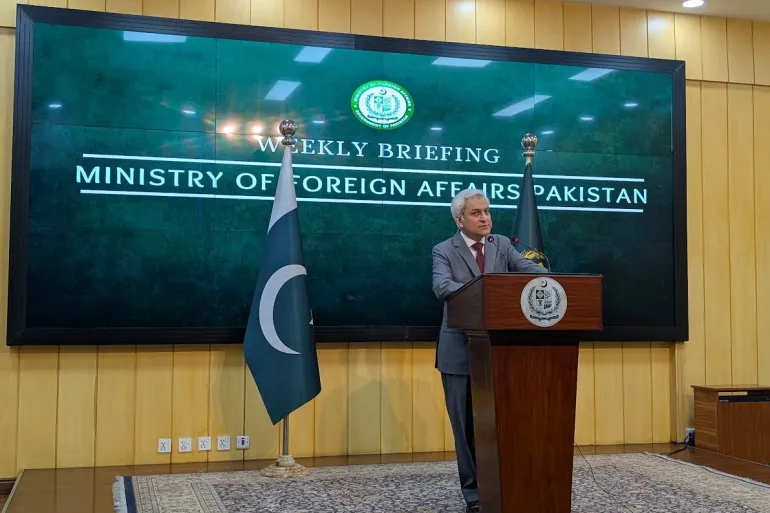
IMAGE: Tahir Andrabi, Pakistan’s Foreign Ministry spokesperson, speaks at the media conference in Islamabad on April 2, 2026 ( Source: Abid Hussain/Al Jazeera)
According to Iranian state media and regional reporting, Tehran has sent a ten‑point reply through Pakistan rejecting a short 45‑day truce and demanding instead a guaranteed end to the war, a formal transit protocol in the Strait of Hormuz that recognises its role there, lifting of U.S. sanctions and financing for reconstruction, and explicit respect for Iran’s right to enrich uranium for peaceful purposes under the NPT. Earlier today, Iranian officials told Reuters they would not reopen the Strait of Hormuz for commercial shipping as part of a temporary ceasefire. Trump’s options are running thin.
In summary
Our conclusion rests on the totality of the evidence rather than any single viral clip. A real rescue mission took place. A second, much larger special operations package moved into the same battlespace. That package was positioned in a corridor that mattered because of Isfahan’s uranium infrastructure, supported by aircraft associated with clandestine raids, shielded by a CIA deception effort, and left behind wreckage that does not resemble a clean success. The official narrative asks readers to shrink all of that into a single heroic rescue. Nonetheless, the evidence refuses to shrink with it.
The most logical explanation, and the one that stays closest to the known facts, is not a wild conspiracy. It is that Washington mounted an illegal incursion into Iranian airspace and territory, wrapped a larger covert action inside a genuine rescue effort, lost control of the battlespace, destroyed some of its own aircraft on withdrawal, and then sold the public the smallest possible version of the truth. That is not speculation dressed up as analysis. It is the simplest reading of the aircraft, the geography, the units, the deception, and the wreckage.
READ MORE IRAN NEWS AT: 21st Century Wire IRAN Files
SUPPORT OUR INDEPENDENT MEDIA PLATFORM – BECOME A MEMBER @21WIRE.TV
VISIT OUR TELEGRAM CHANNEL
21st Century Wire is an alternative news agency designed to enlighten, inform and educate readers about world events which are not always covered in the mainstream media.
Source: https://21stcenturywire.com/2026/04/07/has-trump-lost-his-last-off%e2%80%91ramp-in-isfahan-iran/
Anyone can join.
Anyone can contribute.
Anyone can become informed about their world.
"United We Stand" Click Here To Create Your Personal Citizen Journalist Account Today, Be Sure To Invite Your Friends.
Before It’s News® is a community of individuals who report on what’s going on around them, from all around the world. Anyone can join. Anyone can contribute. Anyone can become informed about their world. "United We Stand" Click Here To Create Your Personal Citizen Journalist Account Today, Be Sure To Invite Your Friends.
LION'S MANE PRODUCT
Try Our Lion’s Mane WHOLE MIND Nootropic Blend 60 Capsules
Mushrooms are having a moment. One fabulous fungus in particular, lion’s mane, may help improve memory, depression and anxiety symptoms. They are also an excellent source of nutrients that show promise as a therapy for dementia, and other neurodegenerative diseases. If you’re living with anxiety or depression, you may be curious about all the therapy options out there — including the natural ones.Our Lion’s Mane WHOLE MIND Nootropic Blend has been formulated to utilize the potency of Lion’s mane but also include the benefits of four other Highly Beneficial Mushrooms. Synergistically, they work together to Build your health through improving cognitive function and immunity regardless of your age. Our Nootropic not only improves your Cognitive Function and Activates your Immune System, but it benefits growth of Essential Gut Flora, further enhancing your Vitality.

Our Formula includes: Lion’s Mane Mushrooms which Increase Brain Power through nerve growth, lessen anxiety, reduce depression, and improve concentration. Its an excellent adaptogen, promotes sleep and improves immunity. Shiitake Mushrooms which Fight cancer cells and infectious disease, boost the immune system, promotes brain function, and serves as a source of B vitamins. Maitake Mushrooms which regulate blood sugar levels of diabetics, reduce hypertension and boosts the immune system. Reishi Mushrooms which Fight inflammation, liver disease, fatigue, tumor growth and cancer. They Improve skin disorders and soothes digestive problems, stomach ulcers and leaky gut syndrome. Chaga Mushrooms which have anti-aging effects, boost immune function, improve stamina and athletic performance, even act as a natural aphrodisiac, fighting diabetes and improving liver function. Try Our Lion’s Mane WHOLE MIND Nootropic Blend 60 Capsules Today. Be 100% Satisfied or Receive a Full Money Back Guarantee. Order Yours Today by Following This Link.


| Visits: | 1,794,269,905 |
| Stories: | 8,617,216 |
Whistler Blowers, Insiders

