

A Dying Empire Collides with a Rising Iran as the Gulf Learns to Live Without America

Freddie Ponton
21st Century Wire
Pakistan is scrambling to salvage a two-week ceasefire that expires tonight, while US warships and Iranian missiles stare each other down across the Strait of Hormuz. In Washington, Trump insists he is “in no rush” to extend the truce even as the War Powers deadline and a growing veteran‑led revolt close in on his Iran adventure. Tehran, for its part, has made one thing brutally clear in the face of ship seizures and threats of power‑plant strikes: there will be no negotiations under the shadow of a gun.
Iran is not bluffing. After fifty days of war and a fragile ceasefire balanced on today’s deadline, it is Washington that is running out of time, out of options, and out of political cover, while Tehran quietly shapes the terms of whatever comes next.
Deadlines, blockades and a war that refuses to end
The United States did not agree to a two-week ceasefire out of generosity. It did it because the War Powers clock is ticking. The White House filed its notification on March 2 after launching joint strikes with Israel at the end of February. Under US law, Trump now has until roughly May 1 to either produce a political settlement or face a showdown with Congress over an illegal, unauthorised war. He can also ask in writing for a 30-day extension for safe withdrawal.
In that narrow window, Washington has tried to make brute force do the work of diplomacy. The naval blockade of Iranian ports. The threat to “destroy” power plants if Tehran does not reopen the Strait of Hormuz. The seizure of the Iranian-flagged cargo ship M V Touska in the Gulf of Oman after a six-hour standoff, when the destroyer USS Spruance opened fire into the engine room, and US Marines fast roped from USS Tripoli to take control of the vessel.
That operation was billed as law enforcement, but in reality, it turned a contested legal theory into an evidentiary record. Washington has now used open kinetic force to enforce a self-declared blockade on the high seas during a ceasefire. Tehran can point to Article 51 of the UN Charter and say that its response fits the language of self defence, while international lawyers increasingly question whether the US-led blockade has any solid legal foundation at all.
The question now is whether that blockade can still be sold as legitimate maritime pressure, or whether it looks more like a siege regime whose civilian impact invites accusations of collective punishment and war crimes. Humanitarian law is clear that blockades and sieges which deprive civilians of essential goods or use starvation as a method of war cross bright red lines.
Iran tests how far resilience can become power
Tehran is no longer simply absorbing punishment; t is steadily turning endurance into political leverage and regional authority.
Iranian forces have already answered US and Israeli strikes with salvos against bases, ports and ships across the theatre, demonstrating reach well beyond their own coastline and accuracy sufficient to shutter facilities and disrupt shipping. Iranian officials and regional outlets have circulated footage and claims of retaliatory drone attacks on US warships after the Touska seizure, even as most major Western outlets focused narrowly on the boarding itself and the ceasefire drama. The fog of war remains thick, but the information gap is telling.
At sea, Washington has concentrated three carrier strike groups, an amphibious group and dozens of destroyers from the eastern Mediterranean to the northern Indian Ocean. On paper, this is overwhelming firepower, but in practice, it is an armada parked inside a dense Iranian missile, drone and anti-ship envelope, a high-value, densely packed target set rather than a symbol of uncontested dominance.
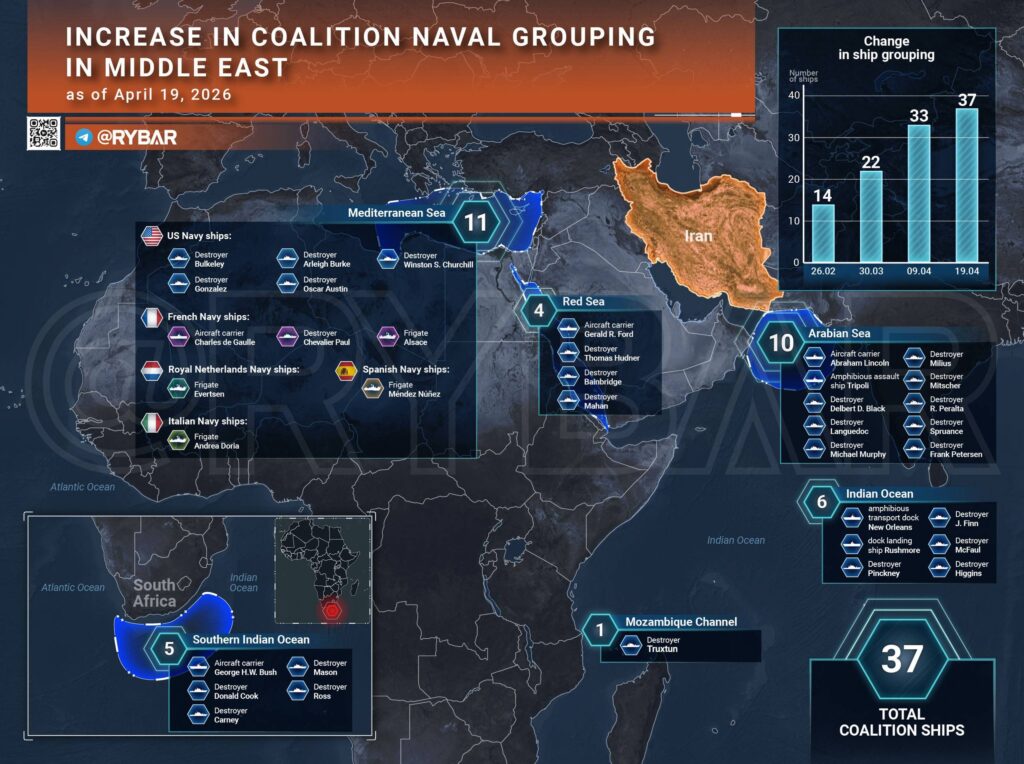
IMAGE: Coalition naval buildup around Iran as of April 19, 2026, showing 37 US and allied warships concentrated across the Mediterranean, Red Sea, Arabian Sea and Indian Ocean in response to the escalating Strait of Hormuz crisis (Source: RYBAR via Will Schryver X account)
Even a partial repeat of Iran’s earlier long-range strikes would be enough to damage or disable major ships, close airfields and further choke global supply lines. A fleet that size is meant to be used; however, the problem for Washington is that using it invites the kind of losses a “late-stage empire” can no longer absorb without political crisis at home.
Islamabad, Hormuz and the choice to say no
Pakistan’s mediation produced the current ceasefire. It was Islamabad that shuttled between Washington and Tehran to secure the truce, carrying US drafts to Tehran and Tehran’s ten-point counterproposal back to Washington, with Pakistani officials openly describing their role as that of an indispensable broker between capitals that was barely speaking to each other, until Pakistan asserted that it possesses trillions of dollars in rare earths and essential minerals, which has generated interest in Washington.
But when it came time to discuss a second round in Islamabad, Iran simply declined to commit. Regional reporting says Tehran is “not ready” to send a delegation for now, citing continued US threats and the blockade of Hormuz. Iran’s parliament speaker has been blunt, insisting on no talks under the shadow of threats and no talks while the Strait remains weaponised.
That stance is reinforced by the nuclear file. The head of the IAEA has called for a new inspection regime as part of any settlement, while Iran resists being pushed back into a JCPOA-style straightjacket without guarantees that the US will not simply tear up the deal again. Even on the one issue where Western officials like to pretend Tehran is on the defensive, Iran is negotiating as if it has options.
The contrast is stark. Washington is begging for more time and a photo op it can sell on the Hill. Tehran is in a position to say it will talk later, on different terms, or not at all. At this stage, negotiations are not an escape route and represent one option among many, to be used as long as it serves Iranian interests.
A region slips out of Washington’s hands
The ground is moving under the US’s feet in the wider region as well. After signing a landmark mutual defence pact with Saudi Arabia, Pakistan is now, according to the Times of Islamabad, in advanced talks with Qatar for a “historic” security agreement, one that would deepen its military role in Gulf defence while bringing in Turkish diplomacy and money.
This does not necessarily mean that these Gulf monarchies are aligning with Iran, but it’s obvious they are hedging. They are quietly building security relationships with regional Muslim powers, so they are not solely dependent on US carrier groups and bases. Every step in that direction dilutes Washington’s monopoly over Gulf security. Every new Pakistani or Turkish footprint makes it harder for the US to assemble a unified Arab front for an all-out US-Israeli war on Iran. It is exactly the kind of multipolar environment in which Tehran has always said it can thrive.
Even in Europe, cracks are visible. Debates over “strategic autonomy”, tariff wars and coercive trade policy, energy blackmail and blind support for Israel have pushed public opinion, especially in Germany, away from automatic alignment with US foreign policy.
Blowback in the empire’s capital
The war is not only bleeding legitimacy abroad. It is now bleeding legitimacy at home. On Capitol Hill, dozens of US military veterans and family members have been arrested after occupying the Cannon House Office Building and demanding an end to the war on Iran and the slaughter in Gaza. They folded US flags for the dead. They chanted against a war many of them once fought for, in other theatres, on false pretences. Here is one account of the action from the peace movement’s perspective.
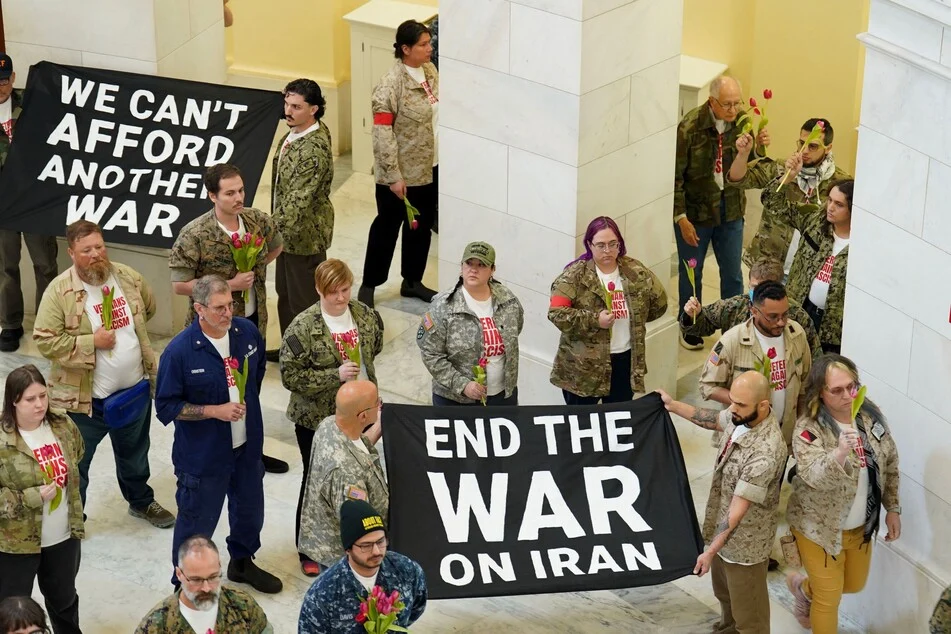
IMAGE: Veterans, military family members, and supporters occupy the Cannon House Office Building on Capitol Hill, calling on the Trump administration to end the war on Iran on April 20, 2026 (Source: © Leigh Vogel / Getty Images North America)
Organizers say more than a hundred service members have already filed as conscientious objectors and warn that resistance inside the ranks will grow if the war drags on past the May 1 deadline. A broader peace current has been building in the US in response to the Gaza genocide, and now finds a new focal point in the Iran war. This is not yet the movement that helped end Vietnam, but it is a crack in the façade at precisely the moment the White House needs silence and obedience.
The same “peace through strength” formula that has failed to deliver a settlement in Ukraine, where, thanks to Steve Witkoff and Jared Kushner, talks keep stalling while offensives grind on, is now failing in Iran as well. Coercion produces escalation, not peace, whilst deadlines arrive, and Empires find themselves negotiating from weakness.
A late-stage empire meets a patient adversary
Put these strands together, and the balance of initiative in West Asia no longer rests with Washington.
Iran has shown it can strike back and inflict meaningful damage on US and Israeli military positions. It controls the most important choke point in the global energy system and has proven willing to close or open Hormuz on its own terms. It can treat Islamabad’s invitations as optional and force mediators to work around its red lines. It watches while Gulf monarchies diversify their security bets away from Washington and while European publics grow tired of paying for American wars.
On the other side, a US president trapped between carriers offshore and veterans in the Capitol, between a War Powers deadline and an enemy that keeps surviving, falls back on the same formula that failed in Iraq, Afghanistan and Ukraine. More pressure. More threats. Peace through strength that looks less like peace every day.
Iran’s confidence is not bravado. It is the cold calculation of a state that has survived sanctions, sabotage, assassinations and open war, and now sees that the empire arrayed against it can no longer impose outcomes at a price it is willing to pay.
A conversation that goes deeper
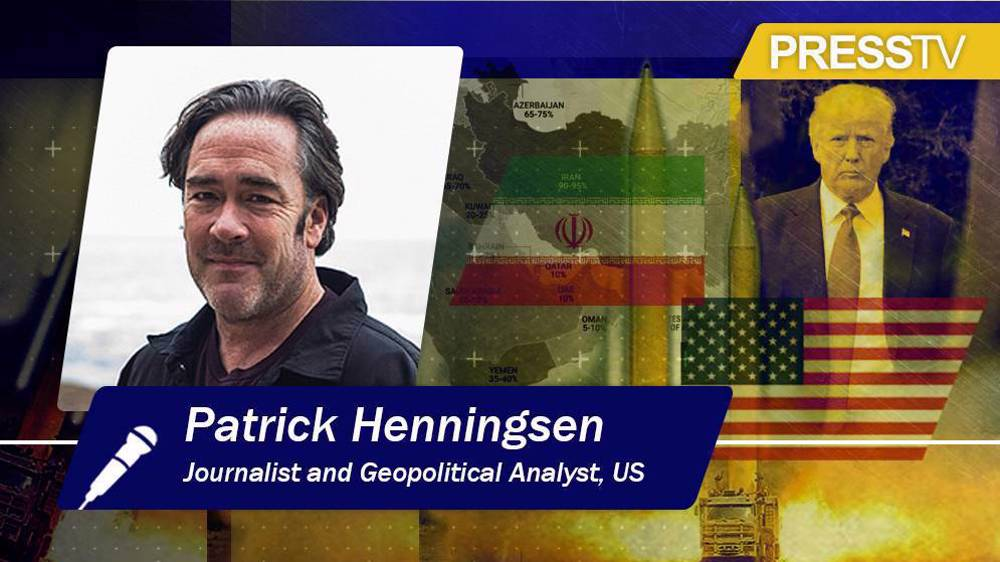
The analysis above is not happening in a vacuum. In a recent interview with the Press TV website team, award-winning journalist and founder of the 21st Century Wire, Patrick Henningsen, dissects the same shifts now visible on the ground, from Iran’s emergence as a central regional power to the way European capitals and Gulf monarchies are learning to navigate around Washington rather than through it. He traces how Iran’s military resilience, its leverage over Hormuz, the breakdown of trust in US commitments and the rise of new regional security arrangements all point to a post-American order taking shape in West Asia.
Readers who want to explore these dynamics in more depth will find that conversation, featured below, a sharp and unflinching guide to the war and the new balance of power it is creating.
Alireza Kamandi reports for PressTV…
Iran now a bona fide regional power with key decisions running through Tehran: Analyst
Iran is now a bona fide regional power, and key decisions run through Tehran – so countries in the region will need friendly relations with Iran, says an analyst.
In an interview with the Press TV website, Patrick Henningsen, the founder of the 21st Century Wire Website, a geopolitical analyst and an award-winning journalist, said the US foreign policy under President Donald Trump continues to alienate long-standing allies, and a noticeable shift is underway in European capitals.
He noted that a combination of strategic autonomy, economic self-interest, and dwindling confidence in Washington’s reliability is driving a more defiant European posture on the world stage.
His remarks came days after the US agreed to a 10-point proposal from the Islamic Republic to permanently end the war of aggression against the country, submitting to the Iranian power.
During the 40-day war, Iranian armed forces retaliated strongly and decimated US military bases and assets across the region, as well as Israeli military and strategic sites in the occupied territories.
Iran also closed the Strait of Hormuz for US and allied vessels following the unprovoked aggression, which caused energy across the globe, including the US and Europe.
The war against the Islamic Republic has further distanced Washington from its European allies, who have refused to join the US-Israeli war coalition against Iran.
Feature – How Iran decimated US power projection in West Asia: Military lessons of 40-day war
By Mohammad Molaeihttps://t.co/RvImJFgLxO
— Press TV (@PressTV) April 10, 2026
Henningsen said, central to this realignment is Iran, which has solidified its status as a bona fide regional power. Key diplomatic and security decisions in West Asia now run through Tehran, compelling many countries, including Europeans, to seek functional, if not friendly, relations with the Islamic Republic.
He described the Trump administration’s approach as characteristic of what some historians call “late-stage empire”: a dominant power turning on its own allies or framing them as adversaries for rejecting imperial authority.
Tariff wars, widely seen as economically damaging to both the US and Europe, alongside inconsistent threats to withdraw from the NATO military alliance, have sent a clear signal. European nations, the argument goes, may need to develop independent foreign policies rather than conforming to frameworks imposed by Washington, NATO, or even Brussels.
“Public opinion in Germany, for example, is reportedly shifting away from blind support for both Israel and US foreign policy. Germans are increasingly aware of how US trade and energy policies—such as forcing the purchase of overpriced LNG gas—have strained their domestic economy, even as Berlin takes on new debt to finance a military buildup framed as a necessary response to Russia”, he noted.
“Iran has demonstrated an ability not only to strike back against US aggression but to inflict meaningful damage on the broader military posture of both the United States and Israel. In living memory, no other opponent has achieved this,” Henningsen said.
By Mohammad Molaeihttps://t.co/RvImJFgLxO
— Press TV (@PressTV) April 10, 2026
“While European and UK politicians remain cautious—often described as fearful of the Israel lobby and its media surrogates—this new reality may eventually force a reassessment.”
Regarding the current ten-day ceasefire agreement involving Lebanon, the award-winning journalist said, while it is seen as initially positive that Iran can impose conditions on both the US and Israel, deep skepticism persists.
Israel has a poor record of respecting ceasefires, especially when such agreements interfere with its territorial expansion or military objectives. Likewise, the US is known to adopt a similar doctrine: using truces as cover to buy time, prepare attacks, and resume hostilities.
Henningsen emphasized that both the US and Israel have been erratic and untrustworthy when it comes to honoring agreements. They ignore international law when it suits their interests and as a result, many countries have lowered expectations.
“Lower-tier powers feel obligated to keep diplomatic channels open to avoid all-out war, but major players like Iran and Russia are reportedly under no illusions about US reliability in any negotiation”, he told the Press TV website.
READ MORE IRAN NEWS AT: 21st Century Wire Iran Files
SUPPORT OUR INDEPENDENT MEDIA PLATFORM – BECOME A MEMBER @21WIRE.TV
VISIT OUR TELEGRAM CHANNEL
21st Century Wire is an alternative news agency designed to enlighten, inform and educate readers about world events which are not always covered in the mainstream media.
Source: https://21stcenturywire.com/2026/04/21/a-dying-empire-collides-with-a-rising-iran-as-the-gulf-learns-to-live-without-america/
Anyone can join.
Anyone can contribute.
Anyone can become informed about their world.
"United We Stand" Click Here To Create Your Personal Citizen Journalist Account Today, Be Sure To Invite Your Friends.
Before It’s News® is a community of individuals who report on what’s going on around them, from all around the world. Anyone can join. Anyone can contribute. Anyone can become informed about their world. "United We Stand" Click Here To Create Your Personal Citizen Journalist Account Today, Be Sure To Invite Your Friends.
LION'S MANE PRODUCT
Try Our Lion’s Mane WHOLE MIND Nootropic Blend 60 Capsules
Mushrooms are having a moment. One fabulous fungus in particular, lion’s mane, may help improve memory, depression and anxiety symptoms. They are also an excellent source of nutrients that show promise as a therapy for dementia, and other neurodegenerative diseases. If you’re living with anxiety or depression, you may be curious about all the therapy options out there — including the natural ones.Our Lion’s Mane WHOLE MIND Nootropic Blend has been formulated to utilize the potency of Lion’s mane but also include the benefits of four other Highly Beneficial Mushrooms. Synergistically, they work together to Build your health through improving cognitive function and immunity regardless of your age. Our Nootropic not only improves your Cognitive Function and Activates your Immune System, but it benefits growth of Essential Gut Flora, further enhancing your Vitality.

Our Formula includes: Lion’s Mane Mushrooms which Increase Brain Power through nerve growth, lessen anxiety, reduce depression, and improve concentration. Its an excellent adaptogen, promotes sleep and improves immunity. Shiitake Mushrooms which Fight cancer cells and infectious disease, boost the immune system, promotes brain function, and serves as a source of B vitamins. Maitake Mushrooms which regulate blood sugar levels of diabetics, reduce hypertension and boosts the immune system. Reishi Mushrooms which Fight inflammation, liver disease, fatigue, tumor growth and cancer. They Improve skin disorders and soothes digestive problems, stomach ulcers and leaky gut syndrome. Chaga Mushrooms which have anti-aging effects, boost immune function, improve stamina and athletic performance, even act as a natural aphrodisiac, fighting diabetes and improving liver function. Try Our Lion’s Mane WHOLE MIND Nootropic Blend 60 Capsules Today. Be 100% Satisfied or Receive a Full Money Back Guarantee. Order Yours Today by Following This Link.


| Visits: | 1,798,688,048 |
| Stories: | 8,625,699 |
Whistler Blowers, Insiders

