

The Global Consequences of Losing Electricity and Running Water in the Modern Era: How Cities, Hospitals, and Food Systems Would Collapse

What Would Happen if Modern Civilization Lost Electricity and Running Water?

Introduction: A Fragile Modern World
For most people living in developed countries today, electricity and running water are so deeply embedded in daily life that imagining a world without them seems almost impossible. Lights turn on instantly with a switch. Clean drinking water flows from taps. Waste disappears down drains. Food is refrigerated, transportation is mechanized, and hospitals rely on advanced electrical technology to keep patients alive.
Yet the modern infrastructure that sustains these conveniences is far more fragile than it appears.
For most of human history, societies functioned without electricity or indoor plumbing. Even in highly industrialized countries like the United States, these technologies became universal only during the mid-20th century. In rural America during the 1930s and early 1940s, millions of households still lived without electricity. Many relied on wells, hand pumps, wood stoves, and outhouses.
Urban areas adopted modern sanitation earlier, but the transition was gradual. In cities such as Boston or New York in the early 20th century, some neighborhoods—especially on the outskirts—still depended on shared wells, outdoor toilets, and manual water collection.
Human communities adapted to those conditions through cooperation, ingenuity, and local resource management.
But there is a crucial difference between historical societies and modern civilization: scale.
Today, billions of people live in densely populated cities whose survival depends entirely on complex technological systems. If electricity and running water disappeared suddenly across a modern country—or globally—the consequences would be catastrophic.
To understand why, we must examine the hidden systems that keep modern civilization functioning.
1. The Fragility of Modern Infrastructure

Modern cities are technological ecosystems. Every system—water supply, transportation, healthcare, communication, food distribution, and sanitation—is interconnected through electricity and complex logistics networks.
A sudden failure of these systems would trigger a cascading collapse.
Imagine waking up in a megacity such as:
A shocking warning is raising concerns across the country, suggesting that millions of Americans could face a devastating crisis by April 27, 2026. Some experts claim that a series of unexpected events could lead to widespread financial collapse, loss of housing, and major power outages affecting everyday life.
Watch the video below to discover the details and see what may be coming.

- New York City
- Tokyo
- London
The lights do not turn on.
Your phone has no signal. Elevators stop working. Water does not run from the tap.
At first, people might assume the outage is temporary. But within hours, deeper problems begin to emerge.
Refrigerators warm. Food begins to spoil. Fuel pumps stop operating. Traffic lights go dark. Subway systems shut down. Electronic payment networks collapse, making it impossible to buy goods.
Within days, supermarket shelves would be empty.
Most cities maintain only three to five days of food supply. Modern supply chains rely on continuous transportation—mainly trucks powered by diesel fuel and coordinated through digital logistics networks.
Without electricity, those networks fail instantly.
High-rise apartment buildings would become nearly unlivable. Water pressure systems require electric pumps to move water to upper floors. Without them, water would not reach apartments above the lowest levels.
Elevators would remain stuck between floors.
People living on the 20th or 40th floor would suddenly face a difficult reality: climbing dozens of flights of stairs simply to leave their building.
Entire sections of cities could be abandoned within weeks.
2. Cities Without Power

When infrastructure fails, cities quickly become hostile environments.
Street lighting disappears, leaving entire districts in darkness at night. Police and emergency services struggle to respond without communication systems. Surveillance cameras stop working.
Crime rates historically increase during prolonged power outages.
One of the most famous examples occurred during the 1977 blackout in New York City, when looting and arson spread across several neighborhoods in less than 24 hours.
But that blackout lasted only 25 hours.
Now imagine a blackout lasting months—or years.
Water treatment plants require massive electric pumps to filter and transport water. Without electricity, the flow of clean drinking water stops almost immediately.
At the same time, sewage systems stop functioning.
Within days, pipes begin backing up into buildings and streets.
Urban sanitation would collapse.
Garbage collection would halt. Food waste and human waste would accumulate in densely populated areas. Rats, insects, and disease-carrying organisms would thrive.
Large cities would become extremely dangerous environments.
Many residents would attempt to flee.
3. Historical Lessons: Life Before Electricity
Human civilization has survived without electricity for thousands of years. However, historical societies were structured very differently from modern ones.
Populations were smaller, more rural, and far less dependent on complex infrastructure.
One of the most remarkable examples of pre-industrial engineering is the system of aqueducts developed by the Roman Empire.
Roman Water Systems


Ancient Rome developed an extensive water supply network capable of serving more than a million residents.
Engineers built aqueducts—channels that transported water from distant springs and mountains into cities using only gravity.
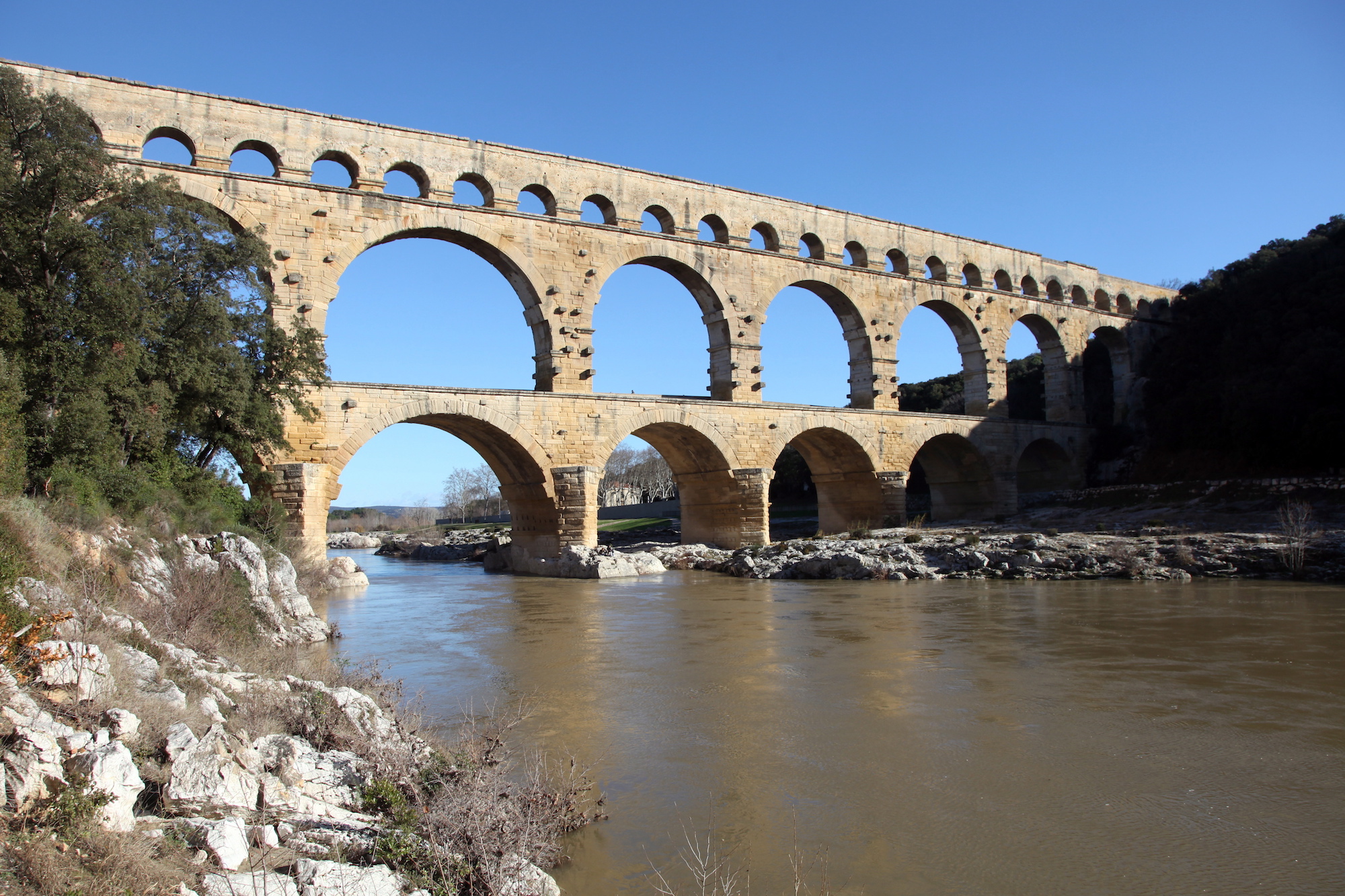
One famous aqueduct, the Pont du Gard in southern France, was constructed in the 1st century CE and carried water across the Gardon River to supply the Roman colony of Nemausus (modern Nîmes).
Some Roman aqueducts transported water over distances exceeding 100 kilometers.
For example, the aqueduct Aqua Marcia supplied Rome with water from springs more than 90 kilometers away and could deliver hundreds of thousands of cubic meters of water daily.
These systems required incredible engineering precision. Water had to flow downhill at a very slight gradient—sometimes only a few centimeters per kilometer.
Despite being built over 2,000 years ago, some Roman aqueducts continued functioning into the modern era.
But history also shows the vulnerability of such infrastructure.
When invading armies destroyed aqueducts during wars, entire cities could lose their water supply overnight. Populations often fled, leaving urban centers abandoned.
Modern cities would face similar risks—but at far greater scale.
4. Sanitation Collapse and Disease
One of the most dangerous consequences of losing electricity and running water would be the collapse of sanitation systems.
Modern sewage networks depend on electrically powered pumping stations. Wastewater travels through underground pipes to treatment facilities where it is filtered, chemically treated, and disinfected.
If those systems stop operating:
- Sewage backs up into pipes
- Toilets stop flushing
- Wastewater floods streets and basements
This creates ideal conditions for waterborne diseases.
Historically, diseases such as:
- Cholera
- Typhoid fever
- Dysentery
- Hepatitis A
spread rapidly in communities lacking clean water and sanitation.
During the 19th century, cholera epidemics killed hundreds of thousands of people in Europe and Asia before modern sanitation systems were introduced.
In a modern collapse scenario, disease outbreaks could spread even faster due to dense populations and global travel networks.
Hospitals—already struggling without electricity—would quickly become overwhelmed.
5. Hospitals Without Electricity

Modern medicine is fundamentally dependent on electrical technology.
Hospitals rely on electricity for:
- life-support machines
- ventilators
- surgical equipment
- diagnostic imaging (CT scans, MRI, X-rays)
- sterilization systems
- refrigeration of medicines
Without electricity, medical care would regress by centuries.
Doctors could still perform basic procedures using manual tools, but many life-saving technologies would be unavailable.
Medicines requiring refrigeration—such as insulin and vaccines—would spoil within days.
Pharmaceutical manufacturing would also stop. Most modern drugs require complex chemical production facilities powered by electricity.
Within weeks, even common antibiotics could become scarce.
Millions of people with chronic medical conditions—diabetes, heart disease, kidney failure—would face life-threatening shortages of treatment.
6. Transportation Breakdown
Transportation is another system deeply dependent on electricity.
Gas stations rely on electric pumps to move fuel from underground tanks into vehicles. Without electricity, fuel becomes inaccessible.
Even if fuel exists, it cannot be distributed.
Modern logistics networks use computers, satellite navigation, and automated warehouses to coordinate deliveries. Without power, these systems shut down instantly.
Highways that once carried thousands of trucks per day would become eerily empty.
Food distribution would collapse.
Within one week, most urban populations would face severe shortages of essential supplies.
People would begin leaving cities in search of food and water.
This mass migration would create enormous pressure on rural areas.
7. Agriculture After Collapse

Modern agriculture is highly mechanized.
Large farms depend on:
- tractors
- irrigation pumps
- fertilizer production
- refrigeration systems
- transportation networks
Without electricity and fuel, agriculture would revert to pre-industrial methods.
Farmers would rely on:
- hand tools
- animal labor
- crop rotation
- natural fertilizers
These methods can sustain small populations, but feeding billions of people would be extremely difficult.
Food production would initially drop dramatically.
Famine could spread during the early years following infrastructure collapse.
8. The First Winter
The most dangerous period after a collapse might be the first winter.
In modern homes, heating systems rely on electricity, natural gas, or fuel oil.
Without these systems:
- homes become dangerously cold
- food supplies decline
- disease spreads more easily
Urban residents often lack access to firewood or heating equipment.
Forests near cities could quickly be stripped of trees as people attempt to gather fuel.
Exposure to cold temperatures could become one of the leading causes of death.
Children and elderly individuals would be especially vulnerable.
9. Energy Alternatives
Over time, humanity would adapt.
Societies might reintroduce older technologies that do not require electrical infrastructure.
These could include:
- steam engines
- diesel-powered machinery
- wind-powered mills
- water wheels
- animal labor
Steam locomotives, for example, could once again become important transportation systems for long-distance freight.
Rail networks might replace trucking as the primary method of moving goods.
Communities would gradually reorganize around smaller, localized economies.
10. A New Post-Collapse Society
Over several decades, a new societal structure could emerge.
Cities would likely shrink dramatically. Populations would disperse into smaller towns and agricultural communities.
Large skyscrapers might be abandoned entirely.
Instead, settlements would focus on:
- local food production
- mechanical industry
- low-energy transportation
- community-based governance
This world would resemble a hybrid between the 19th-century industrial era and modern scientific knowledge.
Humanity would still possess centuries of accumulated knowledge—but without the infrastructure that once allowed that knowledge to operate at global scale.
Conclusion
Human civilization has proven remarkably adaptable throughout history.
Our ancestors survived ice ages, pandemics, wars, and technological transitions. Life without electricity is not impossible.
But the sudden loss of electricity and running water in a modern world would trigger one of the greatest crises in human history.
Cities would empty. Infrastructure would collapse. Disease, hunger, and exposure could claim millions of lives.
Yet over time, societies would adapt.
Human ingenuity would rebuild systems using simpler technologies and local resources.
The world would become slower, smaller, and more decentralized—but civilization itself would endure.
Anyone can join.
Anyone can contribute.
Anyone can become informed about their world.
"United We Stand" Click Here To Create Your Personal Citizen Journalist Account Today, Be Sure To Invite Your Friends.
Before It’s News® is a community of individuals who report on what’s going on around them, from all around the world. Anyone can join. Anyone can contribute. Anyone can become informed about their world. "United We Stand" Click Here To Create Your Personal Citizen Journalist Account Today, Be Sure To Invite Your Friends.
LION'S MANE PRODUCT
Try Our Lion’s Mane WHOLE MIND Nootropic Blend 60 Capsules
Mushrooms are having a moment. One fabulous fungus in particular, lion’s mane, may help improve memory, depression and anxiety symptoms. They are also an excellent source of nutrients that show promise as a therapy for dementia, and other neurodegenerative diseases. If you’re living with anxiety or depression, you may be curious about all the therapy options out there — including the natural ones.Our Lion’s Mane WHOLE MIND Nootropic Blend has been formulated to utilize the potency of Lion’s mane but also include the benefits of four other Highly Beneficial Mushrooms. Synergistically, they work together to Build your health through improving cognitive function and immunity regardless of your age. Our Nootropic not only improves your Cognitive Function and Activates your Immune System, but it benefits growth of Essential Gut Flora, further enhancing your Vitality.

Our Formula includes: Lion’s Mane Mushrooms which Increase Brain Power through nerve growth, lessen anxiety, reduce depression, and improve concentration. Its an excellent adaptogen, promotes sleep and improves immunity. Shiitake Mushrooms which Fight cancer cells and infectious disease, boost the immune system, promotes brain function, and serves as a source of B vitamins. Maitake Mushrooms which regulate blood sugar levels of diabetics, reduce hypertension and boosts the immune system. Reishi Mushrooms which Fight inflammation, liver disease, fatigue, tumor growth and cancer. They Improve skin disorders and soothes digestive problems, stomach ulcers and leaky gut syndrome. Chaga Mushrooms which have anti-aging effects, boost immune function, improve stamina and athletic performance, even act as a natural aphrodisiac, fighting diabetes and improving liver function. Try Our Lion’s Mane WHOLE MIND Nootropic Blend 60 Capsules Today. Be 100% Satisfied or Receive a Full Money Back Guarantee. Order Yours Today by Following This Link.


| Visits: | 1,789,632,954 |
| Stories: | 8,607,693 |
Whistler Blowers, Insiders

