
Israel’s War on Iran’s Grid: How the South Pars Strike Turned Energy into a Weapon

Freddie Ponton
21st Century Wire
The drones did not just hit a “gas field.” They hit the machinery that keeps a country running.
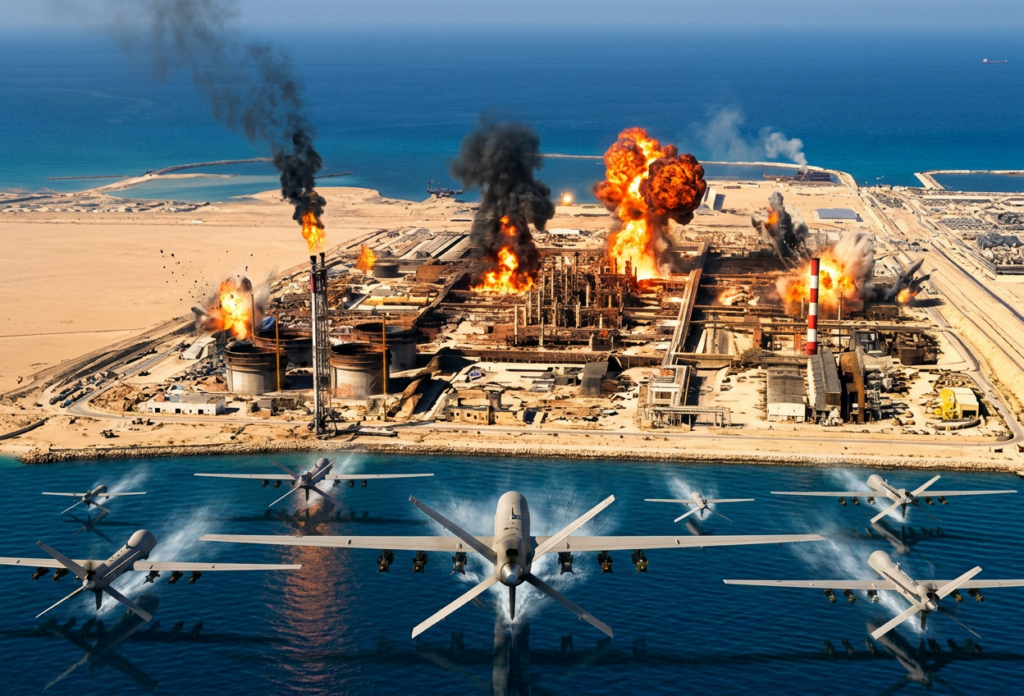
In the early hours of March 18, Israeli drones tore into four gas‑treatment plants in Assaluyeh on Iran’s southern coast, where sour gas from phases 3, 4, 5 and 6 of the South Pars field is cleaned, separated and turned into the fuel that keeps the country’s lights on, homes heated and factories supplied. Iranian officials ordered the plants offline to contain the fires, and industry analysts immediately warned that production from the offshore platforms feeding those trains would have to be cut back. Within an hour of the strike being reported, European gas prices and Brent crude jumped, because traders understood what most headlines did not. This was not a symbolic hit on an abstract “gas field,” but a deliberate attack on a conversion node at the heart of Iran’s domestic energy system and a critical pillar of the wider Gulf energy order.
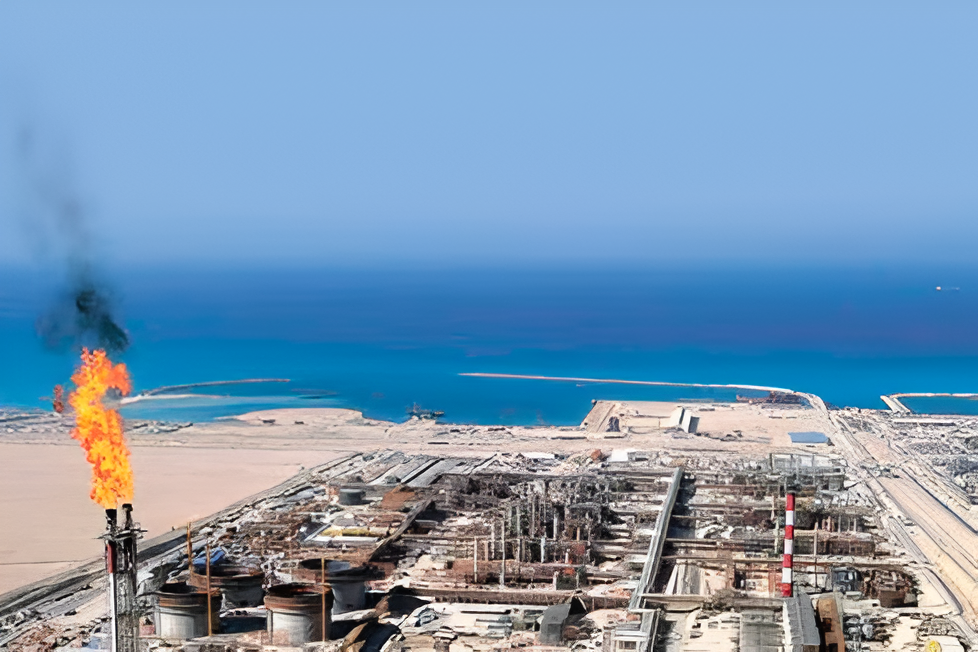
IMAGE: Overview of the South Pars gas field in Assaluyeh, Iran. (Source: Courtesy of Hyundai E&C)
At the same time, Donald Trump was on social media threatening that if Iran retaliated again against Qatar’s LNG hub at Ras Laffan, he would “blow up the entirety” of South Pars – the largest gas field on the planet, and interestingly, a reservoir Iran shares with Qatar. The man who joined Israel in authorising the first strikes on Iranian production facilities is now openly dangling the prospect of destroying the shared gas reservoir that keeps tens of millions of people warm, powered and employed. That is not deterrence, only a head of state experimenting in public with the language of total economic annihilation.
Trump’s own Truth Social post about the strike reads like a rambling attempt to distance Washington from the attack while threatening to “blow up the entirety” of South Pars if Iran hits Qatar again. The post deserves closer attention later in this story.
ASSALUYEH: WHERE GAS BECOMES POWER
To see what was attacked in Assaluyeh is to understand that the language matches the target. South Pars itself is the Iranian half of a single, giant reservoir under the Gulf, known as the North Field in Qatar, which together contain around a tenth of the world’s proven gas reserves. Iranian officials say South Pars covers 24 phases and provides between 70–75% of Iran’s gas production, feeding power plants, industry, petrochemical complexes and gasoline production. The gas that makes that possible must pass through places like Assaluyeh, where onshore plants strip out condensate, liquefied petroleum gases and natural gas liquids before returning dry gas to the grid and sending liquids on to refineries and export jetties. Over two decades, the South Pars Special Economic Energy Zone has grown into a dense cluster of processing trains and downstream plants with total gas‑processing capacity on the order of a billion cubic metres per day and around twenty‑one petrochemical units producing close to forty million tonnes per year of urea, methanol, polyethene, and other basic chemicals.
Israel did not attack the offshore reservoir. It attacked the pipes, columns and separators that turn raw gas into power, plastics, fertiliser and fuel. The four targeted plants process sour gas from phases 3, 4, 5 and 6, which are mature, are heavily integrated blocks that feed directly into Iran’s domestic grid and petrochemical system. Shutting those trains, even temporarily, forces operators to throttle back production on the linked platforms and starves downstream complexes of both dry gas and feedstock. In concrete terms, that means less gas available for electricity generation on a grid already prone to summer blackouts, less feed for petrochemical plants that supply everything from fertiliser to plastics, and less condensate flowing through the storage and export facilities that sit alongside the gas plants on the Persian Gulf shore.
IMAGE: footage from ASALUYEH [عسلویه], Iran, shows that the gas processing facilities linked to the South Pars gas field are on fire and have sustained damage. (Source: Acceladealer | X)
Further footage from ASALUYEH [عسلویه], Iran confirms gas processing facilities associated with the South Pars gas field are damaged and ablaze@GeoConfirmed @EpicFuryMap @FaytuksNetwork
Facility 1: 27.493282, 52.645344
Facility 2: 27.492377, 52.644662
Facility 3: 27.492421,… pic.twitter.com/cHq14NTzHr— acceladealer (@acceladealer) March 18, 2026
Iranian reports speak of powerful explosions at several Assaluyeh facilities, fires around storage tanks and gas units, and workers being evacuated as emergency crews tried to contain the damage. From a planner’s point of view, this is a high‑leverage target: a handful of processing units at the convergence of offshore production and onshore consumption whose disruption sends shockwaves up the supply chain and down into the civilian economy. From the point of view of the people whose houses, factories and hospitals depend on those flows, it looks like something else entirely – an attack on the infrastructure of daily life.
That is the first truth this strike reveals: Israel has shifted from fighting Iran’s armed forces to fighting the country’s energy system, the circulation of fuel that keeps the state conscious.
This is not a one‑off aberration. During the twelve‑day war of June 2025, an earlier Israeli strike hit the Phase 14 processing plant at Assaluyeh, forcing a shutdown and firefighting operation before Iranian engineers brought the plant back online within two weeks. The March 2026 strikes returned to the same nerve centre but widened the cut: instead of Phase 14 alone, the drones went after four plants tied to phases 3–6, which together represent a much larger share of South Pars throughput and a deeper incision into Iran’s ability to turn offshore gas into usable energy. What is being tested here is not just Iran’s repair capacity. It is how much of its gas‑conversion system can be burned down before the political cost becomes untenable.
FROM MILITARY TARGETS TO CIVILIAN PUNISHMENT
The crucial point is that gas in Iran is not a luxury export commodity, but the country’s primary fuel for power generation, industrial heat and residential heating. Well over ninety per cent of the gas Iran produces is consumed domestically, not exported. It keeps homes warm in winter, feeds cement and steel plants, drives turbines in power stations and prevents rolling blackouts on a grid that is already fragile. When you hit Assaluyeh, you are not trimming a few cargoes of condensate to Asia. You are reaching into the core of a domestic energy system that supports nearly ninety million people – the apartment blocks in Tehran that already live with scheduled outages, the small factories in Isfahan that depend on steady voltage to keep lines moving, the provincial hospitals that cannot function when the generators sputter.
Even the outlets trying to normalise the strike cannot entirely avoid that reality. They call South Pars an “energy lifeline”, stress that it powers much of Iran’s electricity system and note that the onshore plants at Assaluyeh are central to separating condensate and LPG from the gas that then runs into Iranian networks. “Energy lifeline” is the language of necessity, not of optional revenue. To choose that target is to choose to tamper with the civilian infrastructure that stands between a functioning society and a rolling crisis of blackouts, shortages and industrial breakdown. “Collective punishment” is usually invoked in the context of bombs on apartment blocks or food embargoes. Here it is delivered through valves and turbines.
It is precisely at this point, when questions of necessity and legitimacy collide, that the recent behaviour of Washington’s own security establishment strips away the alibi that this was a war forced by urgent facts. In a few sentences at a Senate hearing, Director of National Intelligence Tulsi Gabbard told lawmakers that only the president can decide what is an “imminent threat” from Iran, even as senior aides were warning her that there was no evidence Iran had restarted enrichment or posed an immediate nuclear danger. Two days earlier, Joe Kent, the director of the National Counterterrorism Center, resigned, saying in his letter that he could not “in good conscience support the ongoing war in Iran,” that Iran posed “no imminent threat,” and that Israel had pressured the United States into the conflict. Those two moments do not need pages of commentary. Together they are enough: the official charged with guarding the integrity of U.S. intelligence rewrites “threat” as a presidential mood, and the official charged with synthesising terrorist threats walks out saying the war is manufactured.
In other words, while Israeli pilots and U.S. operators are hitting the infrastructure that keeps Iranian civilians alive, the people at the top of the American system are quietly admitting that the supposed emergency justifying those strikes does not exist in the way the public was told. The last line of defence, a reality defined by evidence rather than by political need, has been crossed, and it has been crossed at the exact moment the war shifted from military targets to the machinery of everyday survival.
Trump’s Truth Social statement makes that shift even starker. It is not a clarification, and reads more like a hostage note. South Pars is being turned into collateral for Qatar’s LNG security, and Trump denies U.S. prior knowledge of Israel’s first strike while claiming the right to decide if and when the entire shared field is destroyed. In one message, he signals that the energy backbone of Iran and Qatar is now a bargaining chip Washington is prepared to sacrifice to enforce its war.
.
That is the second truth of this episode: the war on Iran’s civilian infrastructure is being waged under a definition of “threat” that collapses into whatever the president needs it to be.
Once a president starts talking about “blowing up the entirety” of the field that keeps both Iran and Qatar running, the fiction that this is a contained war collapses.
Exporting the Energy Shock
By treating Iran’s South Pars complex and linked Gulf energy infrastructure as disposable targets, Israel and the United States have not just escalated a regional war; they have shifted the economic pain onto societies that never signed up for this fight, from Turkish households to European workers and Indian farmers now absorbing the fallout.
Turkey: forced into a rigged market
In Turkey, the cost of turning South Pars into a battlefield is already measurable. Analysts note that Iran supplies gas to Turkey by pipeline, and that any prolonged disruption would force buyers to look for replacement cargoes on the LNG market. That “elsewhere” is the spot market, where Asian demand has already begun pulling cargoes away from Europe as importers scramble to replace lost Gulf supply. In practice, a strike pitched as pressure on Iran becomes a higher import bill for a NATO member and another inflationary squeeze on households and industry.
Europe: dragged back toward 2022
In Europe, the impact showed up first on trading screens. After disruption to Qatari LNG output, benchmark gas prices on the Dutch TTF hub jumped by as much as 45%, reaching around €46 per megawatt-hour. Reuters then reported that Asian buyers scrambling for LNG replacement cargoes were already pulling shipments toward Asia, reinforcing the risk of another continental price shock. Europe’s dependence on LNG after cutting Russian pipeline supply means that attacks on South Pars-linked infrastructure in the Gulf do not stay regional for long.
India: paying for a war it did not choose
In India, the blowback is more than theoretical. Government sources told CNBC-TV18 that LPG supplies were already “feeling some heat” as the West Asia conflict disrupted shipping routes and pushed gas prices higher. The same report said Asian LNG prices had risen from about $6–8 per MMBtu to around
$15 per MMBtu, while rerouting cargoes from alternative suppliers such as the United States or Norway would take longer. A later report said Indian LPG consumption fell 17.7% in the first half of March because of war-related supply disruption. That is what energy warfare looks like in human terms: shortages, higher costs and forced adjustment by people who had no role in launching the conflict.
China: tested, not insulated
China’s immediate exposure looks smaller on paper, but the same shock still hits Beijing’s energy calculus. Reuters reported that over 80% of Qatar’s LNG exports go to Asia, placing major buyers like China in the line of fire when Gulf supply is disrupted. Another report noted that China was among the key Asian markets exposed as the regional benchmark LNG price surged and traders sought replacement cargoes from farther afield. That leaves Beijing with more buffers than poorer importers, but not immunity from the price shock set off by attacks on Gulf gas infrastructure
WHEN A SHARED FIELD BECOMES A WAR ZONE
If the story stopped at Iran’s shoreline, it would already be devastating. But South Pars does not stop at Iran’s shoreline. The reservoir that feeds Assaluyeh stretches under the Gulf into Qatari waters, where it is known as the North Field and where it supplies Ras Laffan Industrial City, the most important LNG complex on Earth. Before the war, Ras Laffan’s trains exported around 77 million tonnes per year of liquefied natural gas, with plans underway to expand capacity towards 142 million tonnes by the end of the decade. Alongside LNG, Ras Laffan also produces Liquefied Petroleum Gas (LPG), ethane, condensate and sulphur, and hosts gas‑to‑liquids plants, power stations and desalination units. It is a central hinge in the global energy system, and on the day Iran’s missiles arrived, workers there were told to leave the plant that underwrites their families’ incomes because someone else had decided their shared field was expendable.
Qatar understood immediately what an attack on South Pars meant. Its foreign ministry condemned the strikes as “dangerous and irresponsible,” explicitly reminding the world that the field is geologically continuous with the North Field and warning that targeting infrastructure tied to that reservoir threatens global energy security. It has now gone further, calling Iran’s strike on Ras Laffan a “brutal targeting” of its gas hub, invoking Security Council resolutions and asserting its right to respond under Article 51 of the UN Charter. The United Arab Emirates, normally cautious about public criticism of Israel, issued its own statement that attacks on energy facilities linked to Pars risk catastrophic consequences. Those are not sentimental reactions. They are the reflex of states that suddenly realised the line between “hitting Iran” and “putting our own energy spine in the crosshairs” had effectively vanished.
Iran’s Revolutionary Guard then warned that key Gulf facilities had become “direct and legitimate targets” and urged workers to evacuate them before the strike. The list was specific: Ras Laffan; Mesaieed, Qatar’s original deep‑water export port and industrial hub, where gas and condensate are turned into NGLs, refined products, petrochemicals, aluminium and steel; Samref, a more‑than‑400,000‑barrels‑per‑day refinery in Yanbu on Saudi Arabia’s Red Sea coast with around 13 million barrels of storage; Jubail, the giant refinery‑petrochemical complex in eastern Saudi Arabia running at roughly 440,000 barrels per day and anchored by a 1.5‑million‑tonne‑per‑year ethylene cracker; and Al Hosn in the UAE, a sour‑gas project that processes about a billion cubic feet per day of raw gas, produces roughly half a billion cubic feet per day of sales gas for the Emirati grid and throws off tens of thousands of barrels of condensate and thousands of tonnes of sulphur every day.
In Kuwait, drones struck individual units at the Mina al‑Ahmadi refinery and Mina Abdullah refinery, triggering “limited” fires and forcing operators to temporarily halt parts of their output. Further east, Abu Dhabi’s Habshan gas facilities, already singled out in Iranian warnings, were shut down after debris from intercepted missiles fell on the site, underscoring that Tehran was willing to hit the very installations that underpin its rivals’ domestic energy security.
In other words, Tehran not only threatened but executed multiple strikes, and in the Ras Laffan’s case, it appears the Islamic Republic have struck the same class of conversion assets on Arab shores that Israel and the U.S. had just targeted at Assaluyeh, the plants where raw hydrocarbons become electricity, heating, industrial feedstock and exportable product.
It is crucial to understand that Ras Laffan’s LNG trains, Mesaieed’s NGL and refining complex, Samref’s crude units, Jubail’s crude‑to‑chemicals expansion and Al Hosn’s gas and sulphur trains are all parts of the same nervous system.
When one side authorises attacks on conversion nodes at South Pars, the other side’s answer is not to keep politely to its own coastline. It is to declare that the Gulf’s entire energy architecture is now part of the battlefield.
That is the third truth this strike exposes: by hitting a shared field, Israel and the U.S. have made their own allies’ energy spines part of the target set.
THE ENERGY WAR NOBODY CAN HONESTLY CALL ‘DEFENSE’
Seen from this angle, the Assaluyeh strikes were not a self‑contained tactical move. They were the opening of a new kind of war, a war on conversion infrastructure, that punishes civilians first and drags allies and markets along for the ride. Israel hit the plant that turns Iran’s gas wealth into heat, light and wages; Iran responded in kind by putting the plants that turn Qatar’s, Saudi Arabia’s and the UAE’s hydrocarbons into LNG, petrol and plastics in its sights. Trump then raised the stakes by threatening to “entirely blow up” the shared reservoir that makes all of this possible, as if the energy backbone of two states and a sizeable slice of Europe and Asia’s gas supply were a pawn to be removed from the board to prove a point.
At that stage, the legal and moral mask slips. A campaign that begins as “precision strikes” against military and command targets turns, almost in slow motion, into an assault on the infrastructure that keeps tens of millions of people from freezing, blacking out or losing their jobs, and into a form of extortion against the wider Gulf. In other words, people of Iran are being asked to accept that Iran’s energy lifeline can be bombed with impunity, or watch their own refineries and LNG terminals burn.
Iranian analysts now call this openly what it is, “economic warfare” centered on energy, and warn that destroyed or degraded capacity will worsen electricity shortages and deepen domestic hardship. When the same government waging that campaign has senior officials on record saying the “imminent threat” used to sell the war does not exist as advertised, it becomes very hard to sustain the fiction that this is self‑defense in any meaningful sense.
A war waged under those conditions cannot be sold as “precision.” It can barely, if at all, be sold as self‑defense. What they are doing, in the cold light of Assaluyeh’s burning stacks and Ras Laffan’s flares, looks like a campaign of collective punishment enforced through the energy system of an entire region, and once you see it that way, it becomes very hard to unsee.
READ MORE IRAN NEWS AT: 21st Century Wire IRAN Files
SUPPORT OUR INDEPENDENT MEDIA PLATFORM – BECOME A MEMBER @21WIRE.TV
VISIT OUR TELEGRAM CHANNEL
21st Century Wire is an alternative news agency designed to enlighten, inform and educate readers about world events which are not always covered in the mainstream media.
Source: https://21stcenturywire.com/2026/03/19/israels-war-on-irans-grid-how-the-south-pars-strike-turned-energy-into-a-weapon/
Anyone can join.
Anyone can contribute.
Anyone can become informed about their world.
"United We Stand" Click Here To Create Your Personal Citizen Journalist Account Today, Be Sure To Invite Your Friends.
Before It’s News® is a community of individuals who report on what’s going on around them, from all around the world. Anyone can join. Anyone can contribute. Anyone can become informed about their world. "United We Stand" Click Here To Create Your Personal Citizen Journalist Account Today, Be Sure To Invite Your Friends.
LION'S MANE PRODUCT
Try Our Lion’s Mane WHOLE MIND Nootropic Blend 60 Capsules
Mushrooms are having a moment. One fabulous fungus in particular, lion’s mane, may help improve memory, depression and anxiety symptoms. They are also an excellent source of nutrients that show promise as a therapy for dementia, and other neurodegenerative diseases. If you’re living with anxiety or depression, you may be curious about all the therapy options out there — including the natural ones.Our Lion’s Mane WHOLE MIND Nootropic Blend has been formulated to utilize the potency of Lion’s mane but also include the benefits of four other Highly Beneficial Mushrooms. Synergistically, they work together to Build your health through improving cognitive function and immunity regardless of your age. Our Nootropic not only improves your Cognitive Function and Activates your Immune System, but it benefits growth of Essential Gut Flora, further enhancing your Vitality.

Our Formula includes: Lion’s Mane Mushrooms which Increase Brain Power through nerve growth, lessen anxiety, reduce depression, and improve concentration. Its an excellent adaptogen, promotes sleep and improves immunity. Shiitake Mushrooms which Fight cancer cells and infectious disease, boost the immune system, promotes brain function, and serves as a source of B vitamins. Maitake Mushrooms which regulate blood sugar levels of diabetics, reduce hypertension and boosts the immune system. Reishi Mushrooms which Fight inflammation, liver disease, fatigue, tumor growth and cancer. They Improve skin disorders and soothes digestive problems, stomach ulcers and leaky gut syndrome. Chaga Mushrooms which have anti-aging effects, boost immune function, improve stamina and athletic performance, even act as a natural aphrodisiac, fighting diabetes and improving liver function. Try Our Lion’s Mane WHOLE MIND Nootropic Blend 60 Capsules Today. Be 100% Satisfied or Receive a Full Money Back Guarantee. Order Yours Today by Following This Link.


| Visits: | 1,788,628,448 |
| Stories: | 8,606,184 |
Whistler Blowers, Insiders

