

America’s ‘Israel First’ War: The Global Inferno Sparked by Washington’s Unconstitutional Ambush on Iran

Freddie Ponton
21st Century Wire
In the days before the first bombs fell on Tehran, Washington and its media surrogates pushed a soothing story about quiet back‑channel talks in Oman and Geneva and the possibility of one more nuclear understanding if Iran became more “realistic.” In Tehran, officials and ordinary people alike recognised the pattern from earlier rounds of deception, when supposed mediation had provided diplomatic fog for Israeli covert strikes and US escalation rather than any real path to peace.
On the ground, the signals all pointed to war. The United States had assembled the largest concentration of firepower around Iran in decades, including B‑2 bombers, carrier groups, advanced fighter squadrons and drones, while layering new air and missile defences over US bases in Qatar, Bahrain, Kuwait, Saudi Arabia and Jordan, and quietly compiling an extensive and unprecedented target bank. Inside the Trump White House, the Israeli government did not need to lobby from the outside, because real‑estate tycoon Steve Witkoff and son‑in‑law Jared Kushner, both close to Benjamin Netanyahu, were already in the room steering the Iran file and ensuring that no dealmaking disrupted a long‑desired timetable for war.
There was one narrow chance to stop the ambush. In Congress, Ro Khanna, Thomas Massie and Senators Tim Kaine and Rand Paul tried to force a vote that would have reasserted that only Congress can authorise war and that the president could not simply slide into another Middle Eastern conflict. Senate leader Chuck Schumer chose delay and scheduled the measure for the following week, even though he knew missiles would likely already be in the air by then and any move to restrain the president could be dismissed as unpatriotic meddling after the fact.
On February 28, Israel announced an operation it called Roar of the Lion, and the United States joined with its own codename Epic Fury. Cruise missiles, drones and bombers slammed into Iran’s political and military nervous system, destroying the residence of Iran’s Supreme Leader Ayatollah Ali Khamenei in Tehran, killing the eighty‑six‑year‑old patriarch along with family members, Revolutionary Guard commander Mohammad Pakpour and top security adviser Ali Shamkhani, as confirmed in live updates by outlets such as Al Jazeera and NBC News. The White House boasted that forty‑eight senior figures had been killed in the opening wave, proof that the Central Intelligence Agency had spent weeks penetrating networks and tracking the leadership even while officials publicly claimed to be pursuing diplomacy. No resolution of the United Nations Security Council authorised this assault, and it rested entirely on the unilateral decision of one American president who claimed a right to pre‑emptive self‑defence against a threat his own intelligence agencies did not substantiate. For Israel, whose spokespeople had already framed their Gaza campaign as an existential fight, the strike on Tehran extended that logic outward, turning an ongoing genocide in Gaza into an attempt to decapitate the one regional state that refused to accept its domination.
Trump did not go to Congress or the United Nations before unleashing this decapitation strike. He appeared instead in the middle of the night in a short video on his own platform, declaring that Iran posed imminent threats, that it was racing to field long‑range missiles against Europe and US troops and that its government had to go. What was missing was the verifiable evidence to support his claims. The editorial board of The New York Times condemned the operation as “reckless” and constitutionally dubious, and pointed out that Trump had already claimed in June that earlier strikes had “obliterated Iran’s nuclear program,” making it impossible to argue honestly that Tehran now posed an imminent nuclear danger.
Inside Iran, the first response was to show that the state still functioned. “Article 111″ of the constitution (p 31) was activated within hours, and a temporary leadership council was formed to govern until the Assembly of Experts could name a successor. Senior insider Ali Larijani stepped forward as a central voice and insisted that core institutions remained intact and that the armed forces had not initiated aggression. Larijani tore away the last veil from Washington’s narrative by flatly denying that Iran had begged Trump for new talks through Oman and writing that Tehran “will not negotiate with the United States,” a phrase he posted on X and reiterated in interviews with various outlets. In his telling, Trump had turned the America First slogan into Israel First, plunging the region into chaos and sending American soldiers to die for Netanyahu’s political survival rather than for the defence of their own country.
Iran Hits Back at the Architecture of War
If the first day was designed to be a beheading, the following days were Iran’s answer, and that answer focused relentlessly on the machinery that makes this kind of war possible. Through the night after Khamenei’s killing, Iranian forces launched waves of ballistic missiles and armed drones at US installations in Qatar, Bahrain, Kuwait, Saudi Arabia and Jordan, as well as at Israeli military and government sites from Tel Aviv to the Negev desert, as chronicled in regional liveblogs from Al Jazeera and CNN. Tehran presented these strikes as an exercise of its inherent right of self‑defence under Article 51 of the UN Charter after coming under armed attack, in stark contrast to a US–Israeli operation that had no mandate from the Security Council and no credible claim of imminent danger. US Central Command admitted that facilities across the region had come under attack and confirmed that four US soldiers from a sustainment unit in Kuwait were killed and others wounded, men whose mission was not to defend US soil but to supply a distant offensive that had begun with an unprovoked strike.
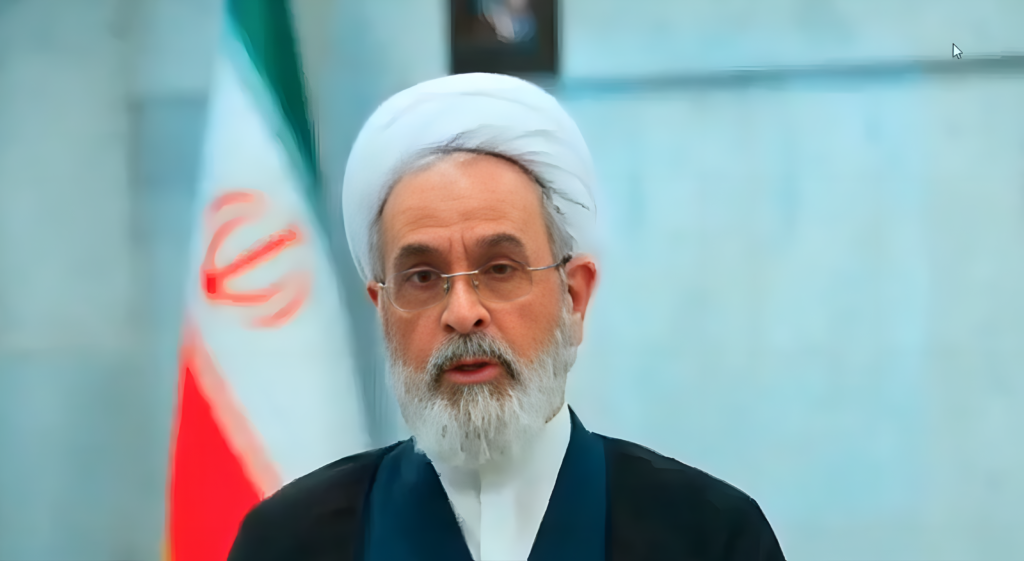
IMAGE: Ayatollah Alireza Arafi, Guardian Council member of Iran’s interim leadership council, which also includes the Iranian President Masoud Pezeshkian, and Judiciary chief Ayatollah Gholamhossein Mohseni-Ejei.
In Kuwait, videos and photographs showed F‑15E jets falling from the sky in flames near Ali Al Salem air base while pilots knelt beside their parachutes in scrubland. The Kuwaiti defence ministry said “several US military aircraft have crashed” and that all crew members survived, while independent outlets such as Middle Eastern broadcasters reported multiple American fighters down in a single day as Iranian missiles and drones probed US air defences. In Bahrain, home to the headquarters of the US Fifth Fleet, footage and local reports described flames and smoke rising from inside the naval compound after incoming strikes.
Analysts of Iranian doctrine note that this pattern matches a strategy widely shared by pro‑Iran but also western military commentators. First, blind US forces by hitting radar and early‑warning sites, then saturate air defences with waves of low‑cost drones and short‑range missiles to deplete expensive interceptor stockpiles, and only once those batteries are strained or exhausted, bring in the larger, more dangerous ballistic or even hypersonic missiles, a concept illustrated in popular infographics circulating on X, such as this schematic from HealthRanger.
Iran’s war strategy is fairly straightforward: Blind U.S. forces by taking out radar installations, then fire low-cost, low-end missiles and drones at various targets to deplete U.S. air defense interceptors.
Once U.S. air defense batteries run out of ammunition, then Iran will… pic.twitter.com/KOL6DM0f81
— HealthRanger (@HealthRanger) March 2, 2026
Israel’s command structure also came under direct pressure. The Revolutionary Guard said that Kheibar missiles in the tenth wave of retaliatory strikes had hit the office of Israeli Prime Minister Benjamin Netanyahu (wanted by the ICC for war crimes) and the location of the air force commander inside the government complex in Tel Aviv, claims that aligned with Israeli censorship‑marred reports of missile impacts in central Israel as sirens sounded repeatedly over Tel Aviv and Haifa and interceptor fire lit the sky, scenes visible in footage
In the Gulf, Tehran’s missiles and drones went after the energy and logistics infrastructure that funds and sustains this war. Several mainstream media outlets reported an alleged drone strike on the Ras Tanura refinery on Saudi Arabia’s eastern coast, forcing Aramco to shut the complex down as a precaution after debris from intercepted weapons sparked a fire at the site, interrupting one of the kingdom’s key export hubs (The Guardian and Al Jazeera). However, based on the official Saudi statements provided by Saudi Arabia’s Ministry of Defense, Ministry of Energy, and Ministry of Foreign Affairs, there is no explicit accusation against Iran for the specific drone incident at the Aramco Ras Tanura refinery on March 2, 2026. The joint statement issued earlier today by Saudi Arabia, Bahrain, Jordan, Kuwait, Qatar, and the UAE also does not mention Aramco.
Oil production in Iraqi Kurdistan was halted by companies that feared their fields and pipelines would become targets as Iran widened the pressure on revenue streams that support governments now complicit in the assault on Tehran.
The United Arab Emirates, long presented as a gleaming, apolitical business hub, found itself on the front line. Explosions and interceptions rattled Abu Dhabi, Dubai and the industrial area of Samha as Iranian weapons struck locations that Tehran described as US and Israeli intelligence offices, places of residence, and an associated logistics hub. The Emirati leadership condemned these attacks as red‑line crossings, yet many in the region pointed out that Emirati ports and companies had been deeply enmeshed in Israeli covert action against Iran for years and that this role had never been subjected to public scrutiny.
Behind these locations lies a dense web of clandestine cooperation. Israeli shipping firms linked to the Ofer family have long used Dubai and the huge port of Jebel Ali as platforms for moving special forces and Mossad operatives involved in missions such as the 2010 assassination of Hamas commander Mahmoud al‑Mabhouh, and Ofer‑affiliated vessels have docked in Iranian ports dozens of times, providing covers for infiltration, as detailed in past investigative reports. Jebel Ali and other strategic ports are run by Dubai Ports World, built by Sultan bin Sulayem, who appears in FBI files linked to Jeffrey Epstein and has been identified in multiple investigations as a key broker of back‑channel meetings between Emirati royals and Israeli elites that smoothed the way for the Abraham Accords. When Iranian missiles now fall on refineries, ports and logistics nodes across the Gulf, they are not being fired blindly; they are aimed at the skeleton of a security and intelligence system that has hunted the Islamic Republic for years.
Taken together, Iranian retaliation and its blowback have touched at least fourteen countries or territories hosting US, Israeli or allied assets in a single night, from Israel and the occupied Palestinian territories to Gulf monarchies, Levantine states and European bases. A widely shared breakdown on X, from @antmillionsbotf, claims that Iranian fire or its fallout hit targets ranging from Israeli cities like Beit Shemesh to Dubai’s airport concourse, Abu Dhabi’s airport and coastal skyline, Bahrain’s US Fifth Fleet headquarters, Kuwait’s Ali Al Salem air base, Qatar’s Al Udeid Air Base, Jordan, Iraq, Oman, Syria, Britain’s RAF Akrotiri in Cyprus and Western facilities from France’s Camp de la Paix in the UAE to Italian forces at Ali Al‑Salem, underlining that anyone who helped host or supply the assault on Iran could now find themselves within the blast radius.
IRAN HIT 14 COUNTRIES IN ONE NIGHT. HERE’S WHAT HAPPENED TO EACH:
Israel — 9 DEAD, Beit Shemesh flattened by ballistic missiles
UAE — Burj Al Arab ON FIRE, Abu Dhabi airport: 1 DEAD 7 injured
Dubai — airport concourse HIT, 4 wounded, flights in chaos
Bahrain — US… pic.twitter.com/UPsuqWAkeF— Wei Zhao 赵伟 (@antmillionsbot) March 2, 2026
There is also growing suspicion among critical Gulf and Iranian commentators that the United States and Israel are trying to push the monarchies into a direct war with Iran so they will fight on Washington’s behalf, a pattern they see reflected in how incidents such as the Ras Tanura drone strike were immediately framed by mainstream outlets and pro‑war influencers as unprovoked “Iranian aggression” demanding a collective response, rather than as part of a larger cycle triggered by the original decapitation strike.
Hormuz and the Price of Choking the Artery
Well before the first joint strike on Tehran, Iran had reminded the world that geography gives it a kind of veto power over normal economic life. In mid February, it closed parts of the Strait of Hormuz for naval drills and sent armed drones and small craft through the channel, where roughly one in five barrels of the world’s oil passes every day, moves described in detail by OilPrice.com and The National. The drills were framed as security precautions, but oil markets reacted immediately, and analysts warned that any full‑scale attack on Iran would put the entire energy system at risk.
Once the decapitation strikes began, risk quickly turned into reality. Tanker traffic through Hormuz slowed to a crawl and then largely halted as shipowners, insurers and captains concluded that transiting under the shadow of Iranian missiles, drones and naval units was too dangerous, even without a formal closure order from Tehran. Major shipping lines temporarily suspended crossings and some diverted away from both Hormuz and even the Suez Canal, adding days and high costs to routes that underpin world trade.
Oil prices moved with ruthless speed. Brent crude jumped by as much as thirteen percent in a single trading session and pushed above eighty‑two dollars a barrel, leaving prices around 10% higher than before the war, while West Texas Intermediate (WTI) climbed above the seventy mark, amid open speculation that a prolonged disruption could drive benchmarks close to the hundred‑dollar mark. Commentators spoke of a war premium, yet for ordinary people from North Africa to South Asia, this means higher fuel and food prices and pressure on already fragile household budgets. Meanwhile, in Europe, in countries such as France, the queues at the petrol station are growing by the hour.
Iran has not needed to declare an official blockade in order to wield Hormuz as a form of leverage. Drills that skirt shipping lanes, the visible presence of coastal missile batteries and naval drones and the proven ability to hit nearby energy infrastructure all feed into the calculation that this is no longer a safe corridor. For decades, the United States and its allies have taken for granted that oil and gas can flow safely out of the Gulf even while they ring Iran with warships and sanctions and repeatedly threaten its existence. By turning Hormuz into a contested artery at the exact moment its own cities and even hospitals in Tehran are struck by US–Israeli bombs, while directing its own fire primarily at bases and infrastructure, Tehran has forced the rest of the world to share at least a fraction of the cost and to confront the asymmetry in how this war is being waged.
The fallout is no longer limited to ships at sea. On day three, a US‑flagged oil tanker, the Stena Imperative, was hit by two projectiles while moored in the Port of Bahrain, according to maritime security firm Vanguard Tech and a bulletin from the UK Maritime Trade Operations centre, causing a fire and forcing the crew to evacuate. The incident underscored how closely Iran’s campaign now hugs the infrastructure of global oil transport and how exposed even non‑military vessels have become in a conflict sparked by a political decision in Washington and Tel Aviv.
Between Palaces and Streets
The political reaction to the war has split three ways, between great powers that see opportunity in Washington’s overreach, client regimes that fear they are next in line and populations that refuse to act as silent collateral.
Russia’s Foreign Ministry denounced the attack as a “preplanned and unprovoked act of armed aggression” against a sovereign UN member and warned of humanitarian, economic and even radiological catastrophe, explicitly mentioning strikes near nuclear facilities. China expressed strong concern, called for an immediate end to military action and insisted that Iran’s sovereignty and territorial integrity must be respected, pointing out that war at the mouth of Hormuz threatens the energy lifelines of Asia as well as Europe. Beijing has now gone further and publicly called for an immediate ceasefire and a return to diplomacy, with its foreign ministry stressing that “the most urgent task is an immediate cessation of military operations and preventing a spread and spillover of conflict,” a message echoed in Chinese‑language analysis at outlets like China Global South. Both states rightly frame the conflict as an escalation imposed by Washington and Tel Aviv rather than a crisis sparked by Iran.
On the nuclear front, the Vienna‑based International Atomic Energy Agency has convened an extraordinary session of its 35‑member Board of Governors specifically on Iran, following joint US–Israeli strikes on its territory and safeguarded sites. The meeting, which precedes the Board’s regular quarterly session, was requested by Iran and formally initiated by Russia, as reported by outlets such as HUM News and Ground News, and opened with IAEA chief Rafael Grossi urging all parties to exercise “maximum restraint,” a development welcomed by Iranian diplomats who have shared clips of the Vienna proceedings on X, including this video from Iranian journlaist Alireza Akbari.
An extraordinary session of the International Atomic Energy Agency Board of Governors has convened in Vienna following US and Israeli aggression against Iran.
The meeting was requested by Iran and formally proposed by Russia as a Board member pic.twitter.com/DpEvJZbikD
— Alireza Akbari (@itsalireza_akb) March 2, 2026
On the ground, Iran’s allies in what is often called the “axis of resistance” have also moved in step, with Hezbollah allegedly firing rockets into northern Israel, triggering heavy bombardment of Beirut and southern Lebanon. Yemen’s Ansarallah movement warns that US bases across the region are legitimate targets in support of what it calls Iran’s lawful self‑defence.
Turkey and Egypt speak more carefully but make clear they see danger rather than opportunity. President Recep Tayyip Erdoğan has described the joint US–Israeli strike on “our neighbour Iran” as a violation of sovereignty and warned that the region faces a “ring of fire” even while condemning Iranian missiles that fall on “brotherly” Gulf states. Egyptian president Abdel Fattah el‑Sisi has held emergency calls with Arab leaders to warn of impending regional chaos and has urged immediate de‑escalation, knowing that another US‑driven war could destabilise Egypt’s already fragile economy and the Suez corridor.
Europe talks about restraint, yet edges closer to war. The European Union stresses that its forces are not part of the bombing but keeps piling sanctions on Iran and maintains the listing of the Revolutionary Guard as a terrorist organisation. French foreign minister Jean‑Noël Barrot has announced that France is “ready to defend Gulf states and Jordan against Iran,” naming Saudi Arabia, the Emirates, Qatar, Iraq, Bahrain, Kuwait, Oman and Jordan as partners dragged into a conflict they did not choose and promising French support under collective self‑defence arrangements. In a joint declaration, the leaders of France, Germany and the United Kingdom say they are “appalled” by what they call Iranian missile attacks and warn that they may support “defensive action” to destroy Iran’s capability to fire missiles and drones at their source, as set out in their Elysée‑hosted statement, even though none of them used such language about the opening decapitation strike on Tehran or the bombing of Iranian hospitals. In sharp contrast, Spain’s prime minister, Pedro Sánchez, has openly condemned the US–Israel war on Iran as a “breach of international law,” emerging as one of the only Western leaders to denounce the attacks on legal grounds while still criticising Iran’s internal repression.
Inside the Gulf palaces, panic and dependency are both visible. Qatar, Saudi Arabia, Kuwait and the Emirates issue statements condemning Iranian missiles as flagrant violations of sovereignty and vow to take all necessary measures to protect themselves, yet they carefully avoid presenting the original US–Israeli bombardment of Iran as a legitimate act, because their own populations now see very clearly that allowing US and European bases and Israeli intelligence networks to burrow into their territory has turned their cities into military targets, as analysed by outlets such as The New Arab and NPR. Only Oman speaks plainly, reminding Washington that it had been hosting real nuclear talks days before the attack and warning that “this is not your war.”
On the streets, the language is different and far less polite. In Pakistan, tens of thousands march after Khamenei’s assassination, chanting “Death to America” and “Death to Israel” in cities from Karachi to Lahore and Skardu, scenes captured in accounts of the 2026 attack on the US consulate in Karachi and local reporting such as NDTV. In Karachi, protesters reach the outer wall of the US consulate, set a vehicle on fire and are met with live rounds from security forces, leaving multiple people dead and many more wounded on the pavement outside the building. In Gilgit‑Baltistan, demonstrators attack UN observer offices, seeing them as symbols of a global order that raises its voice against Iran’s domestic repression yet struggles to name US and Israeli aggression for what it is.
In Baghdad, crowds gather at the edge of the Green Zone and confront security forces guarding the US embassy compound, which still occupies prime territory more than twenty years after the invasion. Police fire tear gas and stun grenades, but the message is clear: many Iraqis now see the American presence not as a shield but as a permanent source of danger that could drag them into another war, a mood reflected in reports on protests targeting US sites in Iraq. Across the region, from Tehran and Yazd to Izmir and Beirut, demonstrations and vigils form a rough counter-narrative in which Iran is not an isolated rogue state, but a country under sustained attack whose insistence on self‑defence resonates with people who have lived through decades of Western wars, as summarised in the overview of pro‑Iran protests during the 2026 strikes. In Gulf cities that once advertised themselves as safe islands of commerce, social media fills with questions about why rulers ever invited foreign armies and Israeli operatives so deeply into their ports and skylines that Iranian missiles now explode nearby.
War of Choice, Nation of Survival
By the third day, even Washington’s own briefings could no longer sustain the myth that this was a last‑ditch act of self‑preservation. In closed‑door sessions with members of Congress, Pentagon officials admitted they had no intelligence that Iran planned to attack US forces first, undercutting the administration’s repeated claims about an imminent threat, as Reuters and others have reported. Senate Intelligence vice‑chair Mark Warner said publicly that he had seen no evidence of an impending Iranian attack and described Trump’s campaign as a war of choice, while Senator Richard Blumenthal said existing defences were already handling the risks posed by Iran and its allies.
Experts outside government drew the same conclusion. Arms control specialist Daryl Kimball reminded audiences that even if Tehran wished to sprint for a bomb it would need months to accumulate enough fissile material and years to rebuild facilities already damaged in earlier strikes, while former State Department official Richard Haass described the present conflict as “preventive, not pre‑emptive,” launched to remove a possible future rival rather than to stop a real attack. A Reuters/Ipsos poll found that only 27% of Americans approve of the recent strikes on Iran, while nearly half the country, including a quarter of Republicans, believe President Trump is too willing to use military force. Despite widespread public awareness of the surprise attack that killed Iran’s leader, disapproval outweighs support as the region plunges into chaos; these numbers are evidence that a public exhausted by Iraq and Afghanistan is wary of another open‑ended war in the Middle East.
Former congresswoman Tulsi Gabbard, who served in uniform in Iraq, called the operation an unconstitutional act of war and warned that the United States now found itself in direct conflict with Iran without any clear, achievable objective.
Tulsi Gabbard: “[Trump] conducted and committed an act of war without congressional authority…We are in a war with Iran now. So the real issue is, are we going to allow this war to continue to escalate? And if so, for how long and to achieve what objective?” pic.twitter.com/RA5i5GD3Ph
— Mats Nilsson (@mazzenilsson) March 2, 2026
From Tehran, Ali Larijani answered in terms that were simple and stark. Iran’s armed forces had not started this aggression and were responding under the same Article 51 of the UN Charter that great powers regularly invoke when they themselves come under fire. The country would defend itself, and no negotiation would be possible while missiles fell on Iranian cities and while an American president openly subordinated the lives of his own soldiers to Israel’s agenda.
For Tehran, winning does not mean conquering territory or toppling a foreign government. It means not losing. This resilience comes despite a US–Israeli campaign that has already hit more than a thousand targets inside Iran, from Kharg Island and hardened missile sites to Iranian navy ships and submarines, and that has killed hundreds of civilians across at least 131 cities, a toll documented in trackers like Al Jazeera’s casualty overview. Survival in this context requires preserving the core institutions of the state, blocking regime change by assassination and bombardment, maintaining internal cohesion despite the shock of Khamenei’s death and imposing a real cost on US and Israeli military, intelligence and economic structures so that they abandon hopes of finishing the job. Every US logistics hub in Kuwait that comes under fire, every refinery or port from Ras Tanura to Jebel Ali that must shut down, every day that tankers hesitate to cross Hormuz pushes Washington and Tel Aviv closer to that reckoning, especially when set against the hundreds of Iranian civilians already killed and the patients and staff buried under the rubble of hospitals hit by US and Israeli bombs.
On the American side, the picture that emerges is not flattering. Congress had time to assert its constitutional role and chose not to act. The Pentagon now concedes there was no imminent attack to forestall. The president sells a preventive decapitation as noble self‑defence and relies on advisers with deep ties to Israel’s hard right who are not accountable to the US public. Millions of Americans who once believed the slogan “no more endless wars” watch their country slide into another one that serves the strategic fantasies of a smaller ally more than their own interests.
From Tehran’s perspective, refusing to legitimise sham talks used as cover for air raids and choosing instead a disciplined campaign against US bases, Israeli command centres, ports, refineries, and the bottleneck of Hormuz is not an act of nihilism. It is the only available form of rational self‑defence for a state whose leader has been assassinated and whose cities are under bombardment.
Whether the world listens more closely to the carefully crafted statements issued in Western capitals or to the chants and tear gas outside US embassies in Karachi and Baghdad will help determine how long this war of choice lasts and how high a price is paid for pretending that Iran should simply absorb punishment and quietly accept its own destruction.
READ MORE IRAN NEWS AT: 21st Century Wire IRAN Files
SUPPORT OUR INDEPENDENT MEDIA PLATFORM – BECOME A MEMBER @21WIRE.TV
VISIT OUR TELEGRAM CHANNEL
21st Century Wire is an alternative news agency designed to enlighten, inform and educate readers about world events which are not always covered in the mainstream media.
Source: https://21stcenturywire.com/2026/03/02/americas-israel-first-war-the-global-inferno-sparked-by-washingtons-unconstitutional-ambush-on-iran/
Anyone can join.
Anyone can contribute.
Anyone can become informed about their world.
"United We Stand" Click Here To Create Your Personal Citizen Journalist Account Today, Be Sure To Invite Your Friends.
Before It’s News® is a community of individuals who report on what’s going on around them, from all around the world. Anyone can join. Anyone can contribute. Anyone can become informed about their world. "United We Stand" Click Here To Create Your Personal Citizen Journalist Account Today, Be Sure To Invite Your Friends.
LION'S MANE PRODUCT
Try Our Lion’s Mane WHOLE MIND Nootropic Blend 60 Capsules
Mushrooms are having a moment. One fabulous fungus in particular, lion’s mane, may help improve memory, depression and anxiety symptoms. They are also an excellent source of nutrients that show promise as a therapy for dementia, and other neurodegenerative diseases. If you’re living with anxiety or depression, you may be curious about all the therapy options out there — including the natural ones.Our Lion’s Mane WHOLE MIND Nootropic Blend has been formulated to utilize the potency of Lion’s mane but also include the benefits of four other Highly Beneficial Mushrooms. Synergistically, they work together to Build your health through improving cognitive function and immunity regardless of your age. Our Nootropic not only improves your Cognitive Function and Activates your Immune System, but it benefits growth of Essential Gut Flora, further enhancing your Vitality.

Our Formula includes: Lion’s Mane Mushrooms which Increase Brain Power through nerve growth, lessen anxiety, reduce depression, and improve concentration. Its an excellent adaptogen, promotes sleep and improves immunity. Shiitake Mushrooms which Fight cancer cells and infectious disease, boost the immune system, promotes brain function, and serves as a source of B vitamins. Maitake Mushrooms which regulate blood sugar levels of diabetics, reduce hypertension and boosts the immune system. Reishi Mushrooms which Fight inflammation, liver disease, fatigue, tumor growth and cancer. They Improve skin disorders and soothes digestive problems, stomach ulcers and leaky gut syndrome. Chaga Mushrooms which have anti-aging effects, boost immune function, improve stamina and athletic performance, even act as a natural aphrodisiac, fighting diabetes and improving liver function. Try Our Lion’s Mane WHOLE MIND Nootropic Blend 60 Capsules Today. Be 100% Satisfied or Receive a Full Money Back Guarantee. Order Yours Today by Following This Link.


| Visits: | 1,783,215,058 |
| Stories: | 8,595,642 |
Whistler Blowers, Insiders

