
Iran Didn’t Erupt, It Was Ignited: The Hidden Hands Behind a Manufactured Crisis

Freddie Ponton
21st Century Wire
When the first chants rose up in Tehran’s Grand Bazaar at the end of December 2025, they came from merchants worn down by real, everyday suffering: inflation eating away savings, a collapsing currency, and the unceasing grind of uncertainty. Yet within days, what began as a grassroots protest against economic hardship abruptly became a battleground for global geopolitical forces, reflecting not just Iran’s internal struggles but a war over narrative, power, and influence that spans continents.
Foreign capitals watched with interest, while intelligence agencies saw opportunity. Media networks amplified messages that served strategic interests, but amid these swirling forces, ordinary Iranians became actors in a drama orchestrated in part by powers far beyond their cities. This is not a recounting of statistics; this is a story about how a nation’s protest against the price of bread became a potential spark for wider conflict, and what that says about the world we live in today.
The Anatomy of Interference: Intelligence, NGOs, and Manufactured Momentum
Almost immediately, the protests were framed in global media as a moral struggle for freedom, a narrative that dovetailed neatly with the interests of Western powers seeking to exert pressure on Tehran. Social media lit up with slogans like “Trump must intervene, save the Iranian people!” and “Free Iran!”, messages that would soon be echoed by political elites in Washington. But behind these slogans lay something far less organic.
Western intelligence services, notably Mossad, CIA, and MI6, have a long history of operations aimed at destabilising Tehran. According to regional reporting, counter‑government elements linked to foreign intelligence were embedded among pockets of unrest, with accusations that these operatives helped precipitate violence and chaos that went far beyond spontaneous civil discontent. The effect was not subtle: targeted sabotage of peaceful protests, direct engagement with activists, and narrative shaping via digital and human channels. These efforts were designed to transform economic protests into a broader political crisis, ripe for exploitation.
Compounding this were the roles of Western‑aligned NGOs. Organisations such as the Human Rights Activists in Iran (HRA/HRAI) and its news arm HRANA, the Abdorrahman Boroumand Centre for Human Rights in Iran (ABCHRI), and the Centre for Human Rights in Iran (CHRI) were presented globally as independent voices documenting the turmoil. In reality, their funding and alliances reveal a much deeper entanglement with U.S. political and security interests. HRANA, for example, is supported by the National Endowment for Democracy (NED), a body established by the U.S. Congress and widely criticised as a civilian proxy for CIA regime‑change operations. According to investigative sources, HRANA received over $900,000 from NED in 2024 alone, a fact rarely disclosed by Western media when reporting their casualty figures and “expert” testimonies.
These groups became the foundation for many Western media narratives about casualty counts, repression, and protest dynamics, figures that were amplified without adequate scrutiny. Their role introduces a crucial question: to what extent were narratives designed to justify external pressure, and possibly intervention, rather than merely inform?
SEE MORE: US-Israeli Fake ‘Revolution’ in Iran’s is Prelude to War – Patrick Henningsen & Lt Col Daniel Davis
Propaganda Wars: Narrative as a Theatre of Power
The influence operations surrounding Iran’s turmoil extended far beyond traditional media. Social platforms erupted with polarised sentiment, often automatically boosted by networks of accounts tied to state or state‑aligned influence campaigns in the West. These digital efforts did more than report events; they shaped perceptions, creating the impression of a unified, Western‑aligned revolutionary movement demanding external rescue. An investigation by Al Jazeera reveals how a synchronised effort by Israeli officials and dubious social media accounts took over the #FreeThePersianPeople hashtag, which suggests artificial amplification promoting the overthrow of Iran’s government
Political figures quickly echoed these calls online. Former U.S. President Donald Trump repeatedly broadcast messages urging Iranians to “take over your institutions” and promising American support, leading Tehran to condemn such interventions as blatant violations of international law and Iranian sovereignty.
Meanwhile, strategic voices from within the U.S. security establishment underscored the importance of framing. On January 2, 2026, Mike Pompeo, former Secretary of State and ex‑CIA director, alluded to the presence of Mossad in Iran in a social media post on X. He also acknowledged in public remarks the role control over narrative plays in modern conflict. Speaking at the MirYam Institute, he stated, “We need to make sure that the story is told properly so that when the history books write this, they don’t write about the victims of Gaza… The victims were the people of Israel.” This stark admission reveals the extent to which information framing is treated as a strategic instrument of statecraft, not mere commentary. In this case, Pompeo invited his supporters to erase history, especially the Gaza Genocide, and paint Israel as the victim; Déja vu?
VIDEO: At The MirYam Institute Israel Security Briefing, former U.S. Secretary of State Mike Pompeo joined Benjamin Anthony, CEO and Co-Founder of The MirYam Institute and IDF combat veteran. Extract from their conversation on Israel’s security (Source: MirYam Institute)
Former CIA Director Mike Pompeo:
“We need to make sure that the story is told properly so that when the history books write this, they don’t write about the victims of Gaza.”
“The victims were the people of Israel.”
This is literal holocaust denial. pic.twitter.com/K0lyaZOvzS
— sarah (@sahouraxo) January 14, 2026
This tangling of digital influence, political exhortation, and institutional messaging shows that modern warfare is as much about controlling the story (or history) as it is about controlling territory.
Tehran Under Pressure: Politics, Protest, and Foreign Winds
The protests in Iran spread rapidly, enveloping major cities and challenging the stability of a government already grappling with economic challenges. Independent observers and critics note that the movement was unprecedented in scope, with demonstrators from nearly every social stratum, young students, bazaar merchants, workers, and even conservative constituencies, uniting in shared frustration.
However, Iranian officials and critics argue that the protest wave was strategically hijacked. Iranian Foreign Minister Ali Bagheri Araghchi explicitly described the unrest as exacerbated by external interference from U.S. and Israeli channels, claiming that violent escalations were pushed by “foreign‑supported elements” rather than being purely spontaneous uprisings.
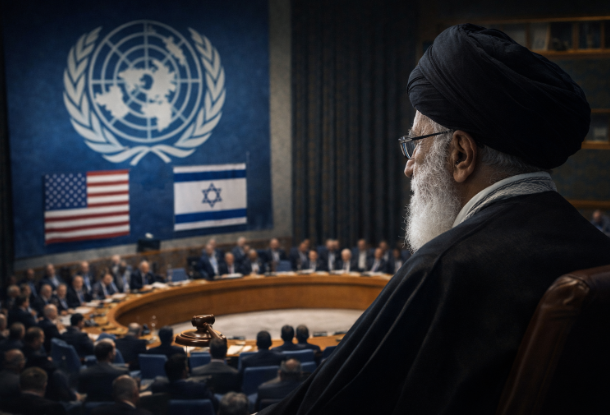
Tehran’s leadership insisted that while economic grievances are real, the speed and coordination of the unrest suggested external involvement. At the United Nations, Iran’s ambassador lodged formal complaints about U.S. rhetoric, urging the Security Council to condemn what Tehran called blatant interference in its domestic affairs. China and Russia, aligned with Iran through diplomatic blocs, joined in rebuking Western actions.
As unrest swept across Iranian cities, authorities detained roughly 3,000 individuals connected to armed groups, ringleaders, those accused of property damage, and some reportedly linked to Israel. Officials said several detainees were involved in deadly attacks and arson targeting mosques, public buildings, and security forces. Speaking at Friday prayers, interim leader Seyyed Ahmad Khatami called the riots a “terrorist war,” blaming the United States and Israel for orchestrating violence, while also acknowledging public anger over soaring prices and urging economic reforms alongside security measures.
Iranian authorities also warned that (Israeli-backed) Kurdish separatist groups were being leveraged as proxy forces along the western borders to smuggle weapons and provoke clashes, part of a broader foreign agenda. Subsequently, The Associated Press reported that members of the Kurdistan Freedom Party, known as PAK, have contributed to the protests by providing financial assistance and engaging in armed actions to protect demonstrators when necessary. Jwansher Rafati, a representative of PAK, informed AP on this matter on Thursday. Turkey is said to have alerted the Islamic Revolutionary Guard Corps (IRGC) to cross-border infiltration, helping Tehran dismantle armed cells and prevent escalation, revealing how regional actors and proxy networks can be co-opted into wider geopolitical campaigns. People inside Iran, contacted by Reuters on Wednesday and Thursday, indicated that the protests seemed to have diminished since Monday.
On the international stage, the U.S.-requested UN Security Council meeting on Iran was condemned by Tehran as a theatre to deflect criticism. Deputy UN Ambassador Gholamhossein Darzi accused Washington of spreading lies and threatening force, while Russia called U.S. rhetoric “dangerous” and China rejected interference, signalling growing multipolar resistance to Western interventionism.
The Global South and Multipolar Responses
Shanghai Cooperation Organisation (SCO): Solidarity over Militarism
In contrast to Western powers, the Shanghai Cooperation Organisation (SCO), a bloc encompassing China, Russia, and several Asian states, responded to the unrest by condemning terrorist and subversive elements that exploited protests. SCO Secretary‑General Norlan Yerkembayev expressed deep sympathy for the Iranian people and reaffirmed the importance of cooperation, stability, and unity in addressing terrorism and external interference.
In direct communication with Iranian officials, Yerkembayev and Iranian Foreign Minister Araghchi emphasised the shared principle of non‑interference and the need to support sovereign stability. China and SCO partners underscored the essential norms of sovereignty, territorial integrity, equality, and non‑interference, principles enshrined in the UN Charter yet often neglected in Western policy discourse.
China’s position has been relatively measured. While Beijing denounced the threat of foreign intervention and called for restraint, it also appealed for diplomatic engagement. Chinese analysts emphasise the internal structural drivers of unrest, notably severe economic strain, currency volatility, and social stress, arguing that these internal dynamics are overshadowed when foreign actors rush to frame the protests in their own geopolitical narratives.
Russia: Condemnation, Caution, and Geopolitical Calculation
Russia’s response has been notably complex. On the one hand, Moscow has openly condemned foreign threats of military action against Iran, labelling them “categorically unacceptable” and decrying external interference in sovereign affairs. Russian officials have pointed to decades of Western sanctions and political pressure that have pressured ordinary Iranians and made economic conditions far worse.
Russia’s Security Council Secretary Sergei Shoigu even held direct talks with Ali Larijani, the head of Iran’s National Security Council, condemning “foreign interference” in Iran’s domestic politics and reaffirming bilateral cooperation under a 2025 strategic partnership treaty.
Yet observers note a tension in Moscow’s posture. President Vladimir Putin has remained conspicuously silent on Iranian internal unrest, even as he champions the partnership with Tehran on the international stage. Some analysts believe this reflects Russia’s deep strategic caution, unwilling to jeopardise its own geopolitical goals elsewhere, especially in the ongoing conflict in Ukraine, by fully committing to a stance that might entail direct confrontation with the West.
The Anduril of Economic Strife and Escalation Risk
Iran’s protests did not occur in a vacuum. They emerged within a context of economic challenges intensified by international sanctions and structural strain. According to Chinese reporting, the protests were the largest in over three years, fueled by political disillusionment and economic despair. Analysts pointed to the failed “12‑Day War” of June 2025 and severe sanctions targeting Iran’s oil, banking, and shipping sectors as key accelerants of internal stress.
In this cauldron of economic pain, claims of tens of thousands dead and tens of thousands arrested circulated rapidly. However, independent verification is difficult due to Iran’s internet restrictions and limitations on foreign journalists. A recent report from MintPress indicates that claims of thousands dead and arrested, which circulated widely, relied heavily on Western-aligned NGOs and are aimed at fueling unrest. These discrepancies or exaggerations underscore how information itself has become another theatre of conflict.
The Strategic Dilemma: War, Deterrence, and the Brink of Escalation
As protests spread, Iran’s leadership faced an existential series of choices. Western political pressure, amplified by media narratives and foreign political statements, made the prospect of intervention tangible. Rumours emerged that U.S. military options, including the deployment of carrier strike groups and US Navy submarines, were being considered to threaten Iranian forces.
In this atmosphere of intimidation, Iran’s strategic posture became increasingly defensive. Tehran publicly warned that any external military action would lead to unpredictable consequences, potentially engulfing the region. The calculus was grim: a preemptive strike against Israel could invite nuclear retaliation; retaliation against U.S. bases could provoke a broader American military campaign.
At the same time, a Washington Post report describes backchannel communications between Israel and Iran, facilitated through Russian intermediaries; but what are the chances that thiscould be a diplomatic ruse? Israel assured Tehran it did not intend to escalate the conflict, even as it prepared for contingencies in coordination with Washington. This strategic ambiguity could be interpreted differently, as it allows Israel to maintain plausible deniability, preserving deterrence while avoiding overt escalation.
Finding Solutions: Pathways to Stability and Peace
Amid these pressures, potential pathways toward stabilising the crisis and avoiding wider conflict emerge if world powers are willing to act pragmatically:
1. Reinforce Economic Stability and Internal Reform
Iran’s unrest is fundamentally rooted in economic distress. Meaningful debt restructuring, sanctions relief tied to verifiable reforms, and targeted economic assistance could defuse one of the key engines of protest and reduce the leverage of foreign interference.
2. Diplomacy Over Threats
China, Russia, and SCO members advocate for dialogue and non‑interference, emphasising the UN Charter’s principles. A multilateral diplomatic initiative that brings Iran, regional states, and Western powers into structured talks could de‑escalate tensions.
3. De‑escalate Narrative and Misinformation Warfare
Media outlets must scrutinise NGO sources and disclose conflicts of interest. Independent commissions, including non‑aligned states and respected global institutions, should be empowered to verify casualty figures and protest dynamics, reducing the weaponisation of statistics.
4. Strengthen Regional Security Frameworks
Organisations like SCO and others rooted in the Global South can act as brokers of stability, offering security guarantees, economic cooperation frameworks, and platforms for conflict resolution that do not depend on Western military power.
5. Public Accountability and Transparency
All parties, including Western governments and intelligence agencies, must be held accountable for information operations that risk conflating humanitarian crises with strategic wars. Transparency in funding and messaging would reduce cynicism and allow authentic civil society voices to be heard.
In Summary: A Nation and a World at the Edge
Iran’s protest movement, in isolation, was a human cry for economic justice. But as we have seen, it has become a mirror of global power dynamics, where foreign interference, intelligence strategy, narrative control, and proxy pressures converge. From Washington’s social media exhortations to SCO’s condemnations of terrorism, from Russia’s cautious diplomacy to Beijing’s insistence on sovereignty and multilateralism, the crisis exposes the fault lines of our fragmented world order.
Iran’s tragedy lies in its people’s legitimate grievances being subsumed under a larger game of geopolitical chess. Yet within this tragedy are opportunities: for diplomacy over war, for truth over propaganda, and for a multipolar dialogue that respects sovereignty while advancing peace.
Understanding this complex tapestry, beyond headlines and protest slogans, is essential not just for Iran’s future, but for a world struggling to navigate an age where every internal protest can be magnified into a pretext for broader conflict.
SEE MORE: The Tech-Colony Complex: Silicon Valley, a Proxy State Orchestrating Regime Change in Iran
READ MORE IRAN NEWS AT: 21st Century Wire IRAN Files
SUPPORT OUR INDEPENDENT MEDIA PLATFORM – BECOME A MEMBER @21WIRE.TV
VISIT OUR TELEGRAM CHANNEL
21st Century Wire is an alternative news agency designed to enlighten, inform and educate readers about world events which are not always covered in the mainstream media.
Source: https://21stcenturywire.com/2026/01/16/iran-didnt-erupt-it-was-ignited-the-hidden-hands-behind-a-manufactured-crisis/
Anyone can join.
Anyone can contribute.
Anyone can become informed about their world.
"United We Stand" Click Here To Create Your Personal Citizen Journalist Account Today, Be Sure To Invite Your Friends.
Before It’s News® is a community of individuals who report on what’s going on around them, from all around the world. Anyone can join. Anyone can contribute. Anyone can become informed about their world. "United We Stand" Click Here To Create Your Personal Citizen Journalist Account Today, Be Sure To Invite Your Friends.
LION'S MANE PRODUCT
Try Our Lion’s Mane WHOLE MIND Nootropic Blend 60 Capsules
Mushrooms are having a moment. One fabulous fungus in particular, lion’s mane, may help improve memory, depression and anxiety symptoms. They are also an excellent source of nutrients that show promise as a therapy for dementia, and other neurodegenerative diseases. If you’re living with anxiety or depression, you may be curious about all the therapy options out there — including the natural ones.Our Lion’s Mane WHOLE MIND Nootropic Blend has been formulated to utilize the potency of Lion’s mane but also include the benefits of four other Highly Beneficial Mushrooms. Synergistically, they work together to Build your health through improving cognitive function and immunity regardless of your age. Our Nootropic not only improves your Cognitive Function and Activates your Immune System, but it benefits growth of Essential Gut Flora, further enhancing your Vitality.

Our Formula includes: Lion’s Mane Mushrooms which Increase Brain Power through nerve growth, lessen anxiety, reduce depression, and improve concentration. Its an excellent adaptogen, promotes sleep and improves immunity. Shiitake Mushrooms which Fight cancer cells and infectious disease, boost the immune system, promotes brain function, and serves as a source of B vitamins. Maitake Mushrooms which regulate blood sugar levels of diabetics, reduce hypertension and boosts the immune system. Reishi Mushrooms which Fight inflammation, liver disease, fatigue, tumor growth and cancer. They Improve skin disorders and soothes digestive problems, stomach ulcers and leaky gut syndrome. Chaga Mushrooms which have anti-aging effects, boost immune function, improve stamina and athletic performance, even act as a natural aphrodisiac, fighting diabetes and improving liver function. Try Our Lion’s Mane WHOLE MIND Nootropic Blend 60 Capsules Today. Be 100% Satisfied or Receive a Full Money Back Guarantee. Order Yours Today by Following This Link.



| Visits: | 1,768,993,773 |
| Stories: | 8,567,567 |
Whistler Blowers, Insiders


/awakening-start-here/2025/06/a-prophetic-milestone-22144.html