

From Honduras to Greenland: Inside the Billionaire Blueprint for Deregulated Cities

Freddie Ponton
21st Century Wire
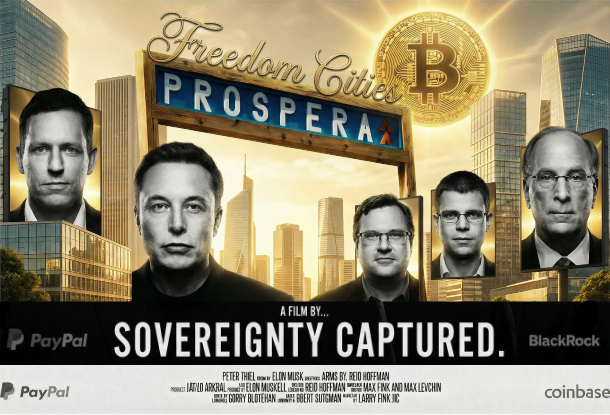
What if “freedom” wasn’t about democracy at all, but the privatisation of governance itself? What if behind talk of innovation and deregulation lies a coordinated agenda to hollow out national sovereignty and replace it with corporate rule? This investigation traces a geopolitical journey from a privatised economic zone in Honduras called Prospera to a planned corporate frontier in Greenland, showing how technocrats, financiers, and political elites rewrote the rules of governance.
Honduras: A Testbed for Corporate Rule
Honduras did not become fertile ground for radical privatisation by accident. In June 2009, President Manuel Zelaya was ousted in a military coup and expelled from the country at gunpoint; the decade that followed saw deeply corrupt governments, entrenched poverty, and a weakened democracy that made the nation vulnerable to externally driven policy experiments. The stage was set for Zones for Employment and Economic Development (ZEDEs), which many critics describe as private jurisdictions cloaked in economic rhetoric.
ZEDEs were designed as enclaves with sweeping powers: they could establish independent courts, write laws, levy taxes, and operate private police, all with minimal oversight. After Honduras’ Constitutional Court struck down earlier reforms as unconstitutional, Congress replaced dissenting judges and passed the ZEDE law in 2013, a judicial purge that altered Honduran governance and laid the foundation for Prospera.
SEE MORE: Honduras: The Making of a Controlled Democracy
In August 2017, Honduras Próspera Inc. was incorporated in Delaware (the entity was originally named Sociedad para el Desarrollo Socioeconómico de Honduras, LLC) to back a charter city on the Island of Roatán. Marketed as a private, semi‑autonomous enclave, Prospera offered low taxes, bespoke regulations, and legal stability guarantees insulated from national law. On the ground, there were only a handful of buildings, but what grew quickly was conflict: residents of Crawfish Rock say they were initially told it was a resort before the surrounding land was fenced and privatised. UN experts warned that ZEDEs could control significant territory and pose human‑rights risks, while Honduran anti‑corruption watchdogs described them as fertile ground for illicit financial activity.
Legal Warfare and U.S. Political Intervention
By 2022, political winds shifted. Former President Juan Orlando Hernández, a central figure in implementing ZEDEs, was arrested in the U.S. on drug trafficking and weapons charges linked to funnelling cocaine for cartels. Despite this conviction, he was pardoned by Donald Trump in December 2025, a controversial move that freed him from a long sentence.
Honduras then elected Xiomara Castro, who campaigned on an anti‑ZEDE platform and oversaw a unanimous repeal of the ZEDE law. Castro labelled ZEDE’s creations as a “narco‑regime,” and at the United Nations General Assembly, said ZEDE land was “irrigated with the blood of native peoples.” Prospera’s response was legal warfare. In December 2022, Honduras Próspera Inc. filed a claim for $10.8 billion at the International Centre for Settlement of Investment Disputes (ICSID) under CAFTA‑DR, not for past losses but future profits. These investor‑state dispute settlement (ISDS) mechanisms allow corporations to sue governments in private tribunals, with enforceable judgments that can be treated as sovereign debt or executed against state assets.
While some U.S. lawmakers like Senator Elizabeth Warren criticised Prospera’s lawsuit as “bullying Honduras,” others, including Senators Bill Hagerty and Ben Cardin, pressed the Biden administration to uphold treaty protections for U.S. investors after the ZEDE repeal. The U.S. embassy in Tegucigalpa publicly criticised Honduras for discouraging investment, further illustrating Washington’s contradictory posture.
SEE MORE: Pardons, Threats, and Carbon Markets: Foreign Hands Shaping Honduras’ Vote
Technocrats, Ideology, and the PayPal Mafia’s Vision
Prospera was financed by Pronomos Capital, founded by Patri Friedman, grandson of economist Milton Friedman, whose advocacy of free markets, deregulation, and minimal government reshaped 20th‑century economic policy worldwide.
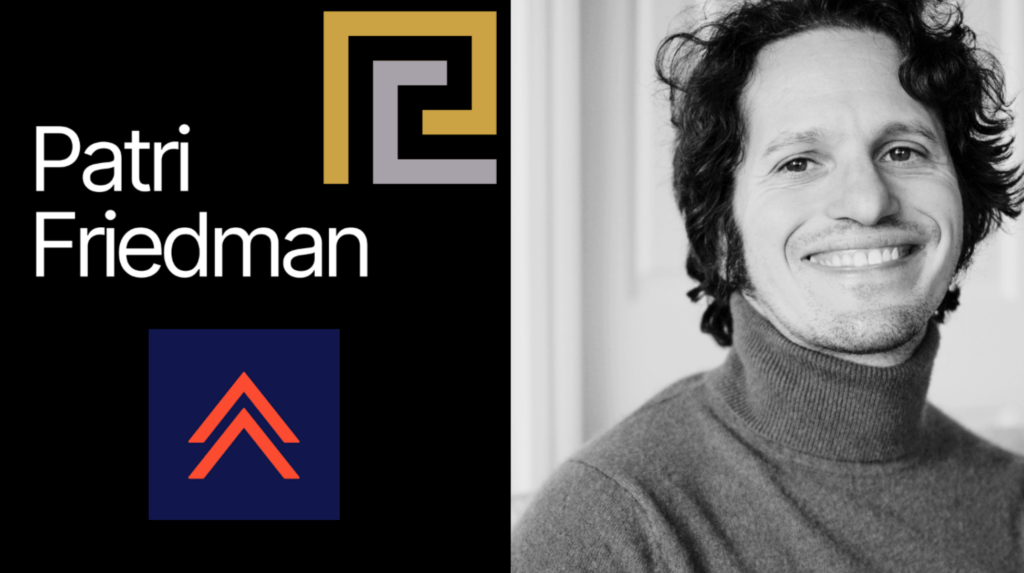
IMAGE: Patri Friedman, founder of Promos Capital, who financed Prospera
Pronomos’s principal backers include Peter Thiel, Marc Andreessen, and Balaji Srinivasan, figures associated with Silicon Valley’s libertarian circles often dubbed the PayPal Mafia. These investors champion ideas that democratic states are inefficient and that governance should be replaced by contract law and private arbitration.
Long before charter cities, some libertarians promoted seasteading, floating cities designed to escape national law. Though impractical, this idea transitioned into on‑shore visions like charter cities, zones where laws are customised for investors rather than residents. Prospera itself now touts a “platform that delivers governance,” with crypto‑first economies, arbitration courts, minimal regulation, and taxes as low as 1%, a configuration critics argue privileges capital over citizen welfare. A comprehensive analysis of Balaji Srinivasan’s (Prospera) concept and its real-world implementations was reviewed in a report authored by David Stancel.
Even economist and former World Bank leader, Paul Romer, who first theorised charter cities, has distanced himself from implementations like Prospera, which he sees as deviating from original goals and sliding toward pure libertarian enclaves. A report from the International Relations Review explains in great detail why Próspera, Honduras, is such a controversial experiment in corporate governance.
Greenland: The Technocrat Frontier Where Strategic Territory Meets Ideology
Greenland’s strategic value lies in its vast rare earth minerals, Arctic sea routes, and geopolitical position between North America and Europe. But the Freedom City agenda is now visible here too. Reports show Silicon Valley financiers envision a libertarian tech hub in Greenland, complete with AI labs, autonomous vehicles, and minimal regulatory oversight. These plans involve many of the same ideological actors seen in Prospera: Thiel, Andreessen, and Ambassador Ken Howery, a co-founder of PayPal whom Trump appointed (not innocently) as the new U.S. ambassador to Denmark in October 2025 (which holds sovereignty over Greenland).

IMAGE: Ambassador Kenneth A. Howery (member of the PayPal Mafia ) in Greenland, attending the annual Joint Committee meeting between the U.S. and Greenland with Denmark in December 2025 (Source: Ken Howery X account)
Ronald Lauder’s Strategic Investments
Ronald S. Lauder, heir to the Estée Lauder fortune and President of the World Jewish Congress, played a key role in prompting Trump’s interest in Greenland. According to John Bolton, Lauder was the businessman who suggested Greenland to Trump. Lauder is also co‑owner of Greenland Water Bank, a boutique water export company based in Nuuk, and has stakes in infrastructure projects through Greenland Development Partners LLC, a Delaware‑registered investment vehicle. Ronald Lauder’s partners in Greenland are highly influential. Svend Hardenberg, a former senior civil servant and energy executive, brings significant experience, while Wæver Johansen, a past minister, currently leads the governing Siumut party in Nuuk. Additionally, his wife, Vivian Motzfeldt, who is Greenland’s foreign minister, has previously held a position on the board of Greenland Water Bank. This combination of political power and private funding has sparked local backlash, particularly when the water company was selected to represent Greenland at a trade event in Washington, D.C. in 2023.
Investors like Jeff Bezos, Bill Gates, and Michael Bloomberg have backed KoBold Metals, using AI to explore Greenland’s resource potential, indicating the attraction of corporate interests beyond water.
“These billionaires bet big on Greenland, after Trump took interest”, reads a Forbes article.
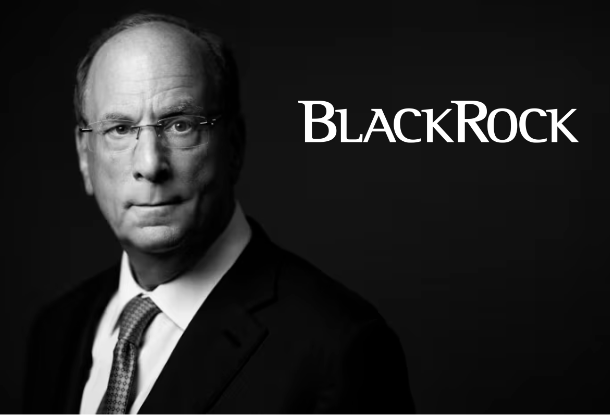
IMAGE of Larry Fink, CEO of BlackRock (source: Joel SAGET | Getty Images)
BlackRock, led by Larry Fink, has expanded aggressively into institutional crypto and tokenisation, facilitating market infrastructure that aligns with freedom city economics. BlackRock’s integration with Coinbase’s institutional custody and trading platform embeds it in the financial infrastructure that freedom cities rely on. This matters because freedom cities deliberately sidestep democratic regulators in favour of privatised, digital-first finance, and BlackRock and Coinbase are positioning themselves to run that system. In the Greenland vision, they wouldn’t just enable the economy; they would extract value from it, controlling custody, settlement, and tokenised assets, turning governance itself into a revenue stream for firms that already dominate global finance.
As Derrick Broze highlighted in his January article for The Last American Vagabond, a 1940 map from Technocracy Inc. lays bare the organisation’s expansive ambitions: Greenland, Canada, the United States, Mexico, the Caribbean, and Central American nations, including Honduras, were all envisioned as part of a global technocratic order. Broze also emphasises that Panama’s inclusion in the Technate should raise alarm, especially given Larry Fink’s recent attempts to acquire control over key ports in the Panama Canal, suggesting a continuity of elite strategies to dominate strategic infrastructure under the guise of corporate and financial planning.

MAP: Technocracy, Inc. and the Technate of America (Source: Boston Rare Maps)
Freedom Cities in the United States: Corporate Utopia or Trojan Horse?
As the Prospera experiment unfolded internationally, a mirror‑image idea has taken root on U.S. soil, one that reflects the same deregulatory, market‑driven philosophy exported to Honduras and courted in Greenland. This idea, known as “Freedom Cities,” has been actively promoted by political and private sector forces aligned with the Trump administration.
In early 2024, policy groups connected with the Trump campaign and allied think tanks announced a vision to build “Freedom Cities” on federal land, urban zones with dramatically relaxed federal oversight and highly favourable business environments. A great article from WIRED explains how ‘Startup City’ Groups were meeting Trump officials to push for Deregulated ‘Freedom Cities’. According to the Frontier Foundation, which publicly supports the initiative, Freedom Cities are intended to act as Special Economic Zones with streamlined regulatory frameworks designed to “reopen the frontier” and accelerate U.S. competitiveness in advanced technologies, manufacturing, and critical industries. This was confirmed in a PR Newswire report titled, Frontier Foundation Announces Support For President Trump’s Freedom Cities Initiative“.
“The Frontier Foundation today announced its support for President Trump’s Freedom Cities initiative, aligning with the foundation’s mission to establish new specialized economic zones with streamlined regulatory frameworks. These Freedom Cities will advance American industrial innovation and strengthen national security, helping accelerate leadership in advanced technologies and manufacturing.” PR Newswire
The public positioning of Freedom Cities borrows heavily from classic frontier rhetoric. The Frontier Foundation’s announcement, which aligned with Trump’s stated goals, quoted him saying the plan would “reopen the frontier” and deliver a “quantum leap” in economic opportunity by building new cities on underutilised federal land.
While this language gestures at housing affordability and growth, underlying structural proposals, including how to create these zones, reveal deeper ideological aims. According to reporting by WIRED, several “startup city” lobbying coalitions — including the Freedom Cities Coalition, Frontier Foundation, and the Charter Cities Institute, have been in discussions with Trump administration officials to draft legislative frameworks that would allow these cities to operate with limited oversight from federal agencies such as the Food and Drug Administration (FDA), Nuclear Regulatory Commission (NRC), and Environmental Protection Agency (EPA).
VIDEO: In 2023, Trump proposed building ten new US ‘Freedom Cities’ (Source: Forbes Breaking News | Youtube)
.
These advocacy groups have outlined multiple legal pathways for realising Freedom Cities, including interstate compacts, federal enclaves, or executive orders, each designed to position these cities outside the reach of standard regulatory regimes. This proposal directly mirrors the logic used in special economic zones abroad, including Prospera’s model in Honduras, where deregulated governance is marketed as innovation but can serve to prioritise capital freedoms over broader public protections.
Frontier Foundation’s public statements make the ideological intent clear: Freedom Cities are pitched as hubs for industrial innovation, advanced manufacturing, and technology development, often with a focus on sectors like AI infrastructure, semiconductors, and next‑generation energy systems, and with reduced regulatory barriers viewed as obstacles to growth. On the surface, proponents portray these cities as outlets for American dynamism and economic revival. But the broader narrative, supported by policy coalitions with ties to Próspera’s backers, reveals a consistent pattern: transforming governance into a tool that privileges investment and elite direction over democratic accountability. In such zones, critics argue, corporate interests can dominate at the expense of worker protections, environmental safeguards, and civic participation.
Freedom Cities, then, are best understood in the context of a larger movement, one that seeks to rewrite the rules of sovereignty in favour of zones where capital, deregulation, and corporate legal frameworks take precedence, whether in Honduras, Greenland, or the interior of the United States.
To Summarise: Sovereignty for Whom?
From Roatán to Greenland, a pattern emerges: democratic constraints are framed as inefficiencies; sovereignty is treated as an obstacle; and local populations are sidelined in favour of private governance experiments constructed by capital. Investor‑state dispute mechanisms shield corporate investors while governments face bankruptcy threats. Billionaire influence shapes territory and governance, not through ballots but legal force and financial power.
Prospera revealed the model. The ICSID lawsuit exposed its legal leverage. Greenland shows the ambition, scaled, financed, and backed by political power. This is not fringe ideology; it is an agenda to commodify sovereignty itself.
21st Century Wire is an alternative news agency designed to enlighten, inform and educate readers about world events which are not always covered in the mainstream media.
Source: https://21stcenturywire.com/2026/01/21/from-honduras-to-greenland-inside-the-billionaire-blueprint-for-deregulated-cities/
Anyone can join.
Anyone can contribute.
Anyone can become informed about their world.
"United We Stand" Click Here To Create Your Personal Citizen Journalist Account Today, Be Sure To Invite Your Friends.
Before It’s News® is a community of individuals who report on what’s going on around them, from all around the world. Anyone can join. Anyone can contribute. Anyone can become informed about their world. "United We Stand" Click Here To Create Your Personal Citizen Journalist Account Today, Be Sure To Invite Your Friends.
LION'S MANE PRODUCT
Try Our Lion’s Mane WHOLE MIND Nootropic Blend 60 Capsules
Mushrooms are having a moment. One fabulous fungus in particular, lion’s mane, may help improve memory, depression and anxiety symptoms. They are also an excellent source of nutrients that show promise as a therapy for dementia, and other neurodegenerative diseases. If you’re living with anxiety or depression, you may be curious about all the therapy options out there — including the natural ones.Our Lion’s Mane WHOLE MIND Nootropic Blend has been formulated to utilize the potency of Lion’s mane but also include the benefits of four other Highly Beneficial Mushrooms. Synergistically, they work together to Build your health through improving cognitive function and immunity regardless of your age. Our Nootropic not only improves your Cognitive Function and Activates your Immune System, but it benefits growth of Essential Gut Flora, further enhancing your Vitality.

Our Formula includes: Lion’s Mane Mushrooms which Increase Brain Power through nerve growth, lessen anxiety, reduce depression, and improve concentration. Its an excellent adaptogen, promotes sleep and improves immunity. Shiitake Mushrooms which Fight cancer cells and infectious disease, boost the immune system, promotes brain function, and serves as a source of B vitamins. Maitake Mushrooms which regulate blood sugar levels of diabetics, reduce hypertension and boosts the immune system. Reishi Mushrooms which Fight inflammation, liver disease, fatigue, tumor growth and cancer. They Improve skin disorders and soothes digestive problems, stomach ulcers and leaky gut syndrome. Chaga Mushrooms which have anti-aging effects, boost immune function, improve stamina and athletic performance, even act as a natural aphrodisiac, fighting diabetes and improving liver function. Try Our Lion’s Mane WHOLE MIND Nootropic Blend 60 Capsules Today. Be 100% Satisfied or Receive a Full Money Back Guarantee. Order Yours Today by Following This Link.


| Visits: | 1,777,952,488 |
| Stories: | 8,585,682 |
Whistler Blowers, Insiders

