

A Mother’s Life Cut Short: Minneapolis, ICE, and Domestic Terror Labels


IMAGE: Photograph of Renee Nicole Good, 37, hangs on a lamppost at the site where she was shot and killed by a federal agent from ICE while she was in her vehicle in Minneapolis on Wednesday, Jan. 7. (Source: David Guttenfelder/The New York Times)
Freddie Ponton
21st Century Wire
The killing of Renee Nicole Good, a 37-year-old U.S. citizen and mother of three, by a U.S. Immigration and Customs Enforcement (ICE) agent on a Minneapolis street has forced an uncomfortable national reckoning. Within hours of her death, federal officials and Kristi Noem, US DHS Secretary, framed the encounter not as a tragic escalation during a law-enforcement operation, but as an act of domestic terrorism. That framing did more than explain the shooting; it attempted to settle it.
Cowboy Kristi Noem, US DHS Secretary, describes the Minneapolis shooting as domestic Terrorism.
Narco Terrorism = Justification for International Kidnapping and Extrajudicial Killings
Domestic Terrorism = Justification to murder American Citizens in cold blood pic.twitter.com/BaaLWum4xr
— Freddie Ponton (@freddie_ponton) January 8, 2026
On Instagram, Renee Nicole Good described herself simply and without pretense: “a poet and writer and wife and mom, and a pretty terrible guitar strummer from Colorado.” According to media reports, she had been living in the Twin Cities with her partner. She had also been married before and was the mother of a 15-year-old daughter and two sons, ages 12 and 6, who would grow up knowing their mother through memories, photographs, and the words she left behind. It would appear she was an amazing human being, and will certainly be remembered as such.
Yet what happened in Minneapolis was not an attack on civilians, a plot to destabilise government, or an ideologically driven act of violence. It was a tense, confused encounter between armed federal agents and a civilian in a vehicle, an encounter that ended in gunfire. Video footage and eyewitness accounts show a car moving slowly, commands shouted, and a moment that spiralled out of control. What followed was not caution or restraint in official language, but certainty: the killing was justified because the threat was labelled terrorism.
Estonishingly, President Donald Trump weighed in on the Minneapolis shooting, portraying Renee Nicole Good as “very disorderly, obstructing and resisting, who then violently, willfully, and viciously ran over the ICE officer, who seems to have shot her in self-defense.” He added that he found it “hard to believe [the agent] is alive, but is now recovering in the hospital.” His statement, however, drew immediate criticism for its lack of compassion and apparent disregard for the life of a U.S. citizen. Eyewitness accounts note that the ICE officer remained on his feet throughout the encounter, calling into question the necessity of lethal force, yet Trump’s remarks focus almost exclusively on defending the agent, minimising the human tragedy and the questions surrounding federal accountability. Incredibly, Trump went on blaming the “radical left” for the shooting.
This is where the danger begins. Words like terrorism carry moral and legal weight far beyond ordinary crime. Once invoked, they can short-circuit public doubt, narrow the scope of inquiry, and recast a civilian death as an unfortunate but necessary act of state defense. Minneapolis shows how quickly that transformation can happen — and how thin the line has become between enforcement and elimination.
What “Domestic Terrorism” Means — and What It Does Not
Under U.S. law, domestic terrorism has a precise statutory meaning. 18 U.S. Code § 2331(5) defines it as acts that are dangerous to human life, violate criminal law, and are intended to intimidate or coerce civilian populations or influence government policy through violence, occurring primarily within U.S. territory. This definition, established in the wake of the September 11 attacks through the USA PATRIOT Act of 2001, was designed to describe certain forms of criminal conduct, not to expand police powers at that moment.
Critically, labelling conduct as domestic terrorism does not grant law enforcement new authority to use deadly force. It does not override the Constitution, nor does it suspend the Fourth Amendment. Supreme Court precedent is unequivocal: deadly force is lawful only when an officer reasonably believes there is an imminent and unavoidable threat of death or serious bodily harm at the exact moment the trigger is pulled. Cases such as Tennessee v. Garner and Graham v. Connor make clear that noncompliance, resistance, or even the movement of a vehicle does not automatically meet that standard.
Legal scholars warn that when federal officials retroactively apply terrorism language to ambiguous encounters, the term becomes less a legal category and more a narrative shield. It shifts attention away from whether lethal force was truly necessary and toward whether the victim can be cast as a threat to the state. The law does not permit that substitution, but rhetoric often succeeds where legal standards fail.
ICE, Escalation, and a Record of Unchecked Force
The Minneapolis shooting fits into a longer and more troubling pattern. ICE’s enforcement tactics have been controversial for years, particularly as the agency has expanded its footprint far from the border and deeper into American cities. In 2025, ICE agents shot and killed Silverio Villegas González during a traffic stop in a Chicago suburb. Federal officials said he attempted to flee and endanger officers; eyewitnesses and subsequent reporting raised serious doubts about whether the response was proportional.
Investigative journalism has documented numerous cases in which ICE agents fired at unarmed individuals in public spaces, often with little transparency afterwards and rarely with disciplinary consequences. Oversight is limited, internal investigations are opaque, and accountability is elusive. At the same time, civil liberties organisations, including the American Civil Liberties Union (ACLU), have represented U.S. citizens who were wrongfully detained or nearly deported due to ICE errors, misidentification, or overreach.
These incidents reveal a system that is not merely aggressive, but brittle: one that escalates quickly, corrects itself slowly, and too often shields its agents from meaningful scrutiny. As ICE’s role has grown under recent federal policies, distrust has deepened, not only among immigrant communities but among citizens who increasingly find themselves in the blast radius of enforcement actions never intended for them.
A History of Lethal Force: ICE’s Troubling Record
The Minneapolis shooting is not an isolated incident. Federal records show a long and troubling pattern of ICE use of deadly force. According to The Trace, between 2015 and 2021, ICE officers were involved in at least 59 shootings across 26 states and U.S. territories, resulting in 23 deaths and 24 injuries. Many of these events occurred in public spaces, intersections, parking lots, and during traffic encounters, and in several cases, the victims were unarmed or not the intended targets of enforcement.
According to The Trace, accountability has often been minimal. Investigations are frequently opaque, disciplinary actions are rare, and ICE has routinely declined to release detailed use-of-force policies or full reports on these shootings. The lack of transparency fuels a climate where aggressive tactics may escalate unchecked, sometimes with deadly results,
Some incidents highlight the human cost of this posture. On September 12, 2025, during Operation Midway Blitz in Franklin Park, Illinois, ICE agents shot and killed Silverio Villegas-Gonzalez, claiming he attempted to flee and strike an officer with his vehicle. Eyewitnesses, however, reported that Villegas-Gonzalez had been dropping his child at school at the time, raising serious questions about whether lethal force was necessary. That same operation involved dramatic raids using helicopters and tactics that temporarily detained children, some U.S. citizens, before they were released.
In a report from The Guardian, we learn that in October 2025, in Los Angeles, an ICE agent fired at a man who allegedly hit an agent’s vehicle during a traffic stop. The man survived, but the incident underscored the agency’s increasingly aggressive posture in everyday enforcement operations, particularly in urban areas far from the border. It is also well documented that the federal immigration enforcement agents are deploying increasingly violent tactics, that has clearly gone out of control.
These historical cases reveal a pattern of militarised, sometimes indiscriminate force that casts a long shadow over the Minneapolis tragedy. They suggest that Renee Nicole Good’s death did not occur in a vacuum but is part of a broader trend in which ICE’s tactics, lack of transparency, and rhetoric around threats have repeatedly put civilians — including U.S. citizens — in lethal danger.
A Slippery Slope for the Rule of Law
Civil liberties advocates warn that framing domestic law enforcement as counter-terrorism invites a dangerous transformation. When agencies deploy with the language and posture of war, de-escalation becomes secondary, and fatal force can appear preemptive rather than defensive. Actions that would be impermissible for local police risk being normalised for federal agents operating under a national-security banner.
The death of Renee Nicole Good forces a hard question: When does the enforcement of “law and order” become a threat to the very liberties it claims to protect? She was not charged, convicted, or proven to be a violent actor. She was a citizen who encountered a federal operation and did not survive it.
If broad, unchecked claims of domestic terrorism are allowed to blur legal definitions and constitutional limits, they risk becoming something far more dangerous, a figurative, and sometimes practical, license to kill. Minneapolis is not just about one shooting. It is about whether the United States will insist that even its most powerful agencies remain bound by law, transparency, and restraint when operating on its own streets.
The rule of law does not weaken public safety. It is what makes public safety legitimate. Common Dreams has the story…
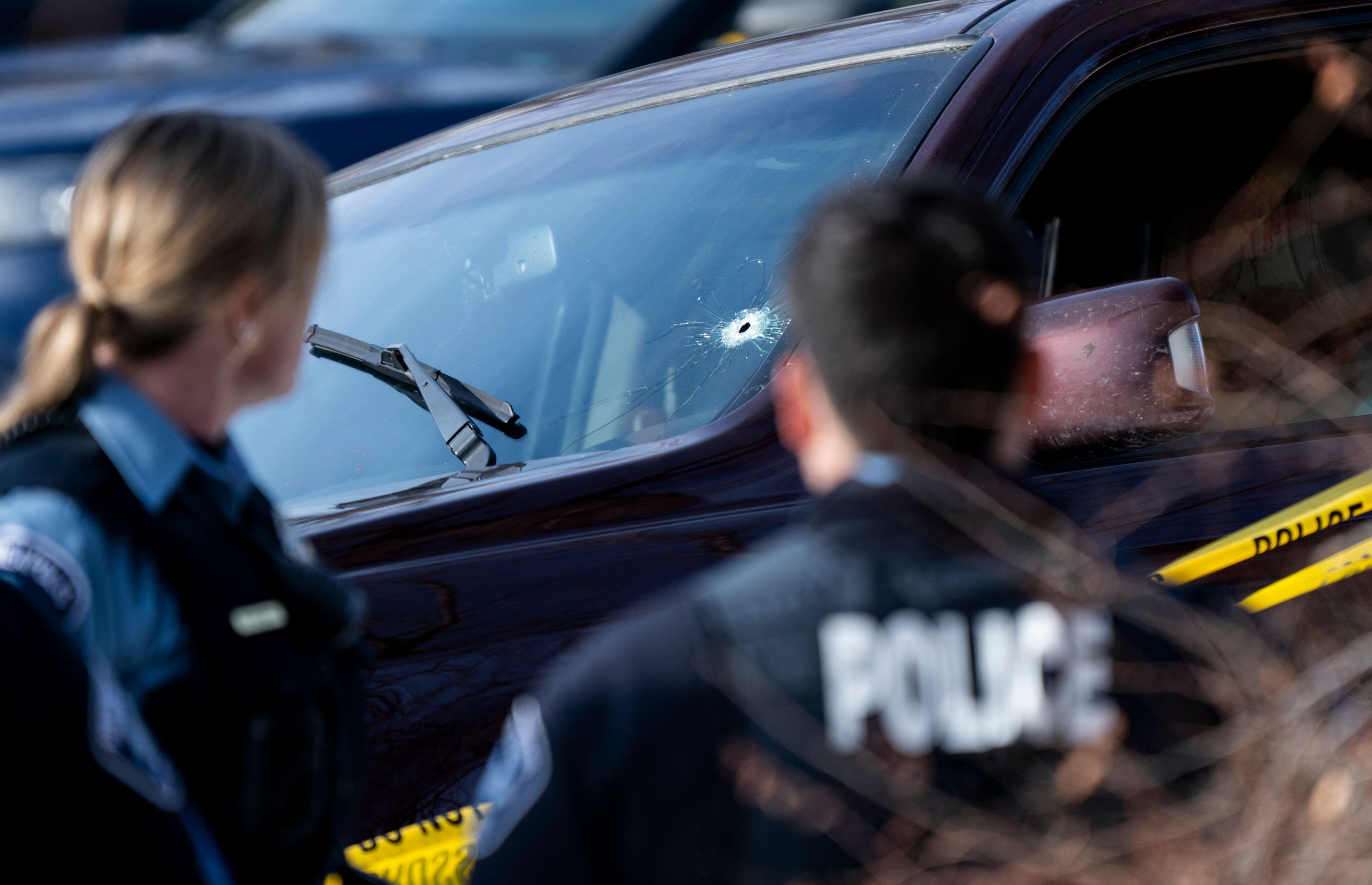
Brad Reed reports for Common Dreams…
Videos From Scene of Fatal ICE Shooting in Minneapolis Betray ‘Garbage’ DHS Claims
The US Department of Homeland Security accused the slain woman of committing “an act of domestic terrorism” by “attempting to run over our law enforcement officers in an attempt to kill them.”
The US Department of Homeland Security on Wednesday defended a federal immigration enforcement agent for fatally shooting a woman in Minneapolis by claiming that the slain woman was committing “an act of domestic terrorism” by “attempting to run over our law enforcement officers in an attempt to kill them.”
However, footage of the incident taken by eyewitnesses shows that the driver was slowly trying to pull away from the scene shortly before an officer fired four shots at her vehicle.
Here’s the video for those who don’t have Bluesky pic.twitter.com/vM3Bsfk8Uc
— Hussain (@huspsa) January 7, 2026
Does this look like what you’re claiming pic.twitter.com/4rV8n4LuSd
— Mogana (@MoganaPhilips) January 7, 2026
The start of one video shows the woman sitting in her car, which was parked perpendicular to the street. Several officers are then seen approaching the car, with at least one of them telling her to exit. It’s unclear what directions other officers may have been giving simultaneously.
When one of the officers tries to open the car door, the vehicle moves slowly backwards as the wheels turn, before starting to move forward.
As the vehicle moves forward, an agent standing near the driver-side bumper—who the driver may not have even seen, given her attention to the other agent at her door—draws his gun and fires multiple shots at the driver.
Only after the gunfire does the vehicle accelerate before crashing into an electric pole and another parked car.
Here is a zoomed in slowed down version. pic.twitter.com/tLIgGg0WMg
— Collin Rugg (@CollinRugg) January 7, 2026
Minneapolis Mayor Jacob Frey said during a press conference on Wednesday that the video footage, in his mind, shows that DHS claims about the woman engaging in “domestic terrorism” is complete “garbage.”
“So, they are already trying to spin this as an act of self-defense,” he said. “Having seen the video of myself, I want to tell everybody directly: That is bullshit. This was an agent recklessly using power that resulted in somebody dying.”
Minnesota Gov. Tim Walz echoed Frey’s comments in a social media post.
“I’ve seen the video,” said Walz. “Don’t believe this propaganda machine. The state will ensure there is a full, fair, and expeditious investigation to ensure accountability and justice.”
See more news from Common Dreams
READ MORE US NEWS AT: 21st CENTURY WIRE US FILES
SUPPORT OUR INDEPENDENT MEDIA PLATFORM – BECOME A MEMBER @21WIRE.TV
VISIT OUR TELEGRAM CHANNEL
21st Century Wire is an alternative news agency designed to enlighten, inform and educate readers about world events which are not always covered in the mainstream media.
Source: https://21stcenturywire.com/2026/01/08/a-mothers-life-cut-short-minneapolis-ice-and-domestic-terror-labels/
Anyone can join.
Anyone can contribute.
Anyone can become informed about their world.
"United We Stand" Click Here To Create Your Personal Citizen Journalist Account Today, Be Sure To Invite Your Friends.
Before It’s News® is a community of individuals who report on what’s going on around them, from all around the world. Anyone can join. Anyone can contribute. Anyone can become informed about their world. "United We Stand" Click Here To Create Your Personal Citizen Journalist Account Today, Be Sure To Invite Your Friends.
LION'S MANE PRODUCT
Try Our Lion’s Mane WHOLE MIND Nootropic Blend 60 Capsules
Mushrooms are having a moment. One fabulous fungus in particular, lion’s mane, may help improve memory, depression and anxiety symptoms. They are also an excellent source of nutrients that show promise as a therapy for dementia, and other neurodegenerative diseases. If you’re living with anxiety or depression, you may be curious about all the therapy options out there — including the natural ones.Our Lion’s Mane WHOLE MIND Nootropic Blend has been formulated to utilize the potency of Lion’s mane but also include the benefits of four other Highly Beneficial Mushrooms. Synergistically, they work together to Build your health through improving cognitive function and immunity regardless of your age. Our Nootropic not only improves your Cognitive Function and Activates your Immune System, but it benefits growth of Essential Gut Flora, further enhancing your Vitality.

Our Formula includes: Lion’s Mane Mushrooms which Increase Brain Power through nerve growth, lessen anxiety, reduce depression, and improve concentration. Its an excellent adaptogen, promotes sleep and improves immunity. Shiitake Mushrooms which Fight cancer cells and infectious disease, boost the immune system, promotes brain function, and serves as a source of B vitamins. Maitake Mushrooms which regulate blood sugar levels of diabetics, reduce hypertension and boosts the immune system. Reishi Mushrooms which Fight inflammation, liver disease, fatigue, tumor growth and cancer. They Improve skin disorders and soothes digestive problems, stomach ulcers and leaky gut syndrome. Chaga Mushrooms which have anti-aging effects, boost immune function, improve stamina and athletic performance, even act as a natural aphrodisiac, fighting diabetes and improving liver function. Try Our Lion’s Mane WHOLE MIND Nootropic Blend 60 Capsules Today. Be 100% Satisfied or Receive a Full Money Back Guarantee. Order Yours Today by Following This Link.



| Visits: | 1,766,753,107 |
| Stories: | 8,563,382 |
Whistler Blowers, Insiders


So sad. No surprise here though. These so called “protesters” need to stay out of the way of law enforcement! It’s that simple!