

Inside ‘Le Cercle’: The Secretive Circle Candace Owens Spotlighted

Freddie Ponton
21st Century Wire
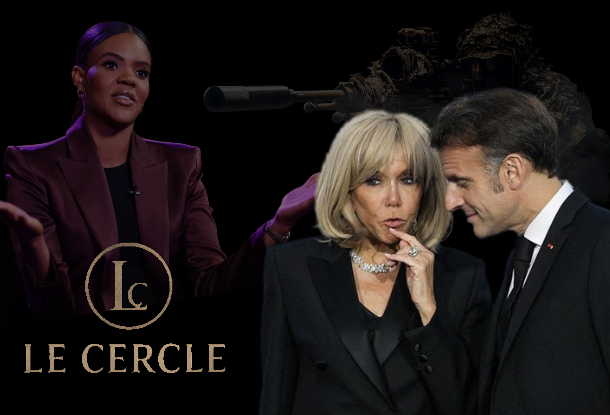
When Candace Owens posted on X that she believed a plot to assassinate her was being orchestrated “from France,” funded by what her source called the “Club des Cent,” few outside intelligence circles knew what to make of it. To the casual observer, the name evokes Parisian gourmets and critics of haute cuisine, but intelligence historians and declassified archives reveal a far darker and far-reaching reality: Owens’ source was, more than likely, referring to the ‘Cercle des Cent’, better known as ‘Le Cercle’, or in Anglo-American sources, ‘The Pinay Circle’ — a secretive, invitation-only network of politicians, financiers, and intelligence operatives whose influence has quietly shaped transatlantic policy for decades.
The Club des Cent is sometimes referred to in intelligence literature as the “Cercle des Cent” or simply “Le Cercle”. (Grok)
Owen’s allegations remain unverified, and she has yet to release public evidence of a plot targeting her. At the same time, the very idea resonates because Le Cercle is a living institution, historically and contemporarily capable of operating in the shadowy spaces where politics, intelligence, and ideology intersect. Unless they are planning to assassinate her with a fork, it is reasonable to assume that Candace’s post shines a light more on a hidden architecture of influence, one that has persisted since the early Cold War, and that still deserves our attention today.
Le Cercle was founded in the early 1950s by former French Prime Minister Antoine Pinay and French intelligence agent Jean Violet, alongside figures such as West German Chancellor Konrad Adenauer and former Federal Minister of Defence of Germany, Franz Josef Strauss. Its purpose was simple but powerful: provide an off-the-record forum where European and Anglo-American elites could coordinate policy, discuss global threats, and cultivate informal networks that operated beyond parliamentary oversight. Attendees included corporate financiers, lawyers, diplomats, and intelligence officers from France’s External Documentation and Counter-Espionage Service (SDECE), the equivalent of MI6, which was later renamed DGSE, the French Directorate General for External Security, as well as the CIA. Declassified meeting agendas, now available through the ISGP archive, reveal discussions spanning NATO strategy, European integration, and Middle Eastern crises, alongside interactions with clandestine networks such as Gladio, 6I, and the Safari Club, which we reported on last week:
SEE ALSO: Past as Prologue: Safari Club Illuminates Candace Owens’ Allegations
The structure of power within these elite networks reflects a larger operational logic. The liberal establishment tends to focus on economics and diplomacy, while the conservative establishment is primarily concerned with national security. Though their priorities sometimes diverge, the two are deeply interdependent. When diplomatic avenues falter, the machinery of the CIA and the Pentagon is empowered to take over, handling tasks the State Department cannot touch: invasions, coups, espionage, assassinations, arms shipments, and even drug trafficking. Within this context, Le Cercle occupies a shadowy but pivotal space, quietly coordinating influence and action at the intersection of diplomacy, intelligence, and private power.
But Le Cercle was more than a transatlantic think tank. Researchers argue that it also functioned as a bridge between Anglo-American intelligence, conservative Christian-Catholic activism in post-war Europe, and broader anti-communist and Zionist-aligned networks. In practice, this meant that elite Catholic politicians, pro-Israel activists, and intelligence operatives were likely rubbing shoulders in discreet hotels and private estates, sharing strategies and shaping ideological consensus. Some analysts describe this ecosystem as a “private Cold War,” a milieu where former spymasters, political activists, neo-conservatives, and financiers collaborated to influence global affairs.
The connections to neo-conservative and pro-Israel circles are particularly striking. Many scholars note that neoconservatives frequently acted as liaisons between US intelligence and Israeli state interests. Within this broader ecosystem, Le Cercle, and affiliated networks like 6I, “a private sector operational intelligence agency, beholden to no government, but at the disposal of allied or friendly governments”, or “Paneuropean right-wing groups”, to facilitate informal channels between pro-Israel actors, intelligence operatives, and European conservative elites. While this does not establish direct operational control by any government, it highlights the Circle’s potential as a conduit for transnational ideological and strategic coordination.
Some researchers point to another dimension of influence that may bind the corridors of intelligence to the vaults of old money. Among the corporate partners listed in intelligence-veteran networks is a group described cryptically as “Du Pont Investment Bankers.” If this designation refers to members or associates of the famed Du Pont (Dupont) dynasty of Wilmington, Delaware, a family whose wealth and industrial-financial empire stretches back two centuries, it suggests a potential overlap between legacy American capital, covert-network structures, and the transatlantic power corridors surrounding Le Cercle. The Du Ponts’ traditional holdings in chemicals, trust banking, corporate finance, and global industrial interests could have provided not just capital, but a discrete financial infrastructure for global influence, a silent undercurrent where big business, geopolitics, and intelligence converge.
Owen’s post gains added weight considering recent reporting confirming that Le Cercle is still active. According to Declassified UK, the group funded travel for UK ministers as recently as 2019, including Business Secretary Kwasi Kwarteng and his deputy Greg Hands. Former ministers and parliamentarians were also associated with the group, demonstrating the Circle’s enduring political reach. Meetings reportedly occur at least twice yearly, once in Washington and once in a European location, under strict confidentiality rules.
The roster of past participants reads like a who’s who of transatlantic power: former US Supreme Court Justice Antonin Scalia, former United States Secretary of State Henry Kissinger, former National Security Advisor of the United States John Bolton, former United States Secretary of Defense Donald Rumsfeld, and former CIA directors William Colby and Former United States Director of Central Intelligence William J. Casey. These connections reinforce the Circle’s historical and contemporary relevance.
Some accounts, sometimes contested, assert that parts of the Le Cercle milieu entertained, condoned, or even supported covert operations, propaganda campaigns, and geopolitical interventions, including activities touching the Middle East and Israel17. While there is no publicly verifiable evidence of paramilitary operations or assassination missions, the speculation reflects the Circle’s proximity to powerful networks where ideology, intelligence, and clandestine action converge.
One of the most compelling yet enigmatic aspects of Le Cercle is its overlap with conservative Zionist Catholic groups. Full attendee lists are rarely disclosed, but it is understood that conservative Catholic activists and pro-Israel actors sat at the same tables. The Circle historically drew European politicians with Catholic backgrounds, anti-communist activists, and financiers with strong ties to Israel (The Rothschilds, James Goldsmith, etc…) This intersection suggests that Le Cercle functioned as a unique transnational salon, blending ideological alignment with strategic coordination.
The Circle’s enduring secrecy amplifies both fascination and fear. Funders are undisclosed, agendas unpublished, and meetings strictly limited in attendance. Discussions reportedly cover foreign policy, security, and economic strategy, but documentation is scarce outside memoirs and leaks. The result is an organization that retains influence far beyond public view, while making verification of any covert activity extraordinarily difficult.
In this context, Owens’ concern is understandable. Le Cercle remains active, influential, and intertwined with networks of intelligence, conservative Catholic ideology, neo-conservative thought, and pro-Israel interests. Even without proof of assassination plots, the very existence of such a secretive, elite forum capable of transnational influence and financing clandestine operations lends credibility to her suspicions.
Le Cercle exemplifies a broader truth about power in the modern world: elite networks endure, shaping policy, alliances, and strategy from behind the scenes. The private Cold War forums of the 1950s and 60s have evolved, incorporating contemporary political actors, corporate financiers, and intelligence veterans. The Circle has persisted, not as an overt operational force, but as a nexus where influence, ideas, and alliances are quietly brokered.
It is clear, then, that Le Cercle is more than a historical curiosity or a dining club. It is a living, transnational institution of influence, a meeting place for powerful actors who operate in the shadows yet have real-world consequences. Candace Owens’ post, whether alarmist or prescient, highlights the presence of a network that quietly shapes global affairs across decades.
While the alleged paramilitary or Israeli-directed operations remain speculative, the documented overlaps with conservative Catholic, neo-conservative, and pro-Israel actors demonstrate a strategic continuity that makes Le Cercle relevant today.
In the end, the lesson threaded through Le Cercle’s history is stark: anyone who obstructs or exposes the agenda of such a network risks stepping into the line of fire. From the Cold War to the present, those who challenged the status quo found themselves isolated, discredited, or quietly neutralized. That is simply how covert power operates, not always through visible retribution, but through an ecosystem capable of applying pressure in ways the public never sees.
NOTE: You can visit the ISGP online portal to access rare documents and associated information about “Le Cercle”
READ MORE CANDACE OWENS NEWS AT: 21st CENTURY WIRE CANDACE OWENS FILES
SUPPORT OUR INDEPENDENT MEDIA PLATFORM – BECOME A MEMBER @21WIRE.TV
VISIT OUR TELEGRAM CHANNEL
21st Century Wire is an alternative news agency designed to enlighten, inform and educate readers about world events which are not always covered in the mainstream media.
Source: https://21stcenturywire.com/2025/12/05/inside-le-cercle-the-secretive-circle-candace-owens-spotlighted/
Anyone can join.
Anyone can contribute.
Anyone can become informed about their world.
"United We Stand" Click Here To Create Your Personal Citizen Journalist Account Today, Be Sure To Invite Your Friends.
Before It’s News® is a community of individuals who report on what’s going on around them, from all around the world. Anyone can join. Anyone can contribute. Anyone can become informed about their world. "United We Stand" Click Here To Create Your Personal Citizen Journalist Account Today, Be Sure To Invite Your Friends.
LION'S MANE PRODUCT
Try Our Lion’s Mane WHOLE MIND Nootropic Blend 60 Capsules
Mushrooms are having a moment. One fabulous fungus in particular, lion’s mane, may help improve memory, depression and anxiety symptoms. They are also an excellent source of nutrients that show promise as a therapy for dementia, and other neurodegenerative diseases. If you’re living with anxiety or depression, you may be curious about all the therapy options out there — including the natural ones.Our Lion’s Mane WHOLE MIND Nootropic Blend has been formulated to utilize the potency of Lion’s mane but also include the benefits of four other Highly Beneficial Mushrooms. Synergistically, they work together to Build your health through improving cognitive function and immunity regardless of your age. Our Nootropic not only improves your Cognitive Function and Activates your Immune System, but it benefits growth of Essential Gut Flora, further enhancing your Vitality.

Our Formula includes: Lion’s Mane Mushrooms which Increase Brain Power through nerve growth, lessen anxiety, reduce depression, and improve concentration. Its an excellent adaptogen, promotes sleep and improves immunity. Shiitake Mushrooms which Fight cancer cells and infectious disease, boost the immune system, promotes brain function, and serves as a source of B vitamins. Maitake Mushrooms which regulate blood sugar levels of diabetics, reduce hypertension and boosts the immune system. Reishi Mushrooms which Fight inflammation, liver disease, fatigue, tumor growth and cancer. They Improve skin disorders and soothes digestive problems, stomach ulcers and leaky gut syndrome. Chaga Mushrooms which have anti-aging effects, boost immune function, improve stamina and athletic performance, even act as a natural aphrodisiac, fighting diabetes and improving liver function. Try Our Lion’s Mane WHOLE MIND Nootropic Blend 60 Capsules Today. Be 100% Satisfied or Receive a Full Money Back Guarantee. Order Yours Today by Following This Link.


| Visits: | 1,754,454,409 |
| Stories: | 8,543,465 |
Whistler Blowers, Insiders

